


Volcanic Eruptions, Ocean Climate Connections and Why Environmental Baselines Cannot Be Treated as Permanent
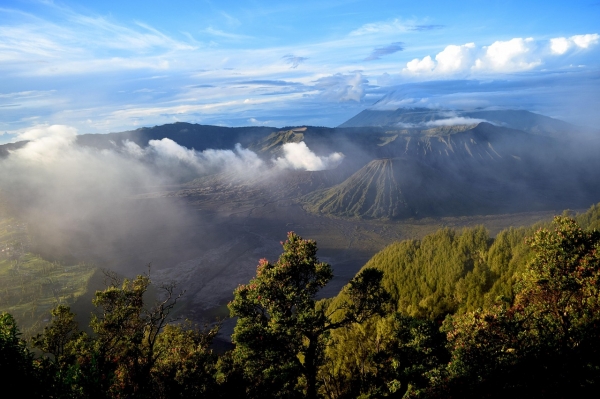
Environmental monitoring depends heavily on the concept of a baseline.
Before an industrial project begins, a development is approved or an environmental intervention is undertaken, scientists attempt to understand what conditions normally look like.
But what happens when “normal” itself changes?
New research led by scientists at the Woods Hole Oceanographic Institution provides a striking example.
By reconstructing interactions between the tropical Pacific and Indian oceans over several centuries, researchers found that the relationship between these enormous climate systems was generally stable—but could be disrupted by powerful external forces.
A sequence of major volcanic eruptions temporarily weakened those connections during the early nineteenth century.
More importantly for the present, the researchers found that the recent change in one major Pacific–Indian Ocean relationship appears exceptional when compared with similar periods across approximately the past millennium.
The study is about global climate dynamics rather than environmental contamination.
Yet it contains an important lesson for environmental practitioners everywhere:
Baselines are not necessarily permanent.
Why are the Pacific and Indian oceans connected?
The tropical oceans do not function as isolated bodies of water.
Ocean temperatures interact with atmospheric circulation, winds, rainfall and heat exchange.
Changes in the Pacific associated with phenomena such as El Niño can therefore influence conditions in the Indian Ocean.
One important mechanism is the Pacific Walker Circulation—a large-scale atmospheric circulation pattern associated with temperature differences across the tropical Pacific.
The researchers also examined two Indian Ocean climate modes:
- The Indian Ocean Basin Mode, which describes broad basin-wide sea-surface temperature variability.
- The Indian Ocean Walker Circulation, associated with east-west atmospheric and ocean-temperature differences across the tropical Indian Ocean.
Historically, changes in these systems have often moved together.
That relationship provides scientists with valuable information when trying to understand and predict climate variability.
The problem with a short instrumental record
Modern sea-surface temperature observations are exceptionally useful.
But reliable instrumental datasets cover only a relatively short portion of Earth’s climate history.
That presents a problem when scientists encounter an unusual modern trend.
If a climate relationship changes over several decades, how can we determine whether the change is truly exceptional or simply part of a much longer natural cycle?
The WHOI researchers addressed that problem by looking beyond thermometers and satellites.
They turned to paleoclimate archives.
Corals, trees and caves as environmental records
Natural materials can preserve evidence of past environmental conditions.
The study used information from shallow-water corals, including oxygen-isotope and strontium-to-calcium measurements, together with annually resolved tree-ring records and an oxygen-isotope record from a cave deposit in Oman.
These archives contain information related to past temperature, rainfall and ocean-atmosphere conditions.
The researchers used them to reconstruct major Indo-Pacific climate modes extending back approximately four centuries.
They compared those reconstructions with instrumental sea-surface temperature datasets and with large ensembles of climate-model simulations extending back to 850 CE.
This combination is important.
No single coral, tree ring, climate station or model provides a complete picture.
Confidence increases when independent evidence can be compared across multiple archives and analytical approaches.
What happened in the early nineteenth century?
For most of the reconstructed pre-industrial period, Pacific and Indian Ocean variability showed substantial multi-decadal coupling.
Then something unusual occurred.
Between approximately 1810 and 1850, the expected relationships weakened.
That period coincided with a series of exceptionally large tropical volcanic eruptions.
Among them was the 1815 eruption of Mount Tambora in Indonesia, one of the largest explosive eruptions in recorded history.
Tambora injected enormous quantities of volcanic material into the atmosphere. Its climatic influence extended well beyond Indonesia, contributing to global cooling and the famous “year without a summer” in 1816.
The new research suggests that successive major eruptions during this period also disrupted the usual relationship between Pacific and Indian Ocean climate variability.
How can a volcano influence an ocean basin far away?
Large explosive eruptions can inject sulphur-containing material high into the atmosphere.
The resulting stratospheric aerosols can reduce incoming solar radiation and alter temperature patterns.
Those temperature changes can, in turn, modify atmospheric circulation.
Because ocean and atmosphere circulation are interconnected, the climatic consequences can extend far beyond the volcano itself.
The study’s climate-model experiments showed responses consistent with the paleoclimate reconstructions: strong tropical volcanic forcing could temporarily produce Indian Ocean conditions that departed from the responses normally expected from Pacific variability.
Importantly, the researchers found that the response depended partly on both the magnitude of the eruption and the climate conditions already present when the eruption occurred.
That is another valuable environmental principle.
The impact of a disturbance depends not only on the disturbance itself, but also on the condition of the system receiving it.
The volcano story is not the main modern finding
It would be easy to interpret this research simply as a study of volcanic eruptions.
That would miss one of its most important conclusions.
The nineteenth-century disruption provides a natural historical comparison against which modern changes can be evaluated.
In recent decades, the tropical Indian Ocean has continued warming even while Pacific circulation has behaved in ways that historically would have produced a different Indian Ocean response.
The researchers concluded that the relationship between the Pacific Walker Circulation and the Indian Ocean Basin Mode since the mid-twentieth century is exceptional relative to comparable intervals across the past millennium.
The study attributes this modern disruption to anthropogenic greenhouse-gas forcing rather than volcanism.
The distinction matters.
Large eruptions temporarily disrupted historical ocean-basin relationships.
Modern warming appears to be changing one of those relationships through a different forcing mechanism.
What “exceptional” does—and does not—mean
Scientific language requires care here.
The study does not demonstrate that every component of Indo-Pacific climate behaviour is unprecedented.
The researchers specifically found a pronounced modern change in the relationship between the Pacific Walker Circulation and Indian Ocean Basin Mode.
They did not identify an equivalent statistically significant modern change in every Indian Ocean circulation relationship examined.
The models also have limitations.
For the early nineteenth century, the simulated disruption did not persist as long as the disruption reconstructed from paleoclimate records.
The authors identify incomplete representation of historical volcanic forcing and biases in simulated ocean responses among possible reasons for that proxy-model discrepancy.
That uncertainty should remain part of the interpretation.
Model agreement strengthens evidence.
Model disagreement can also reveal where scientific understanding still needs improvement.
Why climate relationships matter for environmental management
A predictable environmental relationship has practical value.
If one part of the climate system consistently provides information about another, forecasters can use that connection when estimating future rainfall, drought or other climate conditions.
If the relationship weakens, forecasting becomes more difficult.
That matters because water-resource managers, agricultural planners, infrastructure operators and environmental regulators often make decisions based partly on historical climatic relationships.
The WHOI researchers specifically note that stable connections between ocean basins contribute to climate predictability and that disruption therefore has implications for climate-risk management.
This does not mean forecasting becomes impossible.
It means the assumptions behind forecasts must continue to be tested.
What does this mean for the Caribbean?
This study should not be interpreted as evidence that disruption between the Indian and Pacific oceans is producing a particular rainfall, drought or environmental effect in Trinidad and Tobago.
The research did not test that question.
The direct geographic focus is the tropical Indo-Pacific.
However, the broader lesson is highly relevant to Caribbean climate management.
Caribbean forecasting already considers multiple interacting climate drivers.
The Caribbean Regional Climate Centre notes that strong El Niño conditions can influence drought probability, rainfall frequency, heat and Atlantic hurricane activity, while sea-surface temperatures in and around the Caribbean and tropical North Atlantic can modify regional outcomes.
The World Meteorological Organization similarly reports that Latin America and the Caribbean are experiencing a changing climate characterised by increasingly consequential heat, drought, extreme rainfall and tropical-cyclone impacts.
The practical implication is not that Caribbean climate behaves like the Indian Ocean.
It is that environmental planning should avoid assuming historical relationships will always remain stationary.
Why this matters for environmental baselines
A baseline survey is designed to establish environmental conditions before a project, activity or intervention.
It may include water quality, groundwater conditions, air quality, soils, sediments, ecological communities or other environmental indicators.
But environmental conditions vary naturally.
They also respond to:
- Wet and dry seasons
- Drought
- Flooding
- Extreme rainfall
- Ocean-temperature changes
- Long-term warming
- Land-use change
- Industrial development
- Major natural disturbances
A short baseline period may therefore capture only part of the true range of environmental conditions.
This does not make baseline monitoring ineffective.
It makes monitoring design more important.
One measurement is not necessarily a baseline
Suppose a river is sampled once during the dry season.
The results may accurately describe conditions at that location on that day.
They do not necessarily describe typical wet-season conditions.
Likewise, one year of groundwater measurements may not capture a multi-year drought.
A coastal-water survey conducted during unusually calm conditions may not represent conditions following major rainfall and runoff.
Environmental data become more informative when sampling frequency and duration reflect the variability of the system being investigated.
The WHOI study operates on a vastly larger spatial and temporal scale, but the underlying principle is similar.
Short records can make unusual changes difficult to distinguish from natural variability.
Establishing stronger environmental baselines
A robust environmental baseline should begin with the decision the data must support.
Monitoring locations should represent relevant sources, pathways and environmental receptors.
Sampling should also account for temporal variability where it could materially affect interpretation.
Depending on the project, this could mean collecting data across:
- Wet and dry seasons
- High-flow and low-flow conditions
- Before and after major rainfall
- Different tidal conditions
- Multiple years
- Different phases of project development
Existing historical datasets can also provide valuable context.
A new measurement becomes substantially more useful when it can be compared with credible earlier observations.
Long-term monitoring reveals change
Baseline data answer:
What conditions existed when the project began?
Long-term monitoring asks:
How are those conditions changing?
That distinction becomes increasingly important in a changing climate.
If rainfall regimes, ocean temperatures, flood frequencies or drought conditions shift over decades, an old environmental baseline may no longer represent contemporary background conditions.
Environmental interpretation therefore needs to distinguish among:
- Project-related change
- Seasonal variability
- Extreme events
- Long-term regional environmental change
Without sufficient data, those influences can easily be confused.
A useful lesson from paleoclimate science
The WHOI research also demonstrates the value of using different forms of evidence.
Scientists combined instrumental measurements, biological and geological climate proxies, statistical reconstruction methods and climate-model simulations.
Environmental consulting operates on a smaller scale, but the same logic can be powerful.
Water chemistry may be considered alongside rainfall.
Sediment results may be considered alongside hydrology.
Air-quality data may require meteorological context.
Ecological observations may need to be interpreted alongside habitat or water-quality change.
The objective is not simply to collect more data.
It is to collect the right complementary evidence to explain what the measurements mean.
Where Ecotox can contribute
Ecotox Environmental Services lists capabilities that align directly with this evidence-based approach.
These include:
- Environmental baseline surveys and data collection
- Environmental sampling and monitoring programme design
- Riverine, marine, groundwater and stormwater sampling
- Marine water and sediment surveys
- Soil and sludge sampling
- Air and noise monitoring
- Environmental analytical testing
- Marine, terrestrial and wetland ecological surveys
- Environmental compliance monitoring
For developers, industrial operators and regulators, these services can help establish documented conditions before a project begins and monitor whether those conditions change through time.
Where specialised climate modelling or seasonal forecasting is required, those functions should remain with appropriately qualified meteorological and climate-science organisations.
Ecotox’s defensible role is environmental measurement, baseline characterisation, monitoring design and scientific interpretation within its verified capabilities.
Data quality and reproducibility
Another strength of the WHOI-led study is transparency.
The researchers state that the datasets used are publicly accessible.
The sea-surface-temperature datasets, coral records, tree-ring and cave records, and climate-model simulations can be independently accessed.
The team’s reconstructed datasets and example visualisation code have also been archived publicly.
This matters beyond academic research.
Environmental conclusions become more defensible when there is a documented chain linking the interpretation back to:
- Sampling methods
- Analytical procedures
- Quality controls
- Original measurements
- Metadata
- Statistical methods
- Assumptions
Good environmental monitoring is therefore not simply about producing a result.
It is about producing a result that can be understood, checked and defended.
From historical baseline to dynamic baseline
Environmental practitioners increasingly need to think about baselines in two ways.
A historical baseline records what conditions were.
A dynamic baseline recognises that broader environmental conditions may be changing.
Both are valuable.
Historical data provide accountability and allow change to be measured.
Contemporary monitoring determines whether historical assumptions remain representative.
In a stable system, those two perspectives may align closely.
In a changing climate, they may not.
Conclusion
The new Indo-Pacific climate study reaches across centuries to answer a deceptively modern question:
How unusual are the climate relationships we observe today?
Corals, tree rings and cave deposits indicate that the Pacific and Indian oceans were generally coupled over multi-decadal periods, while major tropical eruptions temporarily disrupted those relationships during the early nineteenth century.
Climate-model simulations support volcanism as an important driver of that historical disruption.
But today’s change in the relationship between the Pacific Walker Circulation and Indian Ocean Basin Mode appears exceptional even when compared with strong volcanic periods across the past millennium.
For Trinidad and Tobago, the study does not provide a local climate forecast.
Its environmental-management lesson is broader and more useful.
Past conditions remain essential evidence, but they should not automatically be assumed to define future conditions.
Environmental baselines need adequate temporal context.
Monitoring programmes need to account for variability.
And environmental interpretation increasingly needs to separate project effects from a background environment that may itself be changing.
Reliable environmental decisions depend not only on knowing what was measured.
They depend on understanding the system in which that measurement occurred.
Linked Sources
Wang, Oppo & Ummenhofer (2026) — Coupling of Pacific and Indian Ocean variability disrupted by 19th century volcanism, Nature Communications
NASA Earth Observatory — Mount Tambora Volcano, Sumbawa Island, Indonesia
Caribbean Regional Climate Centre — Key Climate Messages for June to August 2026
World Meteorological Organization — State of the Climate in Latin America and the Caribbean 2025
Ecotox Environmental Services — Services
Ecotox Environmental Services — Consultancy & Speciality Projects