


Methane Reductions Depend on Measurement and Follow Through
Methane reductions depend on more than finding an emissions signal. An operator must understand the observation, investigate the source, take suitable action and check the outcome. For industrial businesses in Trinidad and Tobago, Guyana, Suriname and the wider Caribbean, the practical challenge is connecting those stages with evidence that remains clear when someone reviews the record later.
Imagine a facility receiving a satellite-based methane alert. The maintenance team remembers recent work, while operations staff identify several possible sources. However, closing the notification in an email does not establish that a release has stopped. The investigation needs a traceable route from the original observation to the conclusion.
UNEP's November 2026 update shows why that route matters. Its Methane Alert and Response System, known as MARS, links detection with notification and subsequent action. The lesson for regional operators is to make environmental information useful to the people who can investigate and respond.
What the November methane reductions update reports
On 12 November, UNEP reported mitigation at five additional major methane sources since June. That brought the total addressed through MARS to 46 sources across 13 countries. The announcement connects those outcomes with scientific detection, engagement and action on the ground.
The figures describe the programme's reported progress. They do not establish the emissions performance of an individual Caribbean facility. Therefore, a company should keep the international update separate from any claim about its own assets.
Programme results and site results
A global source count helps explain the scale of an initiative. A site investigation needs different evidence, including the source identity, operating conditions and verification approach. Both forms of information are useful, but they answer different questions.
For example, an operator can use the international experience to improve its response process. It still needs site-specific information before describing a particular methane reduction. A strong reporting programme preserves that distinction.
Methane reductions begin with a defined observation
MARS analyses satellite information to identify major emissions and notify relevant governments and companies. Its observation and attribution work provides a starting point for investigation. However, a site team still needs to connect the information with the actual facility and operating activity.
Establish the asset and time
The response record should identify the location, observation time and facility under review. Next, the operator can check which activities and equipment were relevant during that period. This helps the investigation move beyond a general discussion of possible emissions.
A time reference should remain unambiguous across teams. For a regional operation, staff may exchange records with overseas specialists and contractors. Clearly stated dates, times and time zones prevent avoidable confusion about the event being investigated.
Keep the original information
Retain the observation and any stated limitations with the case record. For example, the source estimate may describe a particular observation window. Removing that context can make a later summary appear more certain or more representative than the original evidence supports.
The investigation should then record its own findings separately. This allows a reviewer to distinguish the external observation from the operator's explanation. A useful response connects the two without quietly replacing one with the other.
Why satellite visibility affects methane reductions evidence
UNEP explains that methane-sensitive satellite observations depend on suitable sunlight and cloud conditions. Surface characteristics and instrument detection limits also affect what satellites can observe. In particular, observations over or near water can present additional challenges.
These limitations matter when interpreting an empty part of a map. The absence of an alert is not proof that a facility has no methane emissions. Consequently, an operator should not use satellite silence as its only basis for claiming satisfactory performance.
Match the method to the question
A satellite observation, a site survey and an equipment-level measurement can provide different information. The project team should identify which question each method addresses. That discussion should happen before the company commits to a verification claim.
For example, a regional offshore investigation may require methods suitable for its location and operating conditions. The team should confirm the proposed specialist capability rather than infer it from a general air-monitoring service. Clear method selection makes the eventual conclusion easier to assess.
Methane reductions need an operating record
An environmental observation becomes more useful when the site team can relate it to actual operations. Maintenance logs, activity records and equipment information may help explain the conditions at the observation time. However, the records need enough detail to support that connection.
Planned activity and unplanned findings
A planned operating activity may provide relevant context. Nevertheless, its existence does not automatically explain every observation. The investigation should establish whether the timing, location and available measurements support the proposed explanation.
Similarly, a maintenance record may show that staff completed a task. It does not, by itself, establish the environmental outcome of that task. The response record should distinguish the work performed from the evidence used to assess its effect.
Record what remains uncertain
An investigation may identify a likely source without resolving every question. In that case, the report should explain the uncertainty and the next step. A clear open item is more useful than an unsupported statement that the case is complete.
The same principle applies when no single explanation emerges. The organisation can document the work completed and identify what additional information would help. This keeps the response practical while preserving the limits of the evidence.
Detection, measurement and methane reductions are different stages
A detection identifies a signal within a method's capabilities. A measurement provides information about a defined property, such as concentration or emission rate. A reduction claim compares relevant conditions over an appropriate period and boundary.
Do not merge the measures
A concentration is not automatically an emission rate. Likewise, a short observation does not establish an annual quantity without further assumptions. The report should name the measure and explain the basis of any calculation.
For example, a manager may receive values expressed in kilograms per hour and tonnes per year. Those values describe different time bases. The reviewer should establish how the report moved from one to the other before using them in a performance comparison.
An illustrative duration calculation
Suppose a hypothetical release occurs at one kilogram per hour for 100 hours. Under that stated assumption, the calculated quantity is 100 kilograms. Assuming that the same rate continued for every hour of a year would produce a very different estimate.
The example explains why duration matters. It is not a measurement from any regional facility. A real estimate needs evidence or a clearly stated assumption about how long the release occurred and how the rate varied.
Persistence changes the methane reductions picture
UNEP's Eye on Methane platform describes a persistency-weighted flux approach for viewing satellite-detected sources. The approach considers how emissions behave across observations, rather than relying only on a single large detection. This helps distinguish isolated events from more persistent patterns.
For an operator, the practical lesson is to preserve the observation history. A case record should make clear whether the team is investigating one event or a recurring concern. Otherwise, a summary can confuse a dramatic observation with a sustained source.
Keep event and trend records connected
An event log can track specific observations and responses. A trend review can examine what those cases suggest over time. The two records should share source identifiers so that the organisation can relate them accurately.
For example, several cases involving the same equipment may justify a broader maintenance or operating review. That decision differs from closing each notification separately. Connecting the records helps management identify questions that a single case cannot answer.
Company reporting and methane reductions evidence
UNEP's 2026 Oil and Gas Methane Partnership report highlights measurement-based reporting and the use of better data for action. Its October publication and November announcement represent different reporting snapshots. Therefore, figures from the two dates should retain their original context.
A company can apply the same discipline to its own records. A monthly operational summary and an annual inventory may cover different periods and boundaries. They should not appear directly comparable unless the report explains how the measures align.
Define the reporting boundary
Identify the assets, activities and period included in the claim. In addition, explain any important exclusions. This helps readers understand whether they are reviewing an equipment finding, a facility result or a wider organisational total.
A change in boundary can affect a comparison even when individual equipment performance remains unchanged. Consequently, the organisation should record additions, removals and methodological changes. Transparent boundaries make a trend easier to interpret.
Verifying methane reductions after corrective work
The verification plan should follow the source and operating context. It should identify the method, relevant conditions and evidence needed to assess the intended change. A generic statement that staff repaired equipment is not a complete verification record.
Compare suitable operating conditions
A later observation may occur under conditions that differ from the original event. The reviewer should identify those differences before attributing the entire change to corrective work. This is particularly useful when operations are intermittent or variable.
For example, a measurement during a shutdown does not necessarily describe performance during normal activity. The investigation needs a suitable basis for the conclusion it intends to make. A technical specialist can help establish that basis for the particular source.
Distinguish completion from performance
Maintenance completion, a follow-up survey and a verified reduction are separate achievements. The record should identify which stage the team has reached. This prevents an administrative closure from becoming an environmental performance claim by accident.
The organisation should also identify who accepts the verification evidence. In addition, it should establish how the case will reopen if new information appears. This supports a response process that remains useful after the first repair.
Regional applications for methane reductions
Trinidad and Tobago, Guyana and Suriname share an interest in credible industrial environmental information. However, individual sites have different assets, locations and operating conditions. A regional approach should provide consistent records while retaining those differences.
Trinidad and Tobago operations
Consider a hypothetical operator coordinating environmental and maintenance teams at an industrial facility in Trinidad. A shared source identifier can connect the observation, inspection, work order and follow-up evidence. Each team can then see how its information contributes to the case.
The example does not establish emissions at a named facility. It illustrates a practical coordination problem. A clearer link between records can make an investigation easier to complete and review.
Guyana offshore and support operations
A hypothetical Guyana project may involve offshore assets, shore-based support and several contractors. The response plan should identify who receives an observation and who can access the relevant operating records. This helps avoid delays caused by uncertainty about responsibility.
The sampling or measurement plan must also suit the actual location. Satellite limitations over water make method selection especially relevant to offshore questions. Nevertheless, no single limitation establishes the correct method for every project; the team must confirm the specific approach.
Suriname project planning
For a hypothetical project in Suriname, planning the information system early can make later reporting more consistent. Equipment identifiers, record ownership and review arrangements can form part of the operating plan. As a result, the team has a clearer basis for responding when observations become available.
A baseline or inventory should state its boundary and purpose. It should not become a promise that future emissions will remain unchanged. Monitoring and review need to follow the actual operation as it develops.
What wider Caribbean businesses can take from the research
Methane questions can arise in different sectors, including waste-related operations. However, the current distribution of MARS detections reflects its strong oil-and-gas focus. A business should not assume that the platform provides equivalent coverage for every sector or location.
The useful principle is to match evidence with the source under review. A waste-management investigation may need different operational information and specialist methods from an oil-and-gas investigation. The project scope should make those requirements explicit.
Build the response around the responsible team
Identify the people who can investigate the relevant process and arrange appropriate follow-up. Next, establish how environmental findings will reach them. A dashboard can help, but it cannot replace an assigned owner and a practical response route.
For example, an unresolved observation should remain visible with its current status and next action. The record should explain what prevents closure. This gives management a clearer picture than a simple count of open and closed notifications.
Communicating methane reductions without overstating results
A public statement should name what the organisation actually measured or verified. It should also identify the reporting period and boundary. This helps customers, partners and other readers understand the evidence behind the statement.
Use precise progress language
An organisation can report that it received an observation, completed an investigation or carried out corrective work. It can separately describe the verification evidence when that work is complete. Each statement should remain within the stage reached.
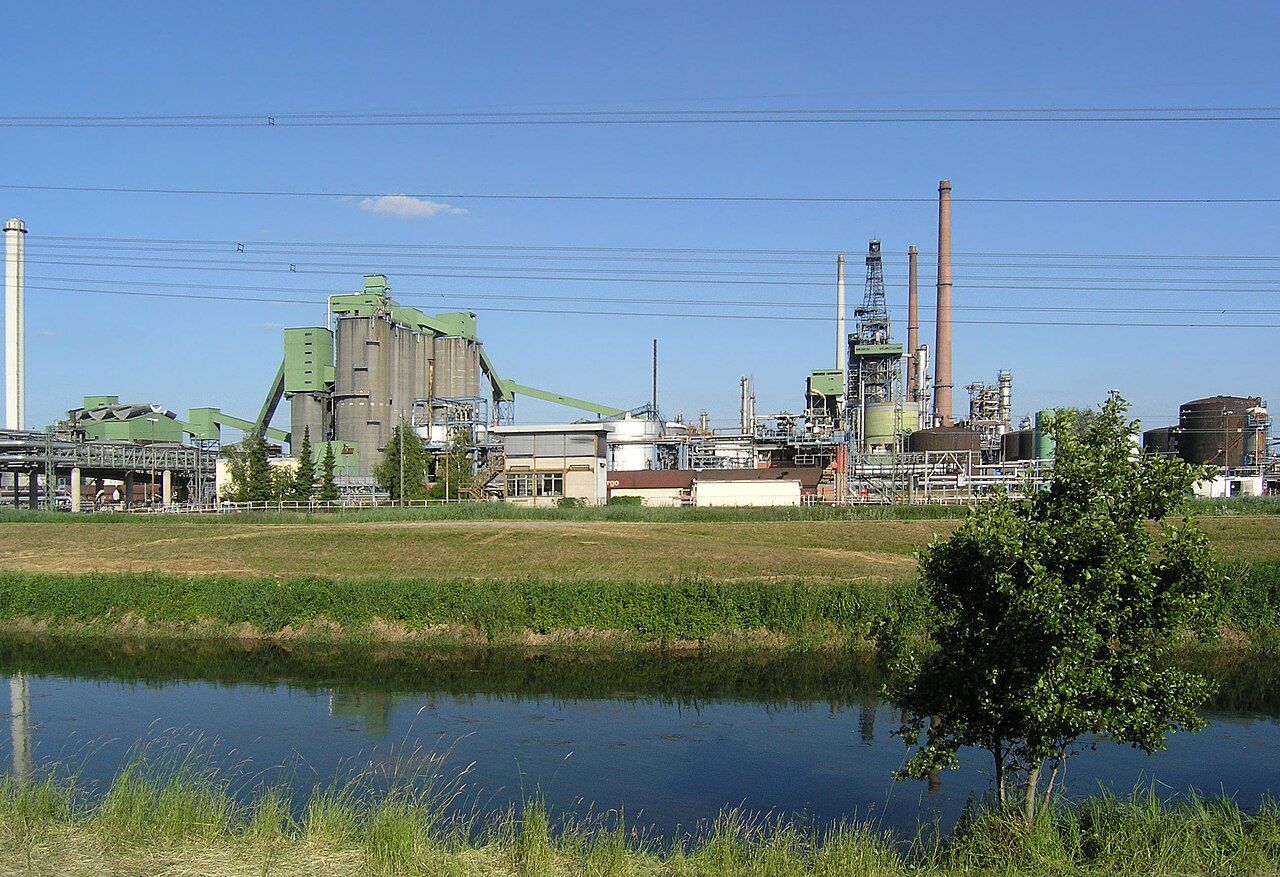
Avoid allowing a visually impressive image to carry a stronger claim than the data. An ordinary industrial photograph does not establish a methane plume. Likewise, a map without a detection does not establish zero emissions at a site.
Keep a reviewable evidence trail
A useful final record connects the original observation, the investigation, the intervention and the outcome assessment. In addition, it retains the important limitations. A reviewer should be able to understand how the organisation reached its conclusion without reconstructing the case from scattered emails.
The record can then support future planning. Repeated findings may reveal an operating question worth investigating, while successful responses may improve the next case. This gives the monitoring programme value beyond a single announcement.
Common questions about methane reductions
Does no satellite alert mean no methane emissions?
No. Satellites have observation and detection limitations. The absence of an alert should not become proof of zero emissions. A facility needs an appropriate evidence base for the claim it intends to make.
Does completing a repair establish a verified methane reduction?
Not by itself. The repair record describes the work performed. A reduction claim needs suitable evidence about the outcome, operating conditions and comparison. The verification plan should address the actual source.
Can a short emission-rate observation become an annual total automatically?
No. The calculation needs a suitable basis for duration and variability. Any assumptions should remain explicit. Otherwise, a short event can acquire an annual interpretation that the available evidence does not support.
How ECOTOX can support a defined project
ECOTOX lists environmental baseline surveys, air-quality monitoring and project-based consultancy among its published services. These capabilities provide a starting point for discussing an industrial environmental investigation. However, any specialist methane detection, quantification or satellite-verification capability must be confirmed explicitly.
For organisations in Trinidad and Tobago, Guyana, Suriname and the wider Caribbean, the discussion should identify the source, location and decision. Add the available observations and operating information. The team can then clarify which services and specialist inputs would suit the project.
Explore ECOTOX's air-quality monitoring and consultancy services to discuss the appropriate scope. Credible methane reductions reporting starts with a clear question and ends with evidence that supports the stated outcome.
Sources
- UNEP November update on methane reductions. 12 November 2026.
- UNEP International Methane Emissions Observatory. Accessed 20 November 2026.
- UNEP MARS frequently asked questions and detection limitations. Accessed 20 November 2026.
- ECOTOX consultancy services. Accessed 20 November 2026.
- UNEP OGMP 2.0 2026 report. Accessed 20 November 2026.
- UNEP Methane Alert and Response System. Accessed 20 November 2026.
Image credit: Ikar.us. MiRO1. CC BY 2.0 Germany. Historic refinery photograph from 2005, used to illustrate industrial infrastructure. It is not a verified methane plume or a statement about current emissions at the facility. Wikimedia supplied a reduced resolution copy; no other edits.
