


Peatland Water Levels and Warming: Why Hydrology Controls Carbon Loss
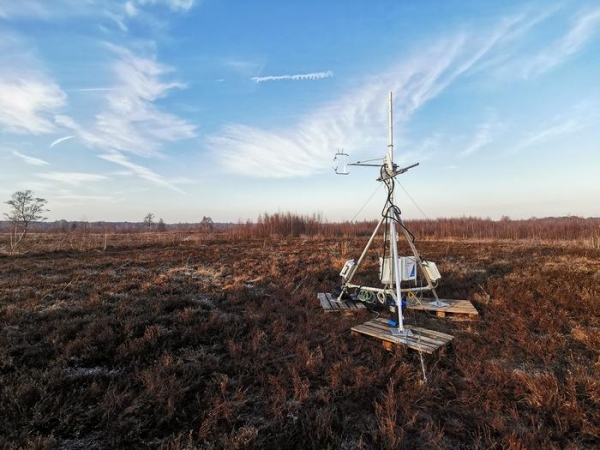
Water level is often treated as a hydrological measurement.
In peatlands, it is much more than that.
A new international study led by researchers at the University of Münster shows that the depth of the water table helps determine not only how much carbon dioxide a peatland releases, but also how strongly those emissions respond to warmer temperatures.
The implication is important.
A drained peatland may become increasingly vulnerable to carbon loss as the climate warms, while maintaining or restoring a high water table can reduce that sensitivity.
The research strengthens the case for viewing wetland hydrology, carbon storage and climate resilience as interconnected environmental-management issues rather than separate disciplines.
Why peatlands store so much carbon
Peatlands form where soils remain waterlogged for long periods.
Under saturated conditions, oxygen is limited.
That slows the microorganisms responsible for decomposing dead plant material.
Instead of decomposing rapidly and returning much of its carbon to the atmosphere, organic material accumulates as peat.
Over hundreds or thousands of years, this process can create exceptionally large stores of soil carbon.
The new Nature Communications paper notes that peatlands cover only around 3% of Earth’s land surface yet contain an estimated 600 gigatonnes of carbon, making them the world’s largest terrestrial store of organic carbon. Approximately 87% of global peatland area is located in temperate and boreal regions.
That carbon store depends heavily on hydrology.
What changes when peatlands are drained?
Drainage lowers the water table.
More of the peat then becomes exposed to air.
As oxygen penetrates the previously waterlogged organic material, microbial decomposition can accelerate.
Carbon that had been stored in peat can consequently be released as CO₂.
Drainage occurs for several reasons, including agriculture, forestry and peat extraction.
The researchers note that approximately 10% of global peatlands have been degraded by drainage and that drained peatlands make a significant contribution to anthropogenic greenhouse-gas emissions.
But drainage does not act independently.
Temperature matters too.
And that interaction between hydrology and temperature is at the centre of the new study.
The largest dataset of its kind
The international research team compiled CO₂ measurements from 114 peatland sites in temperate and boreal regions.
Together, those sites provided 276 site-years of annual carbon-flux observations covering the period from 1999 through 2023.
A site-year represents one year of measurements from one monitoring site.
The dataset included several land-cover conditions:
- Natural bogs
- Natural fens
- Croplands on peat soils
- Grasslands on peat soils
- Former peat-extraction sites
Of the 276 annual site-years, 177 were based on eddy-covariance measurements and 99 on chamber measurements.
Eddy covariance uses rapid measurements of atmospheric turbulence and gas concentrations to estimate exchanges of gases such as CO₂ between an ecosystem and the atmosphere.
Chamber methods measure gas exchange over a smaller enclosed area of soil or vegetation.
Using both approaches allowed the researchers to draw upon a substantially larger range of peatland conditions than many earlier analyses.
Why a simple straight-line relationship was not enough
It might seem reasonable to assume that the farther the water table falls, the more CO₂ a peatland will emit.
The data showed that the relationship is more complicated.
A simple linear model explained relatively little of the variation across the expanded dataset.
Nonlinear models performed better.
The researchers found that emissions tended to increase as water tables became deeper, but only to a point.
At some severely drained sites, further lowering did not continue increasing emissions at the same rate.
Several factors may contribute.
Very deep peat can be more resistant to decomposition.
Long-drained sites may already have lost more easily decomposable material near the surface.
Very dry conditions can also limit microbial activity.
Management practices such as crop selection, harvesting and fertiliser use can influence emissions independently of water-table depth.
The important conclusion is therefore not simply that “lower water always means proportionally more CO₂.”
The relationship is nonlinear and influenced by site condition and management.
What water level appears to matter?
Across the compiled dataset, CO₂ emissions began declining particularly when water tables were raised from very deeply drained conditions to shallower than approximately 60–75 centimetres below the surface.
But the study indicates that achieving stronger CO₂ mitigation generally requires substantially higher water tables.
The researchers identify water tables of approximately 20 centimetres below the surface or higher as the range associated with stronger mitigation.
That distinction matters for restoration.
Partially raising the water level from an extremely drained condition may reduce emissions.
It does not necessarily mean the peatland has been restored to a hydrological condition that minimises carbon loss.
Water level also changes sensitivity to temperature
This is the study’s most important result.
The researchers did not find that temperature and water level operate independently.
Instead, hydrology changed the way peatlands responded to warmer conditions.
At deeper water tables, higher temperatures were associated with substantially greater CO₂ emissions.
At higher water tables, the effect of warm temperatures was reduced.
In practical terms, drainage can leave a larger volume of peat exposed to both oxygen and warming.
Rewetting reduces the aerated peat layer and can therefore limit conditions favourable to rapid carbon decomposition.
That means peatland restoration may become increasingly important as temperatures rise.
How machine learning was used
Because the relationships were nonlinear and several environmental variables interacted, the researchers used an explainable machine-learning approach.
The annual model considered:
- Effective water-table depth
- Mean annual air temperature
- Incoming short-wave solar radiation
- Leaf-area index
- Site-specific differences
The machine-learning model achieved an R² of approximately 0.71 on test data.
Water-table depth emerged as the strongest predictor, accounting for around 42% of normalised feature importance, followed by air temperature at approximately 17%.
Solar radiation, vegetation and site-specific factors also contributed.
These percentages should not be interpreted as universal physical laws.
Feature importance describes how useful those variables were within this particular model and dataset.
It does not mean that exactly 42% of peatland CO₂ emissions everywhere are “caused” by water-table depth.
The paper itself notes that machine-learning relationships are statistical and do not independently establish causal mechanisms.
The researchers checked the relationship at a daily scale
Annual averages can hide short periods of intense environmental stress.
The researchers therefore conducted a second analysis using high-frequency measurements from 19 peatland sites representing 113 site-years.
These data allowed them to examine day-to-day changes in water level, temperature and CO₂ exchange.
The daily analysis reinforced the annual result.
During warm conditions, peatlands with higher water tables showed a weaker temperature response, while deeper water tables amplified temperature-related CO₂ emissions.
This independent daily-scale result is important because it provides another line of evidence for the interaction between hydrology and warming.
What exactly was being measured?
The annual analysis used a carbon-balance measure known as net biome exchange.
In the paper, this represents ecosystem CO₂ exchange together with carbon removed in harvested biomass.
Positive values correspond to net CO₂ emissions.
Negative values represent net CO₂ uptake.
However, the annual calculation did not consistently include lateral carbon losses such as dissolved organic carbon because those measurements were unavailable across all sites.
That is an important limitation.
A wetland’s carbon balance can involve more than gaseous CO₂ exchange.
Carbon may also move through water.
The most important limitation: this is a CO₂ study
Rewetting peatland changes environmental conditions.
Those changes do not affect CO₂ alone.
Methane can increase under strongly waterlogged, oxygen-poor conditions.
Nitrous oxide can also respond to changes in hydrology, nutrients and land management.
The University of Münster and the researchers therefore explicitly caution that the present analysis considers CO₂ only.
A complete climate balance must also evaluate methane and nitrous oxide.
This is critical when communicating restoration benefits.
The study supports the conclusion that higher water tables can reduce peatland CO₂ loss and dampen temperature sensitivity.
It does not establish the complete greenhouse-gas balance of every rewetted site.
Rewetting is therefore not simply “adding water”
Restoring a drained wetland requires more than selecting a target water depth from an international paper.
A restoration programme needs to understand:
- Existing water-table conditions
- Seasonal hydrological variation
- Surface-water inputs and outputs
- Groundwater interaction
- Soil and peat characteristics
- Vegetation
- Previous drainage infrastructure
- Current land use
- Nutrient conditions
- Potential methane and nitrous-oxide responses
- Ecological objectives
Hydrology must also be monitored after intervention.
Otherwise, it may be impossible to demonstrate whether rewetting achieved the intended condition or remained stable through wet and dry periods.
What does this mean for Trinidad and Tobago?
The numerical thresholds reported in the study should not be transferred directly to Trinidad and Tobago.
The research examined northern temperate and boreal peatlands.
Caribbean wetlands operate under very different temperatures, rainfall regimes, vegetation, hydrology and decomposition conditions.
A 20-centimetre water-table target derived from this study should therefore not be treated as a Trinidad and Tobago restoration standard.
Local investigation would be required.
But the environmental-management principle is highly relevant.
Trinidad and Tobago contains internationally important wetland systems.
Nariva Swamp, for example, is the country’s largest freshwater wetland and is designated as a Ramsar Wetland of International Importance.
It contains freshwater marshes, swamp forest, palm swamp, mangrove areas and open water, alongside important wildlife habitat.
These systems depend on hydrology.
Changing drainage, water abstraction, agriculture, road construction, channels or surrounding land use can alter how water enters, moves through and leaves a wetland.
That can have consequences for far more than carbon.
Trinidad and Tobago’s wetlands already have climate value
The Institute of Marine Affairs has highlighted the climate significance of Trinidad and Tobago’s wetland ecosystems, particularly mangroves.
IMA estimates that the above-ground biomass of the country’s mangrove forests stores substantial carbon and notes that below-ground soil carbon pools can be considerably larger.
Wetlands also support biodiversity, fisheries, water regulation and coastal protection.
Mangroves are not the same ecosystems as the northern peatlands examined in the Münster study.
The comparison should therefore not be used to transfer emission factors or water-table thresholds.
The connection is more fundamental:
Wetland carbon storage depends strongly on maintaining the environmental processes that allow organic carbon to remain stored.
Hydrology is one of those processes.
Why water-table monitoring matters
If water-table depth is an important environmental control, it needs to be measured.
A monitoring programme could include:
- Piezometer installation
- Continuous or periodic groundwater-level measurements
- Surface-water elevation
- Rainfall
- Water-quality measurements
- Soil and sediment characterisation
- Vegetation surveys
- Drainage and flow mapping
- Wet- and dry-season monitoring
- Repeated ecological assessment
For restoration sites, monitoring should begin before major intervention wherever possible.
That creates a baseline.
Without pre-restoration measurements, it becomes harder to determine whether later hydrological conditions genuinely changed because of the project.
Water quality should be considered alongside water quantity
Restoring water levels is only one dimension of wetland management.
The water entering a wetland may also carry:
- Nutrients
- Suspended sediment
- Agricultural runoff
- Wastewater
- Hydrocarbons
- Metals
- Other contaminants
Rewetting with poor-quality water can therefore create a different environmental problem.
Hydrological restoration and water-quality assessment should not be treated as independent exercises.
A well-designed monitoring programme should examine both.
Seasonal monitoring is especially important in the Caribbean
Northern peatlands experience strong seasonal variability.
Caribbean wetlands do too, although under very different climatic conditions.
Trinidad and Tobago’s wet and dry seasons can substantially alter water levels, rainfall, runoff and drainage.
A water-table measurement collected once during the wet season may therefore tell us very little about conditions during a prolonged dry period.
Long-term or repeated measurements provide a stronger basis for interpretation.
This becomes particularly important when climate change alters the duration or severity of droughts and extreme rainfall.
Peatland carbon is also a monitoring problem
Much of the public discussion around ecosystem carbon focuses on calculating how many tonnes of carbon an ecosystem contains.
That information is valuable.
But carbon stock is only one part of the story.
Environmental managers also need to ask:
Is the hydrology stable?
Is the site drying?
Is drainage increasing?
Are carbon-rich soils being disturbed?
Are land-management practices changing?
Is vegetation changing?
Are greenhouse-gas fluxes responding?
A carbon-rich ecosystem can remain valuable only if the environmental processes supporting carbon retention are maintained.
What the study does not establish
The Münster study does not demonstrate that all wetlands should maintain identical water-table depths.
It does not provide a restoration standard for Caribbean wetlands.
It does not calculate methane emissions.
It does not calculate nitrous-oxide emissions.
It does not provide a complete greenhouse-gas balance for rewetting.
It does not show that every drained peatland will respond identically.
It does not establish that machine-learning associations represent individual biological or microbial mechanisms.
And it does not show that the numerical thresholds identified across northern peatlands apply to tropical wetland soils.
Those limitations do not weaken the study’s importance.
They define where the evidence is strongest.
Where Ecotox can contribute
Ecotox Environmental Services provides several verified capabilities relevant to wetland hydrology and environmental assessment.
These include:
- Environmental baseline surveys
- Marine, terrestrial and wetland ecological surveys
- Piezometer installation
- Groundwater sampling
- Surface-water and riverine sampling
- Soil and sediment sampling
- Environmental monitoring-programme design
- Water-quality assessment
- Environmental compliance monitoring
For wetland or wetland-adjacent development, these capabilities can help establish existing hydrological and environmental conditions before disturbance occurs and track how those conditions change through time.
Ecotox should not represent itself as providing direct ecosystem-scale greenhouse-gas flux measurement or specialist peatland carbon modelling unless those capabilities are independently verified.
Where such measurements are required, the appropriate approach is to design the environmental field programme around the investigation objectives and involve suitably equipped research or analytical partners.
From wetland restoration to measurable restoration
Calling a wetland “restored” is not enough.
Restoration should be demonstrated with evidence.
Has the water table actually risen?
Does it remain stable during dry periods?
Has surface-water connectivity changed?
Has water quality improved or deteriorated?
Is wetland vegetation recovering?
Are ecological conditions moving toward the intended reference state?
Those questions require measurements.
This is where long-term environmental monitoring becomes more valuable than a one-time assessment.
Conclusion
The University of Münster-led study provides one of the clearest large-scale demonstrations yet that peatland hydrology and warming cannot be considered independently.
Across 276 site-years from 114 northern peatlands, the researchers found a nonlinear relationship between water-table depth and CO₂ emissions.
Deeply drained peatlands were more sensitive to warming.
Higher water tables reduced that temperature sensitivity.
And although emissions began declining when very deep drainage was reversed, the researchers found that much higher water tables—around 20 centimetres below the surface or closer—were associated with stronger CO₂ mitigation.
But the study also delivers an equally important warning.
CO₂ is only one part of the climate balance.
Methane and nitrous oxide matter.
Local hydrology matters.
Vegetation and management matter.
And results from northern peatlands cannot simply be transferred to tropical Caribbean wetlands.
For Trinidad and Tobago, the most useful lesson is therefore not a universal water-table number.
It is a monitoring principle:
Wetland hydrology is an environmental variable that needs to be measured, protected and understood over time.
As the climate warms, preserving the water regimes that support carbon-rich wetlands may become increasingly important.
But defensible management begins with local evidence.
Linked Sources
Behrens, N. et al. (2026). Drivers of northern peatland CO₂ fluxes revisited: interacting water level-temperature dependency. Nature Communications, 17, 9504. DOI: 10.1038/s41467-026-77456-6.
University of Münster. Water level determines how sensitive peatlands are to warming. 9 September 2026.
Trinidad and Tobago Biodiversity Information System. Nariva Swamp Ramsar Site.
Institute of Marine Affairs. Wetlands: Key in Coping with Climate Change.
Ecotox Environmental Services. Consultancy & Speciality Projects and Specialized Sampling Services.