


Low-Carbon Concrete in a Changing Climate: Why Local Weather Can Determine Durability
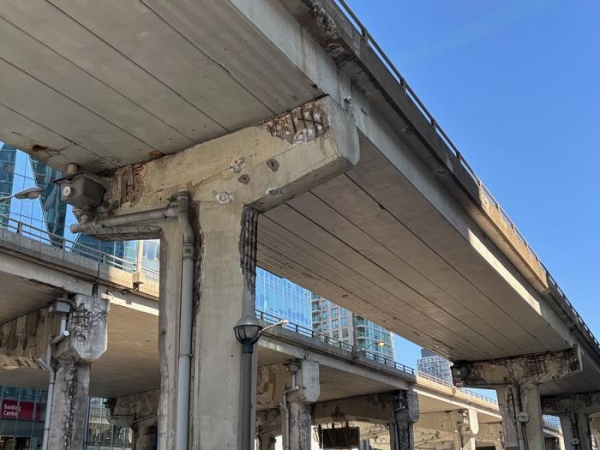
Concrete is central to modern infrastructure.
It is also a major focus of construction-sector decarbonisation because producing the cement used in concrete releases substantial quantities of carbon dioxide.
One response is to develop concretes that use lower-carbon cement systems.
But reducing the carbon footprint of a construction material creates another important question:
Will it remain durable for as long as the structure requires?
New research from ETH Zürich suggests that answering that question requires much more than testing the concrete itself.
The climate surrounding the structure may be just as important—and in some cases substantially more important—than differences among concrete formulations.
That finding has implications for how engineers assess low-carbon building materials, how climate change may affect existing infrastructure and how environmental data are incorporated into long-term infrastructure planning.
Why low-carbon concrete creates a durability question
Reinforced concrete combines concrete with steel reinforcement.
Ordinarily, the highly alkaline environment inside concrete helps protect the steel from corrosion.
Over time, however, carbon dioxide from the atmosphere can penetrate the concrete and react with its cementitious components.
This process is called carbonation.
Carbonation lowers the alkalinity of the concrete.
If the carbonation front eventually reaches the reinforcing steel, the protective passive condition surrounding the steel can be lost, making corrosion possible.
Some lower-carbon cement systems can carbonate more rapidly than conventional Portland-cement concrete.
That has created concern about whether reducing cement-related emissions could also reduce reinforced-concrete durability.
The ETH Zürich researchers argue that this question has often been framed too narrowly.
Concrete service life has more than one stage
A simplified view of carbonation-induced reinforcement corrosion contains two major stages.
The first is the initiation phase.
During this period, carbon dioxide penetrates the concrete until carbonation reaches the reinforcement and the steel loses its passive protection.
The second is the propagation phase.
Once corrosion becomes possible, the steel begins deteriorating at a rate determined by the environmental and material conditions surrounding it.
Eventually, corrosion products can expand, cracking and damaging the concrete cover.
Many conventional durability approaches place strong emphasis on making the initiation phase as long as possible.
That makes sense for traditional concrete.
But the ETH researchers argue that it can unfairly penalise some lower-carbon concretes if it ignores how slowly corrosion may subsequently progress under favourable moisture conditions.
Carbonation does not mean immediate failure
This distinction is one of the most important findings for communicating the research responsibly.
If carbonation reaches reinforcing steel, that does not mean the structure suddenly becomes unsafe.
It means one of the protective mechanisms preventing corrosion has been reduced.
What happens next depends heavily on moisture.
Steel corrosion is an electrochemical process.
The amount and distribution of water within the concrete therefore have a major influence on how rapidly corrosion can proceed.
ETH Zürich reports that, under the conditions considered, steel corrosion in wet concrete can occur up to approximately 100 times faster than in dry concrete.
That moisture effect was substantially larger than differences among the three concrete mixtures examined.
How the researchers tested the idea
The team developed a modelling framework connecting three components:
- Time-resolved meteorological conditions
- Moisture transport within concrete
- Corrosion kinetics at the steel-concrete interface
Rather than using only annual rainfall or an average humidity value, the model tracks how changing weather alters moisture inside the concrete through time.
The researchers then applied the framework to three concrete mixtures under four very different climatic settings:
- Zürich, Switzerland
- Bergen, Norway
- Manaus, Brazil
- Huailai, China
The underlying study uses these examples to demonstrate how the same material can experience very different moisture histories and therefore different reinforcement-corrosion behaviour depending on location.
Why annual rainfall is not enough
Bergen and Manaus provide one of the clearest examples.
Both locations receive approximately 2,500 millimetres of rainfall annually.
If annual precipitation alone were a reliable predictor of concrete durability, their corrosion behaviour might be expected to look similar.
It did not.
The model showed different corrosion behaviour because the timing of wetting and drying differed.
Concrete can take up water comparatively quickly.
It can take considerably longer to dry.
The critical condition is therefore not simply:
How much rain fell this year?
It is also:
How often did the concrete become wet?
How long did it remain wet?
How long were the dry intervals between wetting events?
Those questions describe a moisture history rather than a rainfall total.
The same exposure category can contain very different climates
The researchers highlight another limitation of broad durability classifications.
Despite their different meteorological conditions, the four locations considered can fall within the same broad European carbonation exposure category associated with alternating wet and dry conditions.
Yet their modelled corrosion behaviour differed markedly.
This does not mean existing standards should simply be discarded.
Current standards remain the appropriate basis for engineering design until validated alternatives are adopted.
The research instead suggests that future standards could become more performance-based and climate-specific.
Instead of asking only:
Which exposure category applies?
future assessment may increasingly ask:
What moisture conditions will the reinforcement actually experience at this location over the structure’s intended life?
Low-carbon concrete is not automatically less durable
The study should not be simplified into the claim that low-carbon concrete deteriorates faster.
ETH explicitly cautions against that interpretation.
Some lower-carbon formulations may carbonate faster.
But carbonation rate is only part of the service-life question.
If reinforcement remains comparatively dry after carbonation reaches it, subsequent corrosion may progress very slowly.
The ETH model indicates that some of the lower-carbon concretes examined could achieve 50 years or more of service life under appropriate climatic conditions, while the same or similar materials could experience damage earlier under different conditions.
The implication is not that one concrete is universally good and another universally bad.
It is that material suitability may be location dependent.
Three mixtures do not represent every low-carbon concrete
This is another important limitation.
The researchers examined three concrete systems.
That is sufficient to demonstrate their modelling concept.
It is not sufficient to conclude that every lower-carbon cement behaves in the same way.
Low-carbon concrete is not one material.
Different formulations can use different binders, cement-replacement strategies, water-to-binder ratios and supplementary cementitious materials.
Those differences affect porosity, moisture transport, carbonation and strength.
The study therefore establishes a framework for assessment, not a universal service-life prediction for every low-carbon concrete product.
This is a modelling study—not decades of field exposure
The researchers combined experimental understanding with numerical modelling.
They did not construct identical bridges in four countries and observe them for 50 years.
The projected service lives are therefore model outcomes.
That distinction matters.
Models are valuable because waiting several decades before approving each new low-carbon cement formulation would severely slow innovation.
But models must still be validated against actual structures.
ETH states that the current approach is not yet ready for routine planning practice.
The calculations remain complex and additional validation on real structures is required.
The long-term objective is to develop simpler testing and prediction methods that can support practical engineering decisions.
Another major limitation: this is about carbonation-induced corrosion
Reinforcing steel can corrode through more than one mechanism.
The ETH research specifically addresses carbonation-induced corrosion.
That scope must remain explicit.
Chloride contamination—for example in marine exposure or environments where salts reach reinforced concrete—can cause reinforcement corrosion through a different process.
The present framework should therefore not be treated as a complete durability model for every reinforced-concrete structure.
This distinction becomes especially important when discussing Caribbean infrastructure.
Why the Caribbean requires its own evidence
Trinidad and Tobago is climatically very different from Zürich, Bergen and Huailai.
Manaus provides a tropical example, but one tropical location cannot represent all tropical climates.
The Trinidad and Tobago Meteorological Service documents clear seasonal variation in local rainfall.
For the 1991–2020 climatological reference period, Piarco and Crown Point show pronounced differences between drier and wetter months.
At Crown Point, for example, November averages 218.6 mm of rainfall, while March averages only about 43.0 mm.
At Piarco, March averages approximately 40.6 mm.
Those monthly averages are useful climatological indicators.
But the ETH study suggests that even monthly or annual rainfall totals may still be insufficient for predicting concrete moisture conditions.
The duration and sequencing of individual wet and dry periods can matter.
Trinidad and Tobago also adds marine exposure
Local infrastructure may exist:
- Near coastlines
- In salt-laden marine air
- At ports
- Near industrial facilities
- Along rivers
- In areas exposed to intense rainfall
- In locations experiencing prolonged wetting
- In hot, highly humid conditions
Those environments may involve deterioration mechanisms beyond carbonation.
For this reason, the ETH research should not be used to generate local durability numbers without appropriate Trinidad and Tobago-specific engineering assessment.
Instead, it identifies a stronger question:
Are infrastructure materials being evaluated against the actual environmental conditions they will experience?
Climate change adds another layer
Infrastructure is often designed to remain in service for several decades.
The climate experienced during the first ten years of a structure’s life may therefore not be identical to the climate experienced during its final decades.
The ETH researchers specifically identify this as an important future application of their approach.
If climate change alters the frequency, duration or sequencing of rainfall and drying periods, the moisture conditions controlling corrosion may also change.
That means historical climate may not always be a complete representation of future durability conditions.
Infrastructure design increasingly needs to consider both:
Where is the structure being built?
and
How could environmental exposure at that location change during its service life?
Durability is part of sustainability
Reducing embodied carbon is an important construction objective.
But material sustainability cannot be evaluated solely at the moment the concrete is poured.
A material that contains less carbon-intensive cement but requires premature repair or replacement may create additional material use, transport, construction activity and associated environmental impacts.
Conversely, automatically rejecting a lower-carbon concrete because it carbonates faster could prevent the use of a material capable of delivering adequate service life under the actual climatic conditions.
The broader environmental objective should therefore be:
reduce emissions while maintaining the performance required for the intended service life.
That requires both material knowledge and environmental context.
From generic climate classes to environmental exposure histories
The ETH approach points toward a more detailed understanding of exposure.
Instead of describing a location only as:
“wet and dry,”
engineers may eventually consider environmental histories including:
- Rainfall timing
- Duration of wetting events
- Length of drying periods
- Relative humidity
- Temperature
- Solar exposure
- Orientation
- Surface wetting
- Shelter from rainfall
- Material moisture transport
- Future climate trends
Not every project will require the same level of modelling.
But the principle is important:
environmental exposure is dynamic.
Environmental monitoring and structural engineering answer different questions
This is also where careful professional boundaries matter.
Environmental scientists can characterise weather, water, site conditions and exposure.
Materials scientists can investigate concrete behaviour.
Structural engineers determine whether a material and design satisfy applicable structural and durability requirements.
Those disciplines should inform one another.
They should not be treated as interchangeable.
For Ecotox, the relevance of the research therefore lies in helping establish defensible environmental information, not in replacing structural or materials-engineering specialists.
What could a climate-informed infrastructure assessment consider?
Before major infrastructure is designed, a multidisciplinary programme could consider several evidence layers.
Historical climate
Long-term meteorological records can provide context on:
- Rainfall
- Temperature
- Humidity
- Extreme precipitation
- Wet- and dry-season timing
Site-specific exposure
Conditions can differ significantly even within the same national climate.
Orientation, shelter, elevation, proximity to coastlines, drainage and surrounding development may affect exposure.
Environmental baseline conditions
Depending on the project, these may include:
- Surface-water conditions
- Groundwater
- Flooding
- Salt exposure
- Industrial emissions
- Drainage patterns
- Soil and sediment properties
Future climate
For long-lived infrastructure, plausible changes in rainfall patterns, temperature and extremes may need to be considered.
Materials and engineering assessment
Finally, qualified engineers and materials specialists determine whether proposed concrete systems, reinforcement protection, cover thickness and other durability measures are appropriate.
No single environmental measurement answers all these questions.
Where Ecotox can contribute
Ecotox Environmental Services can contribute to the environmental evidence layer surrounding major developments and infrastructure projects.
Relevant capabilities include environmental baseline studies, environmental monitoring-programme design, surface-water and groundwater assessment, air-quality monitoring, soil and sediment sampling and environmental impact assessment support.
For construction and infrastructure projects, these services can help establish the environmental setting within which engineering decisions are made.
Ecotox should not imply from this research that it provides concrete-mix design, structural service-life modelling, reinforcement-corrosion testing or structural certification unless those capabilities are separately verified.
Where those services are required, environmental data can instead be integrated with assessments conducted by appropriately qualified civil, structural and materials-engineering specialists.
That multidisciplinary model is particularly appropriate for climate-resilient infrastructure.
Why real-world validation matters
The ETH researchers are explicit that their framework still needs validation against real structures.
This is essential.
Laboratory experiments provide controlled information.
Numerical models allow decades of behaviour to be simulated.
Actual structures introduce additional variables:
- Construction quality
- Concrete cover variation
- Cracking
- Surface orientation
- Maintenance
- Local drainage
- Wind-driven rain
- Material variability
- Repairs
- Unexpected exposure
Long-term field monitoring will therefore remain important even as predictive models improve.
Model and measurement should complement one another.
Better data could allow more—not less—innovation
A significant implication of the research is that better durability assessment could actually accelerate low-carbon construction.
If standards are too conservative because they evaluate new materials primarily through tests designed for traditional Portland cement, environmentally beneficial materials may be rejected even where they could provide acceptable durability.
But relaxing standards without better evidence would create the opposite problem.
The answer is better prediction and better validation.
Climate-informed modelling could eventually help identify where particular low-carbon concrete systems are suitable, where additional protection is required and where another material system is more appropriate.
What the research does not establish
The study does not prove that all low-carbon concrete is as durable as conventional concrete.
It does not prove that faster carbonation is unimportant.
It does not provide a universal 50-year service life.
It does not replace current engineering standards.
It does not provide a validated design tool for Trinidad and Tobago.
It does not model every concrete deterioration mechanism.
It does not establish durability under chloride-dominated marine exposure.
And it does not mean annual rainfall can simply be substituted by one other climate variable.
The central finding is more nuanced:
durability emerges from an interaction between material properties, moisture transport, corrosion kinetics and local climate.
Conclusion
The ETH Zürich research challenges a simple assumption about low-carbon concrete.
Faster carbonation does not necessarily mean faster structural deterioration.
What happens after carbonation reaches reinforcing steel may depend strongly on how wet the concrete becomes and how long it stays wet.
Across modelling scenarios for Zürich, Bergen, Manaus and Huailai, local climate substantially changed predicted corrosion behaviour.
Even Bergen and Manaus—both receiving about 2,500 mm of rain annually—produced different results because their wetting and drying patterns differed.
The implications extend beyond concrete.
They demonstrate a broader principle increasingly relevant to environmental management and climate resilience:
location matters, averages can hide important exposure patterns, and long-lived infrastructure needs to be assessed against the environmental conditions it will actually experience.
For Trinidad and Tobago, this research does not provide a ready-made durability formula.
The country’s tropical conditions, pronounced wet and dry seasons and coastal settings require locally appropriate engineering assessment.
But it does identify an important direction.
Lower-carbon infrastructure should not be judged on emissions reduction alone.
Nor should innovative materials be rejected solely because they behave differently from traditional materials in conventional laboratory tests.
The more useful question is:
Can the material deliver the required service life under the actual—and potentially changing—environmental conditions of the site?
Answering that question will require increasingly close integration between climate data, environmental monitoring, materials science and engineering.
That is how low-carbon construction becomes not only lower in emissions, but also durable and climate resilient.
Linked Sources
ETH Zürich — Low-carbon concrete put to the climate test
Trinidad and Tobago Meteorological Service — Climate Averages and Extremes