


Endocrine Disrupting Chemicals and the Case for Targeted Testing
Endocrine disrupting chemicals can turn a simple purchasing decision into a difficult evidence question. A supplier may promise a safer material, yet provide a report for another formulation. For businesses in Trinidad and Tobago, Guyana, Suriname and the wider Caribbean, the useful next step is a clear investigation. The aim is to connect a specific concern with information that can support a practical decision.
Imagine a regional distributor reviewing a replacement food-contact material. The supplier provides a technical sheet and a laboratory certificate. However, the product code on the certificate differs from the code on the shipment. Before commissioning more analysis, the buyer needs to establish what the existing documents actually cover.
This example illustrates the central business challenge. More data can help, but only when the investigation asks the right question. Environmental sampling, chemical analysis and a supplier review each contribute different information. Together, they can help an organisation decide what to investigate next.
What the 2026 assessment adds
UNEP and WHO released their updated global assessment on 17 November 2026. It reviews scientific developments since the earlier 2012 assessment and reports broader evidence of effects on human and wildlife health. The announcement also highlights early-life exposure, chemical mixtures and remaining gaps in knowledge.
The update gives businesses a reason to review their information systems. However, it does not establish contamination in a particular Caribbean product, workplace or waterway. Applying international findings locally requires evidence about the material, activity and exposure pathway under consideration.
For example, an assessment of an imported product starts with its identity and intended use. An investigation of a wastewater discharge starts with the process and substances that could enter that discharge. The same global report may inform both investigations, but it cannot replace either one.
Understanding endocrine disrupting chemicals
Endocrine disrupting chemicals can interfere with hormonal systems. UNEP identifies examples including certain bisphenols, phthalates and legacy chemicals such as PCBs. However, the term does not describe one uniform chemical family or one universal laboratory test.
Endocrine disrupting chemicals: identity and biological evidence
A concentration result identifies how much of a selected substance the method measured in a defined sample. By contrast, an assessment of endocrine action examines biological mechanisms and effects. These questions overlap, but they require different evidence.
A procurement team should therefore avoid treating every certificate as a complete answer. A report may address one named substance and leave other questions outside its scope. Reading the method and sample description is as important as reading the result.
Hazard, contact and the decision
A substance's hazardous properties and a person's opportunity for contact are separate parts of an assessment. For example, information about a chemical in a raw material does not describe every possible exposure during manufacture or use. Qualified specialists must connect the evidence to the actual situation.
The practical implication is straightforward. Define the decision before requesting a laboratory package. Otherwise, an organisation may receive technically correct results that do not resolve its business concern.
Why endocrine disrupting chemicals matter to regional supply chains
Regional businesses often work across several purchasing and distribution stages. A manufacturer may buy a formulation through an agent, while a retailer receives only the finished product. Consequently, the person requesting evidence may be several steps removed from the original chemical supplier.
This makes document traceability particularly useful. Buyers can link the product name, formulation code, batch reference and intended application. They can then ask whether a supplier's declaration covers that exact combination.
In addition, a company operating across Trinidad and Tobago, Guyana and Suriname should maintain a consistent internal record. Each destination may raise different customer or regulatory questions. A common evidence register helps the business respond accurately without assuming that one jurisdiction's requirements apply everywhere.
A declaration should identify the supplied product
A general statement about a brand or product family can leave important details unresolved. For example, two items with similar names may have different formulations or manufacturing sources. The buyer should request clarification before applying one certificate to both.
The same principle applies after a product change. If the supplier replaces an ingredient or changes production, the organisation needs to know whether the existing evidence still applies. Otherwise, a useful historical record can become an unreliable current assurance.
What an endocrine disrupting chemicals investigation can establish
A focused investigation should state what it intends to establish. Possible objectives include checking a supplier specification, investigating a process discharge or identifying whether further specialist work is justified. Each objective should lead to a defined analytical scope.
Start with an inventory
First, list the relevant products, raw materials and activities. Include the names people use on site as well as formal product identifiers. This helps the laboratory and the business discuss the same material.
Next, gather available safety information, supplier declarations and previous reports. A missing document is a reason to ask a question. However, it is not proof that a particular chemical is present or that a harmful exposure has occurred.
Selecting endocrine disrupting chemicals for analysis
The selection should follow the concern and the available process information. For example, an investigation may focus on a named substance identified in a formulation record. Another project may need a broader specialist review before anyone chooses a test list.
An open-ended request to test for every endocrine disruptor is unlikely to produce a useful scope. Instead, the brief should explain which substances matter to the decision and why. It should also identify important questions that the proposed analysis will not answer.
Sampling endocrine disrupting chemicals requires a specific question
OECD provides standardised methods and guidance for evaluating endocrine activity and related effects. Its conceptual framework organises available information and tests. However, OECD explicitly distinguishes that framework from an exposure assessment and from a prescribed testing strategy.
This distinction matters when commissioning environmental work. A facility does not automatically need every test described in a scientific framework. The project team must select a suitable approach for its material, purpose and available evidence.
Endocrine disrupting chemicals in products and discharges
A product sample, a wastewater sample and a sediment sample represent different materials. Consequently, a method suitable for one may not answer the question posed by another. The laboratory should confirm suitability before sample collection begins.
For example, a business checking an incoming material needs a sample that represents the identified batch. A facility investigating a discharge needs an agreed collection location and operating context. Combining these purposes into one request can make the resulting report difficult to interpret.
Agree the reporting requirement
Before commissioning analysis, explain how the organisation intends to use the result. A supplier investigation may need a different reporting capability from an initial screening exercise. The required units and reporting limits should therefore form part of the discussion.
A result below a reporting limit does not establish that a substance is absent under every possible circumstance. Rather, the conclusion must remain within the method's scope. The report should make those boundaries clear to technical and nontechnical readers.
A Trinidad and Tobago procurement example
Consider a hypothetical Trinidad manufacturer reviewing an alternative process material. The purchasing manager wants to reduce uncertainty, while production staff need a material that performs reliably. Both teams benefit from a shared brief before the company orders new tests.
The first step is to identify the existing and proposed formulations. Next, the team can compare the available declarations and supporting reports. Any proposed analysis should address a remaining question, rather than duplicate information that already resolves it.
A useful decision record could explain why the company selected a material for further evaluation. It could also identify the performance and safety questions still under review. This creates a more defensible record than simply describing a replacement as environmentally friendly.
Keep the trial separate from the claim
A production trial may show whether a material works in a process. However, that trial does not automatically establish the material's endocrine properties. Likewise, a chemical result does not establish that the proposed substitution performs well in every application.
The organisation should connect these different evidence streams without merging their conclusions. As a result, purchasing decisions can reflect both operational needs and the information available about the selected substances.
Applying the approach in Guyana and Suriname
A contractor in Guyana or Suriname may receive materials through several suppliers. The immediate task is often to establish who can provide the original specification and supporting evidence. A structured request can help prevent repeated exchanges of incomplete documents.
For example, a contractor can specify the product code, proposed use and evidence required before placing an order. The supplier can then identify whether an existing report applies. If it does not, the parties can discuss a suitable investigation before the material reaches the project.
This is an illustrative purchasing workflow, not a finding about any named contractor or product. Nevertheless, it shows how an international chemical-safety issue becomes relevant to routine regional business decisions.
Build a practical evidence register
The register should connect each material with its supplier, current specification and supporting reports. In addition, it should identify who reviews changes. This prevents a document from remaining in use after its underlying product has changed.
A regional business can maintain the same record structure across its operations. However, the acceptance criteria must reflect the actual contract, application and jurisdiction. A standard internal form should support local review, rather than replace it.
Endocrine disrupting chemicals and wastewater questions
A wastewater investigation begins with understanding the operation. Process inputs, cleaning activities, material changes and waste routes can help identify plausible substances of interest. Therefore, an analytical request should include more than the facility's name and a sample bottle.
Map the relevant process
A simple process map can show where materials enter, where staff use them and where liquid wastes leave. The team can then identify collection points that address the investigation. This also helps distinguish a process stream from a combined discharge.
For example, sampling a mixed final discharge may answer a different question from sampling a particular process outlet. The choice should follow the purpose of the work. It should not depend only on which location is easiest to reach.
Record operating conditions
The field record should explain what the facility was doing during collection. Unusual cleaning, a production change or an isolated discharge may affect interpretation. Without that context, readers may incorrectly treat one observation as a description of normal operations.
Similarly, later measurements need a suitable basis for comparison. If the process or collection location changes, the project record should explain that difference. This gives the investigation a clearer history and makes follow-up decisions easier to assess.
Why mixtures need careful interpretation
The UNEP–WHO announcement highlights the reality that people and wildlife encounter mixtures. However, a laboratory result for selected compounds is not a complete assessment of every possible combined effect. A report should avoid implying otherwise.
For a business, the useful response is to define the limits of its investigation. The team can identify the substances and pathways it considered, together with the questions that remain open. This supports a proportionate next step without overstating certainty.
Interpreting endocrine disrupting chemicals results
A favourable result against a defined specification can be useful. It answers a particular question about the identified sample. However, it should not automatically become a broad claim that an entire product range is free of endocrine effects.
The same care applies to an unfavourable result. The organisation should investigate the material, method and decision criteria before making wider claims. Clear communication protects both the customer and the credibility of the investigation.
Comparing alternatives without replacing one uncertainty with another
A substitution review should examine the proposed replacement on its own merits. Removing one named ingredient does not establish every other property of the alternative. Therefore, buyers should request information that describes what they will actually receive.
Operational questions also matter. Will the material perform under the intended conditions? Can the supplier maintain a consistent formulation? What evidence will support future deliveries? These questions help turn a one-time purchasing exercise into an ongoing control.
For example, the agreement could require notification when a relevant formulation changes. The business can then decide whether its existing evidence remains suitable. This is often more useful than collecting additional certificates without a clear review process.
Reading a laboratory report before making a business claim
Begin with the sample description. It should match the material and investigation recorded by the organisation. Next, review the named analytes, method, units and reporting limits before interpreting the numerical results.
The decision record should also identify the comparison being made. A supplier specification, a project requirement and a regulatory criterion are different things. The reviewer should name the relevant basis rather than describe a result simply as passing or failing.
Questions for the technical review
Ask whether the selected method addressed the intended material and substances. Then check whether any stated limitations affect the decision. If the report leaves an important question unresolved, the reviewer should explain what additional evidence would help.
Finally, separate the laboratory finding from the business response. The organisation may decide to seek supplier clarification, commission further work or change a purchasing condition. Each action should follow the evidence actually available.
Common questions about endocrine disrupting chemicals
Does every business need the same testing package?
No. The appropriate scope depends on the material, process and decision. For example, a supplier-document review may resolve one concern, while another investigation needs environmental sampling or specialist assessment. A standard package should not substitute for defining the question.
Can routine chemical analysis establish every endocrine effect?
No. Measuring selected substances and assessing biological mechanisms require different evidence. OECD's guidance helps explain those distinctions. Consequently, a business should confirm what the proposed analysis can establish before commissioning it.
Does an overseas report prove a local contamination problem?
No. International research can identify a concern and inform an investigation. However, it does not establish the conditions at a specific Caribbean facility or in a particular shipment. Local conclusions need evidence relevant to that location or material.
What should a regional project discuss before collecting samples?
Discuss the material, target substances, collection purpose and reporting requirements first. In addition, confirm practical arrangements for the project location. This allows the team to address method suitability and logistics before it commits to a collection schedule.
Turning technical evidence into an operating decision
A laboratory report becomes more useful when the business assigns responsibility for the next decision. For example, purchasing may own the supplier follow-up, while the environmental team reviews a discharge investigation. The record should identify both roles and the information each team needs.
Next, prepare a brief management note. Describe the original concern, the evidence obtained and the questions that remain open. Then explain the proposed action in plain language. A manager should understand why the team recommends that action without having to reinterpret a laboratory method.
The note should also identify when the organisation will revisit the decision. A formulation change, a new application or a different supplier may justify review. However, a review trigger does not mean the organisation must repeat every test automatically. It means someone should assess whether the existing evidence still answers the current question.
For a business operating across several Caribbean markets, this approach supports consistent communication. Staff can refer to the same technical record while addressing the requirements of each project. Consequently, customers receive a clearer explanation of the evidence behind a decision.
Return to the distributor at the start of this article. Its strongest next step is to resolve the product-code mismatch and identify any remaining evidence gap. If testing follows, the new report can then address a defined material and purpose. The result is a purchasing decision with a traceable basis, rather than a growing folder of unrelated certificates.
How ECOTOX can support a defined investigation
ECOTOX lists environmental analytical testing, specialised sampling and project-based consultancy among its services. Relevant published capabilities include work with water, wastewater, soil, sediment and chemicals. These services can support a properly scoped investigation in the region.
However, businesses should confirm any specialised endocrine assay or individual analytical method before commissioning work. The useful conversation begins with the project question and the evidence required. It should also establish the roles of any additional specialists.
For operations in Trinidad and Tobago, Guyana, Suriname and the wider Caribbean, a clear scope makes regional coordination more effective. The project can then connect sampling, analysis and interpretation with the purchasing or environmental decision it needs to support.
Contact ECOTOX with the product or process details, the reason for the investigation and any existing reports. Together, those records provide a practical starting point for discussing suitable next steps. The value lies in obtaining information that the business can understand and use.
Explore ECOTOX’s environmental analytical testing, specialised sampling and consultancy services to discuss the appropriate scope.
Sources
- UNEP and WHO announcement on the 2026 endocrine disrupting chemicals assessment. 17 November 2026.
- WHO publication record for State of the Science of Endocrine-Disrupting Chemicals 2026. 17 November 2026.
- OECD guidance on endocrine disrupter testing and assessment. Accessed 20 November 2026.
- ECOTOX Environmental Analytical Testing. Accessed 20 November 2026.
- OECD Revised Guidance Document 150 on evaluating chemicals for endocrine disruption (2018 background guidance). Accessed 20 November 2026.
- ECOTOX specialised sampling services. Accessed 20 November 2026.
- ECOTOX consultancy and speciality projects. Accessed 20 November 2026.
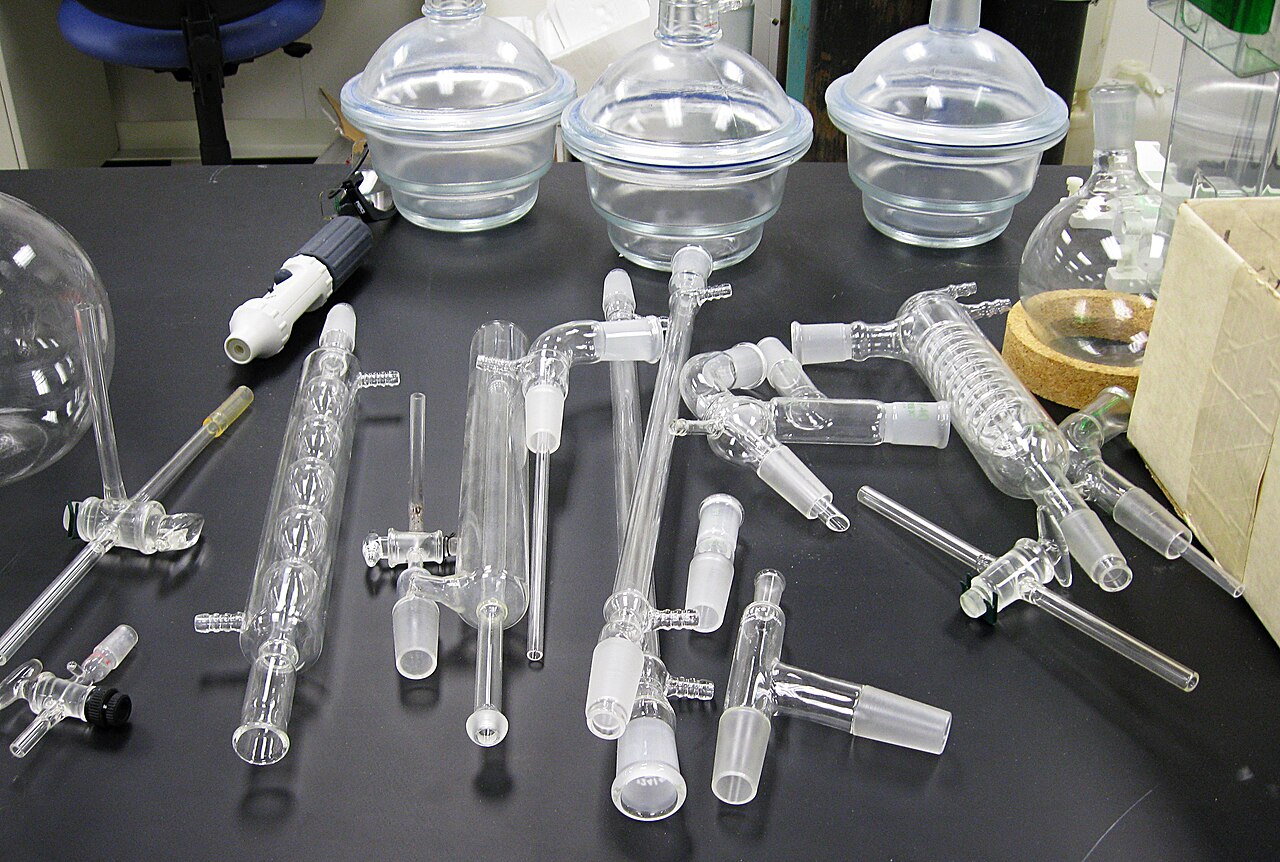
Image credit: Michael Pereckas. Laboratory Glassware. CC BY 2.0. Illustrative laboratory photograph from 2010. This is not an ECOTOX laboratory or a photograph of endocrine testing. Wikimedia supplied a reduced resolution copy; no other edits.
