


Fishing Gear in Stranded Pilot Whales: What a Hawaiʻi Study Reveals About Marine-Debris Monitoring
Plastic pollution is often discussed in terms of bottles, packaging, microplastics or litter visible along shorelines.
A 2026 study from Hawaiʻi highlights another dimension of the problem: large masses of discarded fishing line, rope, netting and sheet plastic can also reach deep-diving marine mammals.
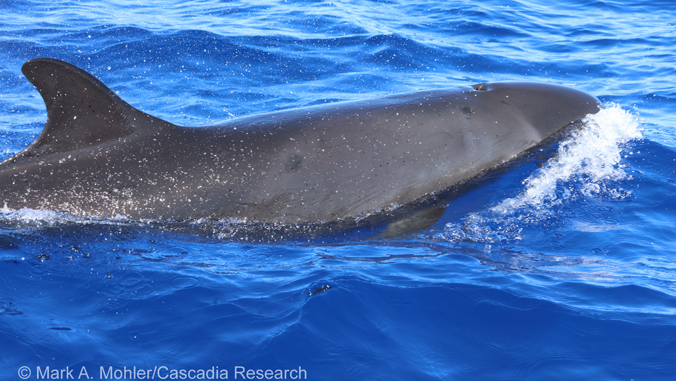
Researchers from the University of Hawaiʻi at Mānoa examined the gastrointestinal tracts of 13 stranded short-finned pilot whales (Globicephala macrorhynchus) recovered in the Main Hawaiian Islands between 2010 and 2023.
Large tangled masses of marine debris were found in the stomachs of three individuals.
Those findings are significant, but they require careful interpretation.
The study does not demonstrate that roughly one-quarter of all Hawaiian pilot whales ingest plastic. It does not establish that the debris killed the affected whales. And it does not tell us that the same scale or composition of exposure occurs in Trinidad and Tobago or elsewhere in the Caribbean.
What it does demonstrate is that substantial quantities of human-made debris can enter the feeding environment of large oceanic animals—and that monitoring marine pollution requires attention not only to chemical concentrations but also to the physical pathways through which waste reaches ecosystems.
What the researchers investigated
The study, led by J.E. Phipps and colleagues at the University of Hawaiʻi Health and Stranding Lab, was published in 2026 in Marine Pollution Bulletin.
Researchers examined gastrointestinal tracts from 13 short-finned pilot whales stranded in the Main Hawaiian Islands from 2010 through 2023.
Three of those 13 whales contained large tangled masses of marine debris.
That corresponds to a frequency of occurrence of 23.1% within the examined stranding sample, with a reported 95% confidence interval of approximately 5–54%.
That wide interval is an important reminder that the sample is small.
It would therefore be inappropriate to translate 23.1% into a population-wide prevalence estimate for Hawaiian pilot whales.
What was found inside the whales?
After drying the recovered material for 2.5 hours at 60°C, the researchers reported a total debris dry mass ranging from 561.4 to 1,870.6 grams per affected animal.
They counted between 6,283 and 35,543 plastic pieces larger than 5 millimetres per stomach.
The researchers classified debris into categories including monofilament, multifilament material, sheet plastic, hard fragments and miscellaneous items.
Fishing-related material dominated.
Across the three affected whales, monofilament line together with multifilament rope and netting accounted for approximately 70.2–84.2% of macroplastic pieces by count and 74.4–86.3% by mass.
The authors classified these materials as abandoned, lost or otherwise discarded fishing gear, commonly abbreviated ALDFG.
Sheet plastic, including materials resembling carrier or garbage bags, was another significant component.
Most pieces by number fell within the 5–20 mm and 20–100 mm size ranges.
However, the heaviest contribution came from much larger pieces exceeding 200 mm.
This distinction between count and mass matters.
Thousands of smaller pieces can dominate a numerical count while relatively few large sections of rope, netting or sheet plastic account for much of the total physical burden.
An important correction to the news coverage
The University of Hawaiʻi news release accompanying the paper describes approximately 4 to 12 pounds of debris per whale.
The peer-reviewed abstract, however, reports dry masses of 561.4–1,870.6 g, equivalent to approximately 1.2–4.1 pounds.
Because those figures are not equivalent, the peer-reviewed measurements should be used when communicating the study.
Without additional authoritative information explaining the difference—for example, whether the news release used wet mass or an earlier calculation—it would be inappropriate to reconcile the two figures by assumption.
This is a useful illustration of why environmental communication should trace quantitative claims back to the primary scientific source rather than relying solely on a press release.
Did plastic kill the whales?
The researchers explicitly report that there was no direct evidence that marine-debris ingestion caused death in any of the three affected animals.
That distinction is critical.
Finding debris in an animal establishes exposure.
It does not automatically establish a lethal effect or prove that the debris caused a particular disease or pathological outcome.
The authors instead identify the findings as raising concern about potential sub-lethal impacts.
Sub-lethal effects are scientifically important because an environmental stressor does not have to cause immediate mortality to matter.
Physical obstruction, reduced feeding efficiency, altered nutrition or other stresses could potentially affect health, but those mechanisms would need to be demonstrated in the animals concerned rather than assumed from the presence of debris alone.
For environmental practitioners, the wider principle is transferable:
Detection is not the same as demonstrated harm, and hazard is not the same as quantified risk.
Why fishing gear deserves specific attention
Fishing gear is not simply another category of plastic waste.
Abandoned, lost or otherwise discarded fishing gear may remain in the marine environment for long periods and can create several distinct hazards.
The Food and Agriculture Organization identifies ALDFG as a concern because lost gear can continue catching animals through “ghost fishing,” damage benthic environments, create navigation and safety hazards, and contribute synthetic material to marine ecosystems.
FAO also emphasises that the issue is transboundary and requires regional and international cooperation.
The Hawaiʻi study adds ingestion to that picture.
In the affected pilot whales, fishing-related line, rope and netting made up most of the macroplastic debris recovered.
This does not establish where each item originated, which fishery lost it or how long it had been at sea.
Marine debris can be transported by currents over substantial distances.
Finding it in an animal therefore cannot, on its own, attribute responsibility to a particular harbour, vessel, country or waste source.
Source attribution requires its own evidence.
The broader monitoring lesson: follow the pathway
Marine-debris monitoring works best when it asks more than one question.
It is useful to know what is present, but environmental managers also need to understand where it may be entering the system, where it accumulates, how it moves and which ecological receptors may encounter it.
For a Caribbean coastal investigation, this could mean integrating several lines of evidence:
- Shoreline debris surveys
- Storm-drain and river-mouth assessments
- Harbour, marina and fishing-landing observations
- Marine-water and sediment sampling
- Identification of debris accumulation zones
- Records of lost or discarded fishing gear
- Ecological observations
Not every component requires laboratory analysis.
For large debris, structured field surveys, photographic documentation, classification, geolocation, weight and count data may be more informative than conventional water chemistry alone.
Where questions extend to microplastics, polymer identification, additives or associated chemical contaminants, specialist analytical methods and appropriate contamination controls become necessary.
Such testing should only be claimed where the laboratory capability and method have been verified.
Why this matters to the Caribbean
The Hawaiʻi result should not be transferred directly into the Caribbean as evidence that local pilot whales are experiencing the same exposure.
What it provides is a scientifically defensible monitoring question.
UNEP’s Caribbean Environment Programme identifies solid waste and marine litter as regional concerns and notes that debris may originate from both land-based pathways—such as rivers, stormwater, waste disposal and coastal activity—and ocean-based sources including fishing and shipping.
The Caribbean context is especially important because islands and coastal states are closely connected to marine ecosystems economically as well as environmentally.
Fisheries, tourism, shipping, recreation and coastal biodiversity can all be affected by poorly controlled waste.
There is also an active policy connection for Trinidad and Tobago.
The country has participated in the Prevention of Marine Litter in the Caribbean Sea (PROMAR) initiative, including work related to marine-litter prevention, circular-economy approaches, baseline assessment and policy development.
The Hawaiʻi research therefore provides another example of the types of ecological exposure that marine-litter programmes are ultimately intended to prevent.
It does not, however, demonstrate that the debris types or exposure frequency observed in Hawaiʻi are present at the same levels in Trinidad and Tobago.
Local investigation would be required.
A practical monitoring framework
A defensible Trinidad and Tobago or Caribbean investigation could begin with a source-to-sea approach.
First, the monitoring objective should be defined clearly.
A programme intended to estimate shoreline litter abundance requires a different design from one intended to identify lost fishing gear, determine riverine inputs, assess marine sediment, investigate ecological exposure or evaluate the effectiveness of a waste-management intervention.
Potential source and accumulation zones could then be selected using evidence such as drainage patterns, river mouths, fishing activity, marinas, ports, stormwater outlets, prevailing currents and historical cleanup records.
These locations should be regarded as potential source or accumulation zones, not confirmed contaminated sites, until sampling or systematic observations demonstrate otherwise.
Field observations should use consistent categories, measurement units and documentation protocols so results can be compared through time.
Where environmental samples are collected, appropriate sampling design, quality assurance and chain-of-custody procedures are essential.
If specialised polymer or contaminant analysis is required, the analytical method and laboratory capability should be established before sampling so that samples are collected, stored and transported appropriately.
Repeated monitoring is particularly valuable.
A single survey provides a snapshot; repeated surveys can begin to reveal seasonality, changes following rainfall, intervention effects or recurring accumulation patterns.
Most importantly, suspected sources should not be treated as proven sources without supporting evidence.
Where Ecotox can contribute
Ecotox Environmental Services provides capabilities relevant to this type of investigation, including marine water and sediment surveys, riverine and stormwater sampling, environmental monitoring programme design and implementation, and specialised environmental sampling.
For a marine-debris project, these capabilities could support the environmental component of an investigation by helping to:
- Design representative sampling locations
- Document source-to-sea pathways
- Collect appropriate environmental matrices
- Establish baseline conditions
- Develop repeatable monitoring programmes
- Interpret environmental monitoring data
Where a project requires specialist analyses beyond verified in-house capability—for example, advanced polymer characterisation or particular emerging-contaminant determinations—the scientifically appropriate approach is to design the sampling and quality requirements around the analytical objective and, where necessary, work with a suitably equipped specialist laboratory.
That provides a stronger result than assuming that one sampling or analytical technique can answer every marine-pollution question.
Conclusion
The Hawaiʻi pilot-whale study is striking because of the quantity and composition of debris recovered, but its broader value lies in what it demonstrates about environmental monitoring.
Three of 13 stranded whales contained substantial macroplastic debris, with fishing line, rope and netting accounting for most of the recovered material.
The finding establishes exposure among those individual animals, not a population-wide ingestion rate, and the study did not identify marine debris as their cause of death.
For the Caribbean, the appropriate response is neither to dismiss the finding as distant nor to assume that Hawaiʻi’s conditions apply locally.
It is to ask better monitoring questions.
Where is marine debris entering coastal systems?
Which materials dominate?
Where does it accumulate?
How much may originate from land-based pathways versus marine activities?
Are interventions reducing it?
What evidence would be required to assess ecological exposure?
Answering those questions requires structured, repeatable and scientifically defensible monitoring.
That is how an international wildlife finding becomes useful environmental intelligence for the Caribbean.
Linked Sources
Phipps et al. (2026) — Characterization of macroplastics ingested by stranded short-finned pilot whales, Marine Pollution Bulletin, 232, 120016. DOI: 10.1016/j.marpolbul.2026.120016.
University of Hawaiʻi — Tangled plastic, fishing gear found in pilot whales, August 25, 2026.
PubMed — Bibliographic record for the Phipps et al. study.
UNEP Caribbean Environment Programme — Solid Waste and Marine Litter.
UNEP Caribbean Environment Programme — Trinidad and Tobago PROMAR marine-litter programme materials.
Food and Agriculture Organization of the United Nations — Abandoned, Lost or Otherwise Discarded Fishing Gear guidance.
Ecotox Environmental Services — Specialized Sampling Services.