


Why Wildfire Smoke May Pose Greater Health Risks Than Other Air Pollution
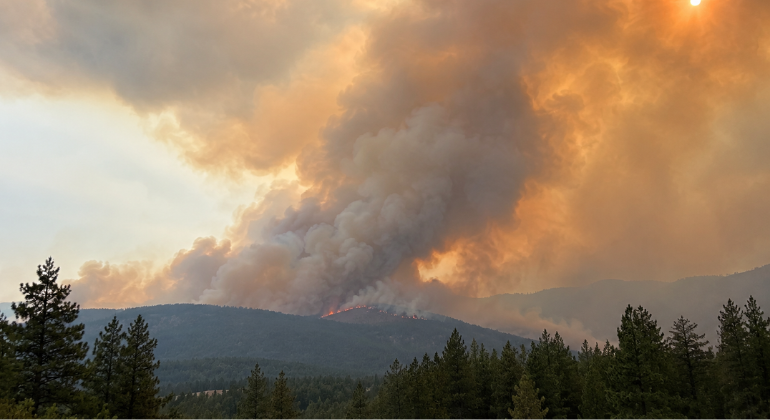
Fine particulate matter, commonly known as PM2.5, is an important indicator of air quality because these small airborne particles can penetrate deep into the respiratory system. However, emerging research suggests that measuring the concentration of particles may not tell the complete story about their potential health effects.
Two studies published in September 2026 by researchers associated with the Icahn School of Medicine at Mount Sinai examined whether fine particles originating from wildfires are associated with different health risks than particles from other pollution sources.
Published in Nature Communications and The Lancet Oncology, the investigations linked long-term wildfire-related PM2.5 exposure to increased risks of cardiovascular and respiratory hospitalisation and poorer survival among older adults diagnosed with lung cancer.
Importantly, the research found stronger associations per unit of PM2.5 concentration for wildfire-related particles than for PM2.5 attributed to other sources.
These findings raise an important environmental-monitoring question: Should air-quality assessments consider not only how much particulate matter is present, but also where it comes from?
For Trinidad and Tobago and the wider Caribbean, this research offers useful insights into smoke exposure, ambient air-quality monitoring and the development of more comprehensive environmental assessment programmes.
What is PM2.5, and why does its source matter?
PM2.5 refers to airborne particulate matter with an aerodynamic diameter of 2.5 micrometres or smaller.
These particles may originate from several sources, including:
- Road traffic and combustion engines
- Industrial and energy-production activities
- Burning vegetation and forest fires
- Agricultural activities
- Other combustion processes
- Secondary particle formation through atmospheric chemical reactions
Because PM2.5 is defined by particle size rather than chemical composition, two air samples containing identical PM2.5 mass concentrations may have different physical and chemical characteristics.
Smoke particles may contain varying mixtures of organic carbon, elemental carbon and other combustion-related substances. Their composition depends on the material burned, combustion conditions, atmospheric transport and chemical ageing.
This variability is important when interpreting potential health effects.
A PM2.5 measurement establishes the mass concentration of fine particles in the sampled air. By itself, it does not identify their source or demonstrate that a particular chemical constituent caused a health outcome.
Two major studies examine wildfire smoke PM2.5 health risks
Researchers led by Min Zhang, with Yaguang Wei as senior author, examined the association between long-term exposure to wildfire-related particulate pollution and two categories of human health outcomes.
The studies used large United States health datasets alongside spatial models estimating wildfire-specific and non-wildfire PM2.5 concentrations.
Study 1: Wildfire-related PM2.5 and cardiovascular and respiratory hospitalisation
The first study, published in Nature Communications on September 17, 2026, examined hospitalisation records from 20 US states covering 2006–2019.
The research included approximately:
- 57.3 million cardiovascular hospitalisation records
- 32.7 million pulmonary hospitalisation records
Researchers compared estimated two-year average concentrations of wildfire-specific and non-wildfire PM2.5 with hospitalisation risks for multiple conditions.
The study found that each 1 µg/m³ increase in two-year average wildfire-specific PM2.5 was associated with increases in hospitalisation risk ranging from approximately 10% for heart failure to 16% for asthma.
For equivalent concentration increases in non-wildfire PM2.5, the corresponding associations across the conditions examined ranged from approximately 4.7% to 8.5%.
The researchers also reported associations involving ischaemic heart disease, hypertension, cerebrovascular disease, pneumonia and other respiratory illnesses.
These figures represent statistical associations for specified long-term changes in modelled exposure. They are not predictions that any individual will experience the reported percentage increase during a single smoke event.
The study also found that non-wildfire PM2.5 remained an important health concern. Because non-wildfire pollution concentrations were generally much higher, its contribution to population exposure should not be underestimated.
Study 2: Wildfire pollution and survival among lung cancer patients
The second study, published in The Lancet Oncology on September 15, 2026, investigated long-term particulate exposure and survival among older adults diagnosed with lung cancer.
Researchers analysed 414,016 patients aged 65 years and older using the United States SEER-Medicare database.
The analysis included approximately 1.21 million person-years of follow-up and used three-year moving averages of estimated PM2.5 exposure.
Both wildfire-related and non-wildfire PM2.5 were associated with increased mortality risk following lung cancer diagnosis.
For each 1 µg/m³ increase in estimated PM2.5 exposure, the reported mortality hazard ratios were:
- Wildfire-related PM2.5: 1.0782, equivalent to an approximately 7.8% increase in the estimated hazard.
- Non-wildfire PM2.5: 1.0171, equivalent to an approximately 1.7% increase in the estimated hazard.
These estimates indicate stronger associations per unit of exposure for wildfire-related particles.
However, the typical wildfire-related concentrations were substantially lower than those from non-wildfire sources. The researchers also reported results using changes based on the observed variability of each pollution category.
Consequently, the larger wildfire association per microgram should not be interpreted as evidence that wildfire smoke contributed a greater total disease burden than all other PM2.5 sources combined.
The study estimated an average of 696 annual excess deaths attributable to wildfire-related PM2.5 in the analysed cohort, using its statistical attribution model.
That figure is a model-based estimate, not a directly counted number of deaths individually confirmed to have been caused by wildfire smoke.
How did researchers distinguish wildfire particles from other PM2.5?
A central feature of both investigations was the use of existing environmental exposure models.
Researchers linked residential ZIP code information to estimated concentrations of wildfire-related and total ambient PM2.5.
Non-wildfire PM2.5 was estimated by subtracting wildfire-related concentrations from total PM2.5.
The hospitalisation study used a self-controlled analytical design and statistical adjustments to address several potential confounding factors, including meteorological and neighbourhood characteristics.
The lung cancer study used a time-varying survival model and examined the relationship between estimated long-term exposure and all-cause mortality.
These approaches allowed researchers to investigate large populations across extensive geographic areas.
However, the studies did not continuously measure each participant’s personal exposure, nor did they chemically analyse every smoke event.
The findings therefore depend partly on the accuracy of the environmental exposure models.
Does wildfire smoke contain more toxic particles?
The research supports the possibility that wildfire-related PM2.5 can have greater health effects per unit of mass than PM2.5 from other sources.
It does not establish that every wildfire produces equally hazardous smoke or that a particular chemical component caused the observed differences.
Smoke composition can change substantially depending on whether a fire burns vegetation, peat, agricultural residues, manufactured materials or other fuels.
Atmospheric conditions also affect the characteristics of particles as smoke moves away from a source.
Potential explanations for source-specific differences include particle size distribution, organic chemical composition and the capacity of particles to produce oxidative or inflammatory responses.
These are scientifically plausible mechanisms supported by wider toxicological research, but the two Mount Sinai population studies did not establish which specific constituents produced their observed associations.
Identifying those constituents will require further chemical characterisation, toxicological investigation and exposure assessment.
What are the important limitations?
Both studies provide significant population-level evidence, but several qualifications are essential.
Observational evidence is not definitive proof of causation. Statistical adjustments reduce some sources of bias but cannot eliminate every potential confounding factor.
Exposure concentrations were estimated rather than continuously measured for each person. Residential location may not adequately represent exposure at work, during travel or inside buildings.
Wildfire-related pollution was modelled separately from other PM2.5. Errors in either exposure estimate may affect the calculated relationship.
Individual smoke composition was not established. The studies cannot determine whether a specific compound or mixture was responsible for the stronger associations.
The findings come from US populations. Differences in fire types, health characteristics, building conditions and pollution sources may influence their applicability elsewhere.
The hospitalisation study also used admission records that could include repeated hospitalisations of the same person. Its authors identified this as a limitation for statistical uncertainty.
These considerations do not negate the findings. They help define what the evidence supports and where additional investigation is necessary.
Implications for environmental air-quality monitoring
Conventional ambient air-quality monitoring provides essential information about pollutant concentrations and their variation over time.
PM2.5 monitoring can identify elevated particle concentrations, support regulatory assessment and reveal potential exposure periods.
However, PM2.5 concentration alone cannot reliably distinguish wildfire smoke from traffic emissions, industrial activities or other particle sources.
The Mount Sinai findings reinforce the potential value of monitoring programmes that combine particulate measurements with additional environmental information.
Depending on the objectives of an investigation, this may include:
- Continuous or event-based PM2.5 monitoring
- PM10 measurements to evaluate broader particulate conditions
- Meteorological monitoring, including wind direction and speed
- Review of known combustion activities and potential emission sources
- Comparison of monitoring results with background or reference locations
- Investigation of particle composition where scientifically justified
- Interpretation of short-duration pollution episodes alongside longer-term exposure patterns
Specialised chemical analysis or source-apportionment modelling may be required to support stronger source-attribution conclusions.
Simply detecting elevated PM2.5 does not establish that a wildfire or vegetation fire caused the increase.
What could the findings mean for Trinidad and Tobago and the Caribbean?
Trinidad and Tobago and other Caribbean territories have distinct environmental and atmospheric conditions.
Vegetation fires, agricultural burning, industrial emissions, traffic, regional aerosol transport and seasonal atmospheric influences are among the potential considerations when investigating particulate pollution.
The relative contribution of each source must be established using appropriate local evidence.
For example, a monitoring programme designed around a suspected vegetation-fire event may investigate whether particulate concentrations change with wind direction, fire timing or distance from potential source areas.
However, such patterns would initially support a source-attribution hypothesis, not necessarily prove it.
The United States research also raises questions about whether short, intense pollution episodes and repeated seasonal exposures should be characterised differently when evaluating potential health concerns.
Local fire conditions, pollutant composition, ambient concentrations and population exposure patterns would need to be measured or otherwise defensibly estimated before drawing conclusions about regional health risks.
The Trinidad and Tobago Environmental Management Authority provides a local regulatory framework through the Air Pollution Rules, 2014, which address ambient air-quality standards and specified emission sources.
The World Health Organization’s global air-quality guidelines provide additional health-based context, but international guidelines and local enforceable standards are not interchangeable.
An appropriate Caribbean assessment should consider the relevant regulatory requirements, study objectives, exposure duration and quality of the available data.
A practical framework for investigating smoke-related air pollution
Organisations assessing potential smoke impacts can benefit from a structured monitoring process.
1. Establish the investigation objective
Determine whether the programme is intended to evaluate ambient concentrations, characterise an event, investigate a potential source, assess exposure patterns or support regulatory compliance.
These objectives may require different sampling methods and monitoring durations.
2. Identify relevant locations and activities
Review possible combustion sources, nearby receptors, meteorological conditions and available historical air-quality information.
Sensitive receptor locations may include residential communities, schools and healthcare facilities.
3. Develop an appropriate monitoring strategy
Select the pollutants, instruments, sampling frequency and monitoring locations needed to answer the investigation questions.
Where source attribution is an objective, consider whether particle measurements alone will be sufficient.
4. Establish data-quality requirements
Monitoring plans should specify appropriate instrument performance, calibration or verification procedures, data completeness requirements and interpretation criteria.
Quality assurance is especially important when measurements from different instruments or monitoring locations are compared.
5. Interpret concentrations and potential sources separately
Evaluate measured concentrations against the applicable assessment criteria.
Investigate source contributions using defensible supporting evidence rather than assuming that every concentration increase results from a particular activity.
6. Communicate findings and uncertainty
A useful environmental assessment should distinguish measured results, modelled estimates, inferred source relationships and unresolved questions.
This allows organisations and regulators to make more informed decisions about follow-up monitoring or mitigation measures.
How Ecotox can support air-quality investigations
Ecotox Environmental Services Limited provides environmental and occupational monitoring services relevant to ambient air-quality assessments.
Its published capabilities include particulate monitoring, including PM2.5 and PM10, selected gaseous pollutant measurements, meteorological monitoring and customised environmental monitoring programmes.
These services can support industrial, commercial and environmental investigations where air-quality information is required for environmental management, baseline assessment or compliance-related purposes.
Where a project requires more specialised analysis, such as detailed smoke chemical speciation or advanced source-apportionment modelling, the scope should be established around the available analytical methods, appropriate laboratory arrangements and defined data-quality objectives.
Ecotox can help organisations plan appropriate sampling and monitoring approaches and interpret resulting environmental data within the limits of the methods used.
Learn more about Ecotox’s Ambient Air and Indoor Air Quality Testing Services.
Conclusion: Better air-quality intelligence requires more than particle concentration
The two September 2026 Mount Sinai studies provide evidence that the relationship between PM2.5 exposure and health outcomes may differ according to the origin of particulate pollution.
Their findings should not be interpreted as proof that every wildfire smoke event is more toxic than every other pollution event.
Instead, they demonstrate why source information, exposure duration, environmental conditions and methodological uncertainty deserve greater attention in air-quality assessments.
For Trinidad and Tobago and the wider Caribbean, the research supports a practical direction for environmental monitoring: retain reliable particulate measurements as the foundation, while improving the ability to understand potential emission sources and exposure patterns where justified.
The goal is not merely to collect more environmental data, but to generate information that supports defensible assessment and better-informed environmental management.
Sources
- Zhang, M., Castro, E., Qiu, M., et al. (2026). Cardiopulmonary hospitalization risks from wildfire-specific and non-wildfire PM2.5 in 20 US states. Nature Communications, 17, Article 9349. https://doi.org/10.1038/s41467-026-76974-7
- Zhang, M., Wisnivesky, J. P., Qiu, M., et al. (2026). Long-term exposure to wildfire-related PM2.5 and overall survival of older patients with lung cancer: a retrospective, registry-based cohort study. The Lancet Oncology, 27(10), 1304–1313. https://doi.org/10.1016/S1470-2045(26)00295-0
- Mount Sinai Health System. (September 17, 2026). Wildfire Smoke May Be More Harmful Than Other Air Pollution, Two Mount Sinai Studies Find. https://www.mountsinai.org/about/newsroom/2026/wildfire-smoke-may-be-more-harmful-than-other-air-pollution-two-mount-sinai-studies-find
- World Health Organization. (2021). WHO Global Air Quality Guidelines. https://www.who.int/publications/i/item/9789240034228
- Environmental Management Authority, Trinidad and Tobago. Air Pollution Rules and Regulatory Framework. https://www.ema.co.tt/ema-legal/legislation/
- United States Environmental Protection Agency. Technical Approaches for Sensor Data on the AirNow Fire and Smoke Map. https://www.epa.gov/air-sensor-toolbox/technical-approaches-sensor-data-airnow-fire-and-smoke-map