


Why Past Carbon Emissions Will Influence Climate Risks for Centuries
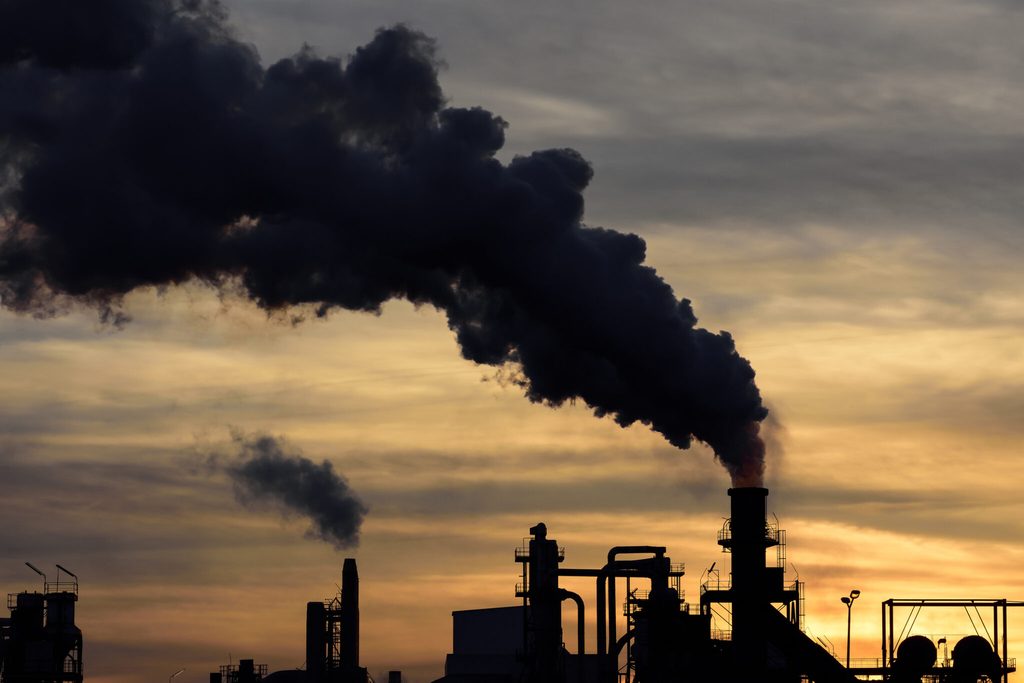
Greenhouse gases released decades ago are still influencing Earth’s climate, and new research suggests their effects will remain measurable for centuries.
A study published on September 23, 2026, in PLOS Climate by researchers at the University of Washington examined how historical emissions associated with major fossil-fuel and cement producers will contribute to global warming far into the future.
Using historical emissions records and climate simulations extending to the year 2500, researchers found that the warming associated with these emissions persists across different future emissions scenarios.
The findings reinforce an important distinction: reducing greenhouse gas emissions can limit additional warming, but it does not immediately eliminate the effects of emissions already released into the atmosphere.
For environmental professionals, industrial operators and policymakers, this research highlights why climate-related environmental decisions require both present-day emissions management and long-term assessment of environmental conditions.
For Trinidad and Tobago and the wider Caribbean, the study provides an opportunity to examine how emissions accounting, climate-risk assessment and environmental monitoring contribute to responsible development planning.
Why do historical carbon emissions still matter?
Carbon dioxide is the principal long-lived greenhouse gas associated with human-caused climate change.
When carbon-containing fuels are burned, carbon dioxide is released into the atmosphere. Cement production also generates carbon dioxide, including through the chemical conversion of limestone.
Some emitted carbon dioxide is subsequently absorbed by the oceans and terrestrial ecosystems.
However, not all atmospheric carbon dioxide is removed quickly.
The global carbon cycle contains processes operating over very different timescales. Consequently, a portion of an increase in atmospheric carbon dioxide can persist for centuries or longer.
This is why the long-term impact of carbon emissions depends substantially on the total quantity released over time, not simply the emissions occurring in a particular year.
The Intergovernmental Panel on Climate Change (IPCC) has established that cumulative carbon dioxide emissions are a key determinant of global warming.
Reducing net emissions is therefore essential to limiting additional warming, while some other climate-system changes, including sea-level rise, may continue for centuries.
What did the University of Washington researchers investigate?
The study, titled Centuries of global heating from Carbon Majors: Dependence on future emissions pathways, was conducted by Dargan M. W. Frierson and Lauren A. Henrie.
The researchers investigated how emissions linked to major historical fossil-fuel and cement producers would continue affecting global temperature under different possible futures.
Their analysis combined two principal scientific resources.
1. The Carbon Majors emissions database
The Carbon Majors database compiles historical production-linked emissions associated with major oil, gas, coal and cement producers.
It includes emissions from industrial operations as well as emissions generated when produced fossil fuels are ultimately burned.
The 2026 study examined 178 entities using historical carbon dioxide and methane emissions covering 1854–2024.
The database includes investor-owned companies, state-owned producers and nation-state entities.
Importantly, identifying emissions associated with a producer does not mean that all those emissions occurred directly at the producer’s facilities.
Much of the database represents the eventual combustion of fossil fuels produced by the entities.
That distinction is essential for interpreting emissions inventories and corporate responsibility.
2. The FaIR climate model
The researchers used the Finite Amplitude Impulse Response model, known as FaIR.
FaIR is a reduced-complexity climate model designed to simulate important relationships among greenhouse gas emissions, atmospheric concentrations, radiative forcing and global temperature.
The study used FaIR version 2.1.4 with calibration version 1.4.1.
Its calibrated ensemble included 841 model configurations, allowing the researchers to examine uncertainty associated with selected climate-system parameters.
The simulations extended to 2500.
Four future emissions scenarios were examined:
- SSP1-2.6: a relatively low-emissions pathway
- SSP2-4.5: an intermediate pathway
- SSP3-7.0: a higher-emissions pathway
- SSP5-8.5: a very high-emissions pathway
These scenarios are alternative modelling assumptions, not predictions that any particular future will occur.
How did the researchers calculate the contribution of historical emissions?
A central feature of the study was its use of counterfactual climate simulations.
A counterfactual simulation asks what the modelled climate would look like if a specified set of historical emissions had not occurred.
The researchers first simulated global climate using historical emissions and the four future pathways.
They then ran corresponding simulations in which carbon dioxide and methane emissions associated with the Carbon Majors entities from 1854 through 2024 were removed.
Comparing these two modelled histories allowed the researchers to estimate the temperature contribution associated with those historical emissions.
This is a modelling-based attribution method.
It is not the same as directly measuring the temperature effect of each company’s emissions in a laboratory or monitoring station.
What were the main findings?
Historical emissions have made a measurable contribution to global warming
The study found that emissions associated with the Carbon Majors dataset contributed approximately 0.66°C of modelled global warming in 2025.
This represents the estimated temperature difference between the modelled historical climate and a counterfactual climate without the selected emissions.
It does not represent total global warming in 2025.
The contribution persists for centuries
By 2500, the estimated warming contribution remained positive in all four future emissions scenarios.
In the lower-emissions SSP1-2.6 scenario, the median attributable temperature increase in 2500 was approximately 0.45°C.
The 5th–95th percentile model range was approximately 0.30–0.77°C.
In the much higher-emissions SSP5-8.5 scenario, the median attributable temperature increase was approximately 0.31°C, with a 5th–95th percentile range of 0.16–0.56°C.
These estimates indicate that a substantial portion of the temperature influence attributed to historical emissions can remain centuries after the emissions occurred.
Historical contributions remain identifiable under very different futures
The total amount of global warming varies considerably among the future emissions pathways.
However, the estimated contribution from the historical Carbon Majors emissions remains within a narrower range.
An important and potentially counterintuitive finding is that the attributed temperature contribution can be somewhat larger under lower future emissions.
The main explanation involves the approximately logarithmic relationship between carbon dioxide concentration and radiative forcing, combined with carbon-cycle feedbacks.
At higher background atmospheric concentrations, an additional increment of carbon dioxide produces a smaller change in radiative forcing than the same increment at lower concentrations.
This does not mean that higher emissions reduce climate risk.
Total projected global warming remains much greater under high-emissions scenarios.
The study instead examines the additional temperature contribution arising from a particular historical emissions dataset against different background climates.
Why is carbon dioxide’s persistence scientifically important?
Carbon dioxide does not behave like every other atmospheric pollutant.
Some pollutants are removed from the atmosphere relatively quickly through chemical reactions, deposition or other processes.
Carbon dioxide participates in a global carbon cycle involving the atmosphere, oceans, vegetation, soils and geological reservoirs.
Different processes remove or redistribute carbon over different timescales.
The University of Washington study used a carbon-cycle model that includes multiple reservoirs representing these different responses.
The long-lived component helps explain why historical emissions continue contributing to atmospheric greenhouse gas concentrations well after their initial release.
Methane behaves differently.
It has a much shorter atmospheric lifetime, commonly described as being approximately a decade, although the exact lifetime depends on atmospheric chemistry and environmental conditions.
The researchers included methane-related effects and interactions with atmospheric chemistry.
However, the persistent long-term warming contribution in their simulations was dominated by carbon dioxide-related processes.
Does this mean global warming will continue increasing even if emissions stop?
Not necessarily.
This distinction is important.
The continued existence of warming caused by past carbon dioxide emissions does not mean global average temperature must keep rising indefinitely after global net carbon dioxide emissions reach zero.
The IPCC indicates that reaching and sustaining global net-zero carbon dioxide emissions would approximately stabilise carbon dioxide-induced global warming.
The exact temperature response also depends on other greenhouse gases, aerosols, natural variability and broader climate-system processes.
However, even if global temperatures stabilise, some effects of past warming can continue evolving.
Sea-level rise is an especially important example.
Ocean warming, glacier melt and ice-sheet responses occur over long timescales. As a result, sea levels may continue rising for centuries even after global temperature stabilisation.
The key message is therefore twofold:
Reducing emissions limits additional warming, while adaptation remains necessary because the consequences of historical warming do not disappear immediately.
What are the limitations of the research?
The study provides a useful modelling framework but should not be interpreted as a precise forecast of the climate in the year 2500.
Several limitations are important.
Future emissions are uncertain
The simulations use established scenarios representing different possible emissions pathways.
Actual emissions will depend on technological development, energy systems, economic activity and future decisions.
The researchers do not claim to know which pathway the world will follow.
Reduced-complexity models simplify the climate system
FaIR reproduces important global climate relationships without resolving all the physical processes represented by more comprehensive Earth-system models.
The authors specifically identified uncertainties in the carbon-cycle response under very high-emissions scenarios.
They reported that the model moves substantially outside its calibrated range in some high-emissions simulations.
They recommended further investigation using other emissions-to-temperature models and Earth-system models.
The counterfactual stops removing emissions after 2024
The researchers removed historical Carbon Majors emissions through 2024 but retained the prescribed future emissions in both modelled histories from 2025 onward.
This modelling choice isolates the influence of the selected historical emissions.
It does not represent a future in which the same producers necessarily stop emitting after 2024.
The authors acknowledged that subsequent emissions would increase the eventual attributable contribution beyond the historical period considered.
Global temperature attribution is not local disaster attribution
The study estimates global temperature contributions.
It does not calculate the emissions contribution to a particular flood, hurricane, drought, coastal-erosion event or economic loss in Trinidad and Tobago.
Event-specific attribution requires additional research into the relevant climatic processes and observational evidence.
Scientific attribution does not automatically determine legal liability
The paper discusses the potential relevance of emissions attribution to climate accountability.
However, estimating an entity-associated contribution to global temperature is distinct from establishing legal responsibility for a specific loss.
Legal conclusions depend on applicable law, evidence, causation requirements and other factors beyond this climate model.
These qualifications are essential to responsible interpretation.
What does the research mean for environmental monitoring?
The study’s practical importance extends beyond emissions attribution.
It reinforces why environmental assessments should consider both historical environmental conditions and plausible future changes.
A conventional environmental baseline documents conditions at a particular site or within a defined study area.
Depending on the project, this may include:
- Surface-water and groundwater quality
- Coastal and marine environmental conditions
- Soil and sediment characteristics
- Ambient air quality
- Wastewater and stormwater conditions
- Sensitive ecological receptors
- Relevant meteorological or hydrological information
These measurements can support environmental impact assessments, industrial planning, monitoring and compliance programmes.
However, a historical environmental baseline does not necessarily describe the conditions a facility will experience throughout its future operating life.
For infrastructure expected to operate for several decades, climate-related factors may need to be evaluated alongside baseline environmental data.
Importantly, routine environmental sampling does not measure a company’s contribution to global warming.
Greenhouse gas inventory preparation, emissions modelling, environmental monitoring and climate attribution are different activities requiring different methods and expertise.
Their findings may inform one another, but the results should not be treated as interchangeable.
Implications for Trinidad and Tobago and the Caribbean
The Caribbean is particularly relevant to discussions of long-term climate risk because many communities, industries and infrastructure systems are connected closely to coastal and marine environments.
The IPCC’s Sixth Assessment Report identifies important concerns for small islands, including rising sea levels, ocean warming, heat extremes and potential changes in water availability.
These regional findings are supported by broader climate research. They were not directly calculated by the University of Washington Carbon Majors study.
Coastal and marine infrastructure
Ports, industrial facilities, coastal roads, drainage systems and shoreline developments may need to account for long-term changes in sea level and coastal conditions.
In Trinidad and Tobago, the Ministry of Works and Transport’s Coastal Protection Unit already has responsibilities relating to shoreline monitoring, erosion and coastal adaptation.
These are legitimate areas where long-term environmental data can contribute to planning.
However, a global warming-attribution estimate cannot be converted directly into a numerical sea-level projection for a particular Caribbean location.
Appropriate regional projections and site-specific information are required.
Water resources and environmental quality
Changes in rainfall distribution, drought conditions, flooding and stormwater behaviour can affect water-resource planning and environmental monitoring requirements.
Trinidad and Tobago’s National Integrated Water Resources Management Policy identifies climate adaptation, risk assessment, hydrological monitoring and resilient water infrastructure as important priorities.
For environmental assessments, this can create a need to distinguish between changes associated with site activities and changes associated with wider environmental variability.
Longer monitoring records and suitable reference information can improve that distinction.
Industrial operations and environmental management
Trinidad and Tobago’s oil, gas, petrochemical and other industrial activities make greenhouse gas emissions management an important consideration.
The country’s National Climate Change Policy, published by the Ministry of Planning in April 2026, provides a policy framework addressing both the drivers and impacts of climate change.
Industrial organisations may benefit from reliable emissions accounting alongside environmental monitoring.
For example, a facility could separately maintain:
- A greenhouse gas inventory documenting relevant emissions.
- An environmental monitoring programme recording site-specific conditions.
- A climate-risk assessment evaluating future physical risks.
- An environmental management plan identifying appropriate responses.
These are complementary processes.
The presence of environmental monitoring data does not automatically establish a source’s contribution to historical global climate change.
A practical environmental-monitoring framework for long-term planning
Organisations planning facilities or evaluating long-lived infrastructure can adopt a structured approach.
1. Define the environmental and climate questions
Determine whether the project requires emissions accounting, compliance monitoring, environmental baseline assessment, physical climate-risk analysis or some combination of these.
Different objectives require different datasets.
2. Establish existing environmental conditions
Collect defensible baseline data using appropriate sampling methods, monitoring periods and quality-assurance procedures.
For climate-sensitive projects, consider whether short-term observations adequately represent relevant seasonal variability.
3. Identify relevant climate-related hazards
Assess which hazards may affect the project, including heat, flooding, drought, coastal inundation or other location-specific concerns.
Select hazards based on the project and available regional evidence rather than assuming that all risks apply equally everywhere.
4. Incorporate future climate information
Use suitable climate projections and clearly document the emissions scenarios, time horizons and uncertainties.
A projection for 2050 or 2100 should not be presented as a guaranteed outcome.
5. Evaluate potential environmental interactions
Consider whether changing climate conditions could affect wastewater systems, stormwater management, receiving-water quality, containment arrangements or ecological receptors.
These interactions require appropriate site-level investigation.
6. Design an adaptive monitoring programme
Where warranted, establish monitoring arrangements that can identify meaningful environmental changes over time.
This may include periodic review of monitoring locations, analytical parameters, reference conditions and data trends.
7. Separate evidence from interpretation
Reports should clearly distinguish measured environmental conditions, inventory-based emissions estimates, modelled future scenarios and professional risk assessments.
This separation improves transparency and supports more defensible decisions.
How Ecotox can support environmental investigations
Ecotox Environmental Services Limited provides environmental analytical testing, specialised sampling and monitoring services relevant to industrial operations, infrastructure projects and environmental assessment programmes.
Its published service capabilities include sampling and analysis involving environmental matrices such as:
- Surface water, groundwater and stormwater
- Marine water and sediment
- Soil and sludge
- Wastewater and industrial effluent
- Selected environmental chemical and physical parameters
These capabilities can contribute to site-specific environmental baselines, investigations and compliance-related monitoring.
For projects considering longer-term climate variability, environmental monitoring can provide information about the condition of receiving environments and how measured parameters change through time.
Where projects require specialist climate modelling, greenhouse gas inventory assurance, climate-event attribution or quantitative future risk projections, the required expertise and methods should be established separately.
Ecotox can contribute environmental sampling, analytical results and interpretation relevant to the wider assessment without implying that routine analytical services independently quantify global climate impacts.
Learn more about Ecotox Specialised Sampling Services.
Conclusion: Historical emissions create a long-term environmental responsibility
The University of Washington study provides evidence that the climate influence associated with historical fossil-fuel and cement production emissions can remain measurable for centuries.
Using emissions histories extending to 2024, researchers estimated a contribution of approximately 0.66°C to global warming in 2025, with a substantial portion persisting in simulations through 2500.
The findings do not imply that future climate outcomes are fixed or that emissions reductions are ineffective.
On the contrary, reducing future greenhouse gas emissions remains fundamental to limiting additional warming.
What the research demonstrates is that historical emissions and future emissions both matter.
For Trinidad and Tobago and the wider Caribbean, this reinforces the value of combining effective emissions management with climate-informed planning and reliable environmental monitoring.
Responsible environmental management must account for both the conditions we measure today and the long-term changes that may affect the environments, industries and communities of tomorrow.
Sources
- Frierson, D. M. W., & Henrie, L. A. (2026). Centuries of global heating from Carbon Majors: Dependence on future emissions pathways. PLOS Climate, 5(9), e0001036. https://doi.org/10.1371/journal.pclm.0001036
- University of Washington. (September 23, 2026). Past emissions from top polluters will continue warming the planet for decades to come. https://www.washington.edu/news/2026/09/23/past-emissions-from-top-polluters-will-continue-warming-the-planet-for-decades-to-come/
- Carbon Majors. Carbon Majors Historical Emissions Database and Methodology. https://carbonmajors.org/Methodology
- Intergovernmental Panel on Climate Change. (2023). Climate Change 2023: Synthesis Report — Summary for Policymakers. https://www.ipcc.ch/report/ar6/syr/summary-for-policymakers/
- Intergovernmental Panel on Climate Change. (2021). Climate Change 2021: The Physical Science Basis — Chapter 12: Climate Change Information for Regional Impact and Risk Assessment. https://www.ipcc.ch/report/ar6/wg1/chapter/chapter-12/
- Intergovernmental Panel on Climate Change. (2022). Climate Change 2022: Impacts, Adaptation and Vulnerability — Chapter 15: Small Islands. https://www.ipcc.ch/report/ar6/wg2/chapter/chapter-15/
- Ministry of Planning, Economic Affairs and Development, Trinidad and Tobago. (April 9, 2026). The National Climate Change Policy of Trinidad and Tobago. https://www.planning.gov.tt/newsite/the-national-climate-change-policy-of-trinidad-tobago/
- Ministry of Public Utilities, Trinidad and Tobago. (2022). National Integrated Water Resources Management Policy. https://www.mpu.gov.tt/wp-content/uploads/2023/04/NIWRM-interior-for-approval.pdf
- Ministry of Works and Transport, Trinidad and Tobago. Coastal Protection Unit — Roles and Responsibilities. https://www.mowt.gov.tt/Divisions/Coastal-Protection-Unit/Who-We-Are