


Laboratory Plastic Waste Recycling: What Birmingham’s Glove Initiative Teaches Us
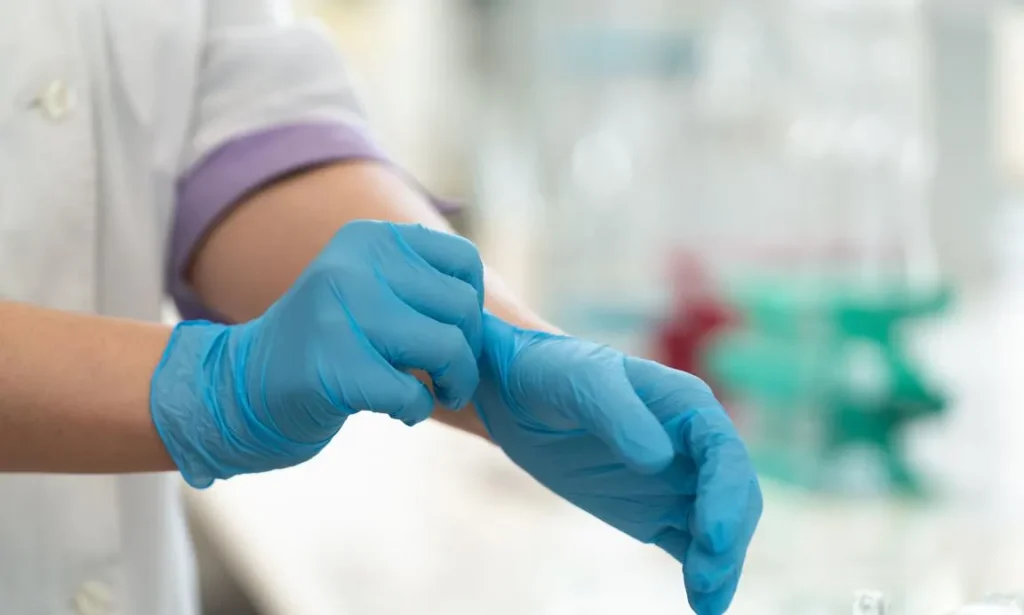
Scientific laboratories depend on disposable protective equipment, but growing attention is being given to what happens to these materials after use.
A sustainability initiative at the University of Birmingham is demonstrating how carefully managed laboratory-waste collection can create new opportunities for plastics recycling.
In September 2026, the university announced that its School of Chemistry and Collaborative Teaching Laboratory had collected 680 kilograms of disposable gloves for recycling through the RightCycle programme.
The collection represents more than 113,000 individual gloves that would otherwise have entered conventional disposal pathways.
Rather than treating these materials entirely as waste, the programme collects eligible, uncontaminated gloves for processing into plastic pellets used to manufacture other products.
The development demonstrates that laboratory sustainability does not always require a new material or complex manufacturing technology. In some cases, significant opportunities begin with better waste segregation, staff participation and reliable recycling arrangements.
However, an important principle must remain central to every laboratory recycling initiative:
Waste reduction must never compromise chemical safety, biological containment, environmental compliance or the reliability of scientific work.
For Trinidad and Tobago and the wider Caribbean, the Birmingham programme offers practical lessons for universities, testing laboratories, industrial facilities and other organisations seeking to improve waste management without weakening essential safety controls.
Why do laboratories generate so much disposable plastic?
Modern laboratories rely on a wide range of single-use consumables.
These products are important for preventing cross-contamination, protecting personnel and ensuring that analytical or experimental results remain reliable.
Common examples include:
- Disposable protective gloves
- Pipette tips and sample tubes
- Petri dishes and culture plates
- Centrifuge tubes
- Plastic reagent containers
- Disposable sampling accessories
- Protective clothing
- Packaging associated with laboratory supplies
Many consumables are manufactured from materials such as polypropylene, polystyrene, polyethylene or synthetic rubber formulations.
Some can potentially be recycled through appropriate processes.
However, the presence of chemical or biological contamination can make ordinary recycling inappropriate or unsafe.
Laboratory-plastic waste therefore presents a different management challenge from conventional household packaging.
The question is not simply whether the item is made from recyclable material.
It is whether the used item can safely enter an approved recycling process without exposing waste handlers, recycling personnel, communities or the environment to unacceptable hazards.
What has the University of Birmingham achieved?
The University of Birmingham joined the RightCycle laboratory-glove recycling programme in 2025.
The initiative was introduced within the School of Chemistry and the Collaborative Teaching Laboratory.
According to the university’s September 18, 2026 announcement, the first major collection recovered 680 kilograms of disposable laboratory gloves.
This was equivalent to more than 113,000 individual gloves.
The participating laboratories collect uncontaminated protective gloves separately from other waste.
The gloves are transferred to RightCycle service providers, which process the collected materials into pellets suitable for manufacturing other products.
Reported applications include outdoor furniture, playground surfaces and certain building materials.
The initiative is also connected to the university’s Green Laboratory Accreditation Scheme, which encourages improved environmental practices in research and teaching facilities.
The university reports that interest in the programme is expanding to other departments.
What does the collection demonstrate?
The reported collection provides evidence that an organised laboratory recycling initiative can recover a substantial quantity of material.
It also demonstrates the importance of coordination among researchers, laboratory technicians, institutional sustainability teams and external waste-management providers.
However, the announcement does not include a project-specific life-cycle assessment, a complete downstream material balance or independently verified emissions savings.
Consequently, the reported 680 kilograms should be understood as a collection and recycling-programme result rather than a quantified measure of environmental benefit.
How does the RightCycle recycling process work?
RightCycle is a specialist recycling programme for eligible non-hazardous personal protective equipment and related materials.
The general process involves four stages.
1. Identify eligible laboratory waste
Participating organisations determine which products and waste streams meet the programme’s acceptance criteria.
These criteria are essential because not all used protective equipment can safely enter the same recovery pathway.
2. Collect materials separately
Eligible gloves are deposited into designated collection containers.
The waste stream must remain separate from hazardous, infectious and other incompatible materials.
Clear labels and staff training help prevent incorrect disposal.
3. Transfer collected materials to recycling providers
Participating organisations arrange for the recovered materials to reach an authorised or otherwise suitable recycling partner.
The movement of waste may involve packaging, storage, collection and transportation requirements.
These requirements depend on the waste classification and jurisdiction.
4. Reprocess materials into usable products
The collected materials are sorted and processed into recycled feedstock.
This can include the production of pellets that manufacturers use in other plastic products.
Importantly, turning used gloves into other products is not the same as cleaning or sterilising them for reuse as protective gloves.
The programme is a materials-recovery initiative, not a method of restoring used gloves for laboratory protection.
What does peer-reviewed research tell us about laboratory plastic recycling?
The Birmingham initiative provides a useful operational example.
Separately, research published on September 21, 2026, in PLOS Sustainability and Transformation provides evidence about the technical and organisational feasibility of recycling single-use laboratory plastics.
The paper, titled From waste to resource: The untapped value of the separate collection of single-use laboratory plastics to enable recycling, examined laboratory-waste practices at the University of Konstanz in Germany.
Researchers investigated the composition of laboratory waste and tested a segregation system designed to recover recyclable polymers.
What materials were investigated?
The study focused particularly on polypropylene and polystyrene.
These polymers are widely used in laboratory consumables.
Polypropylene commonly appears in products such as reaction tubes and pipette tips.
Polystyrene is commonly used for Petri dishes, culture plates and some laboratory pipettes.
Researchers conducted a detailed one-week waste assessment involving three research groups and 25 researchers, equivalent to 19 full-time researchers.
They found that approximately 87% of the residual waste assessed consisted of potentially recyclable plastic by mass.
Polypropylene and polystyrene together represented approximately 81% of that residual waste.
These results suggest that segregation at the point of waste generation can create opportunities for recovering suitable materials.
However, they represent the investigated laboratory setting and cannot be assumed to describe every institution.
Why is separating polymers important?
Different polymers have different processing characteristics.
Mixing incompatible materials can make recycling more difficult and may affect the quality of the resulting product.
The German researchers therefore designed a system that separates major polymer groups at the point of disposal.
They also considered whether items had been contaminated and whether additional treatment was necessary before recycling.
The research demonstrated that recycling feasibility depends on the entire waste-management process, not simply the recyclability of the original polymer.
What did the researchers find about staff acceptance?
Forty-one laboratory users completed a feedback survey.
Approximately 85% reported that they would recommend the separate-collection system.
This suggests that carefully designed collection procedures can be acceptable to laboratory personnel.
However, the finding describes a relatively small survey group and should not be treated as a universal acceptance rate.
The researchers also identified practical challenges involving collection containers, additional staff time and preparation of certain consumables.
These operational details are important because an effective programme must fit safely into everyday laboratory workflows.
Can laboratory plastic recycling reduce greenhouse gas emissions?
Recycling can potentially reduce environmental impacts by avoiding certain disposal processes and creating feedstock for new materials.
However, the outcome depends on the complete waste-management system.
The 2026 PLOS Sustainability and Transformation study estimated the emissions-saving potential of diverting selected laboratory plastics from incineration into mechanical recycling.
The researchers modelled two scenarios.
One used the waste-disposal arrangements associated with the University of Konstanz, where material was sent to an incineration facility in Switzerland.
The second used average waste-incineration conditions in Germany.
Depending on the scenario, the estimated annual savings for the institution’s extrapolated waste quantities reached approximately 7.2–10.6 tonnes of carbon dioxide equivalent.
These were modelled potential savings, not direct measurements of emissions avoided at Birmingham.
The calculations considered factors including:
- Polymer quantities
- Emissions from waste incineration
- Energy recovered during incineration
- Recycling-process emissions
- Transportation
- Assumptions about material recovery
The findings show why recycling can have environmental advantages under certain conditions.
But the calculations should not be transferred directly to laboratories operating in different countries.
For example, a laboratory in Trinidad and Tobago may face different waste-processing technologies, electricity generation conditions, transport distances and recycling options.
A credible assessment must use information relevant to the actual local waste-management system.
Why recycling does not automatically mean environmental sustainability
A successful recycling collection is an important operational achievement.
It does not independently prove that the complete process has a lower environmental footprint than every alternative.
Several questions need to be answered.
What quantity was collected?
The weight of material placed into a recycling programme establishes the collection quantity.
What quantity was accepted by the recycler?
Material may be rejected because of contamination, incompatible polymers or other processing restrictions.
How much usable recycled feedstock was produced?
Sorting and reprocessing may create material losses.
What products were ultimately manufactured?
The practical value of recycling depends partly on whether recovered materials are used in viable products.
What resources were consumed during recovery?
Transport, sorting, cleaning, processing and manufacturing can require energy and other resources.
What disposal process was avoided?
The environmental outcome may differ depending on whether the alternative is landfill, incineration with energy recovery, or another managed process.
These considerations help distinguish waste collection from verified material recovery and environmental performance.
For organisations making public sustainability claims, maintaining an auditable record of the recycling process can improve credibility.
Why contamination controls must come first
Laboratory safety is the most important qualification when considering waste recycling.
A glove used only for a low-risk, non-hazardous task may be suitable for a specialist recycling programme.
A glove contaminated with hazardous chemicals or infectious material presents a different situation.
Similarly, radioactive contamination requires specialised controls that cannot be replaced by ordinary waste handling.
The specific classification depends on the substance, activity, potential exposure and applicable requirements.
Chemical contamination
Gloves that have been exposed to hazardous chemicals may retain residues even when they appear clean.
The absence of visible staining does not establish that a glove is uncontaminated.
The disposal decision should be based on the relevant chemical hazard assessment and established laboratory procedures.
Biological contamination
Biological material may require validated decontamination and handling procedures before certain disposal or recovery options can be considered.
Some research environments use autoclaving to inactivate specified biological hazards.
However, autoclaving does not generally remove hazardous chemical contamination.
It also does not automatically make an item eligible for a particular recycling programme.
Any proposed recovery route must comply with the relevant biosafety requirements and recycler acceptance criteria.
Radioactive materials
Items that may be contaminated with radioactive substances require appropriate radiation-safety controls.
They should not enter ordinary recycling streams unless the applicable regulatory requirements and specialised clearance procedures have been satisfied.
Why visual inspection alone is insufficient
A used glove may look clean despite having been exposed to a hazardous substance.
Conversely, not every visibly stained item necessarily has the same hazard classification.
The safest programme is one based on documented waste-generation activities, clear acceptance criteria and staff training.
Routine recycling should never be used as a shortcut to avoid hazardous-waste disposal obligations.
What can laboratories do before introducing a recycling programme?
A recycling initiative should begin with a structured assessment of existing waste-management practices.
Waste characterisation
Determine which materials are being discarded, their approximate quantities and their potential contamination.
Relevant considerations include polymer type, chemical exposure, biological hazards and existing waste classification.
Source segregation
Identify locations where eligible materials can be separated before they become mixed with incompatible waste.
Source segregation often reduces the difficulty and cost of subsequent processing.
Collection design
Provide clear containers, labels and instructions.
Collection points should be conveniently located without interfering with safe laboratory operations.
Staff training
Researchers, analysts, technicians, cleaners and waste-handling personnel should understand which materials are accepted and which must remain in controlled disposal streams.
Recycling-provider verification
Before starting, determine whether a suitable recycling provider can accept the material under the applicable regulatory conditions.
A provider should be able to describe its acceptance requirements and processing arrangements.
Performance monitoring
Establish measures that can evaluate whether the programme is achieving its objectives.
These may include the quantities generated, separately collected, rejected and successfully recovered, alongside relevant costs and environmental indicators.
This approach allows laboratories to assess performance using actual data rather than assumptions.
Why reducing waste remains preferable to recycling it
Recycling is one part of responsible waste management.
Waste prevention and reduction should also be considered where they can be achieved without compromising laboratory requirements.
For example, an institution may review:
- Unnecessary packaging
- Excess purchasing and expired supplies
- Opportunities for appropriately validated reusable equipment
- Inventory-management practices
- Avoidable duplication of consumables
- Procurement specifications
- Opportunities to share suitable laboratory equipment
However, replacing disposable items with reusable products is not automatically appropriate.
Some procedures require single-use materials to maintain sterility, prevent carryover or ensure analytical accuracy.
Reusable alternatives may require washing, disinfection, sterilisation and additional energy or water consumption.
A responsible decision must consider both operational requirements and environmental performance.
The objective is to reduce avoidable waste while preserving the integrity of scientific work.
What does this mean for Trinidad and Tobago and the Caribbean?
The University of Birmingham initiative provides a useful model for considering laboratory-waste recycling in the Caribbean.
Potentially relevant organisations include:
- University teaching and research laboratories
- Environmental testing laboratories
- Industrial quality-control laboratories
- Food and microbiology laboratories
- Healthcare laboratories
- Pharmaceutical and manufacturing facilities
- Research and technical-training institutions
These organisations may generate significant quantities of disposable protective equipment and plastic consumables.
However, the volume and composition of their waste should be measured rather than assumed.
Local recycling capacity
A successful programme requires a suitable destination for collected materials.
Some recycling processes may not be available locally or may only accept specified materials.
Where off-island transport is proposed, organisations must consider logistics, costs and applicable waste-shipment rules.
The feasibility of any programme depends on the actual recovery infrastructure.
Environmental regulations
Trinidad and Tobago’s Environmental Management Authority administers the Waste Management Rules, 2021, which came into effect on May 31, 2022.
The rules establish a permitting framework addressing specified waste-generation and waste-handling activities, including recovery and recycling.
They distinguish between hazardous and non-hazardous waste and provide requirements depending on the regulated activity and waste quantity or classification.
Laboratories considering a recycling programme must therefore determine which waste streams may be handled as non-hazardous material and which require controlled disposal.
The Birmingham initiative does not establish the legal acceptability of an identical programme in Trinidad and Tobago.
Local requirements must be assessed separately.
Environmental responsibility
Poorly managed laboratory waste can create unnecessary disposal burdens and, in some circumstances, environmental contamination concerns.
However, the presence of laboratory waste does not automatically establish contamination of surrounding soil, water or other environmental media.
Where a facility presents a credible environmental exposure concern, an appropriate investigation may include targeted sampling and analytical testing.
Such testing should address defined investigation questions rather than treating every recycling project as a contaminated-site problem.
A practical seven-stage laboratory waste-recycling framework
Organisations considering a programme can use the following structure.
Stage 1: Conduct a baseline waste audit
Measure the types and quantities of waste generated over a representative period.
Record disposal routes and relevant costs.
Stage 2: Classify waste according to hazard
Identify materials that are non-hazardous and potentially eligible for recycling.
Keep hazardous chemical, infectious and other controlled waste streams within approved management systems.
Stage 3: Verify the available recycling pathway
Confirm the recycler’s material specifications, contamination restrictions, processing method and required documentation.
Stage 4: Develop laboratory procedures
Prepare collection instructions, labels, responsibilities and safety controls.
These should be integrated into existing laboratory management systems.
Stage 5: Implement a controlled pilot
Begin with a limited set of laboratories or waste streams.
Collect data on participation, segregation errors and logistics.
Stage 6: Measure actual recovery
Track the mass collected, accepted and rejected.
Where available, obtain downstream processing records and evidence of material recovery.
Stage 7: Review environmental and commercial performance
Evaluate costs, avoided disposal quantities and relevant environmental impacts.
Expand the programme only when the pilot demonstrates acceptable safety, operational feasibility and a defensible recovery pathway.
A well-managed programme should prioritise traceability and compliance over headline recycling quantities.
How Ecotox can support laboratory waste management
Ecotox Environmental Services Limited provides environmental analytical testing and consultancy services relevant to waste management, environmental compliance and laboratory operations.
Its published capabilities include waste characterisation, specialised environmental sampling, analytical testing and project-based consultancy.
Ecotox’s consultancy services also identify solid-waste management strategies, laboratory management and Good Laboratory Practices as areas of expertise.
Depending on the scope of a project, these capabilities can support:
- Laboratory-waste characterisation and investigation
- Environmental-management planning
- Waste-handling and disposal reviews
- Environmental compliance-related assessment
- Analytical-testing strategies for relevant waste constituents
- Sampling and monitoring where environmental exposure pathways justify investigation
- Interpretation of environmental analytical data
- Laboratory-management and waste-reduction initiatives
Where specialist polymer identification, recycling-process validation, waste decontamination or greenhouse gas life-cycle modelling is required, the scope should be established with appropriately qualified service providers.
Environmental testing also cannot substitute for a formal chemical hazard classification or the regulatory authorisation required for a particular waste stream.
Ecotox can contribute to environmental investigation and management within its verified capabilities, alongside relevant specialist expertise.
Learn more about Ecotox Consultancy and Speciality Projects.
Conclusion: Sustainable laboratories begin with responsible waste management
The University of Birmingham’s collection of 680 kilograms of disposable laboratory gloves demonstrates that meaningful material recovery can begin with practical changes to everyday laboratory operations.
The initiative shows the value of staff participation, clear collection procedures and partnerships with specialist recyclers.
Independent peer-reviewed research published in September 2026 provides further evidence that source segregation can improve the recovery potential of suitable laboratory plastics.
However, collection quantities, actual recycling yields, environmental savings and regulatory compliance are separate measures of success.
Laboratories should not assume that all plastic waste can be recycled or that all recycling programmes produce the same environmental benefits.
For Trinidad and Tobago and the wider Caribbean, the opportunity is to develop more responsible laboratory-waste systems grounded in reliable waste data, appropriate safety controls and verified recovery arrangements.
Ultimately, a sustainable laboratory is not one that simply recycles more waste.
It is one that prevents unnecessary waste, segregates materials correctly, protects people and the environment, and can demonstrate what happens to its materials after they leave the laboratory.
Sources
- University of Birmingham. (September 18, 2026). University of Birmingham tackles laboratory plastic waste through pioneering recycling scheme. https://www.birmingham.ac.uk/news/2026/university-of-birmingham-tackles-laboratory-plastic-waste-through-pioneering-recycling-scheme
- Schell, B. R., Emmerich, A.-K., Nazneen, A., Widenmeyer, M., Weidenkaff, A., & Bruns, N. (2026). From waste to resource: The untapped value of the separate collection of single-use laboratory plastics to enable recycling. PLOS Sustainability and Transformation, 5(9), e0000225. https://doi.org/10.1371/journal.pstr.0000225
- University of Birmingham. Sustainable Research — Green Laboratories. https://www.birmingham.ac.uk/about/our-approach-to-sustainability/sustainability-on-campus/sustainable-research
- Kimberly-Clark Professional. The RightCycle Program — Frequently Asked Questions. https://www.kcprofessional.com/-/media/global/content-hub/documents/204265933_pdf.pdf
- Woods Hole Oceanographic Institution. Glove Recycling Program. https://web.whoi.edu/sustainability/initiatives/waste-recycling/recycling/glove-recycling-program/
- Environmental Management Authority, Trinidad and Tobago. Waste Management Rules, 2021 and Waste Management (Fees) Regulations, 2021. https://www.ema.co.tt/our-environment/waste/
- Ecotox Environmental Services Limited. Consultancy and Speciality Projects. https://ecotoxes.ani.quest/services/consultancy__speciality/
- Ecotox Environmental Services Limited. Environmental Analytical Testing. https://ecotoxes.ani.quest/services/environmental_analytical_testing/