


Toxic Metals After Wildfires: What Maui Research Reveals About Long-Term Environmental Exposure
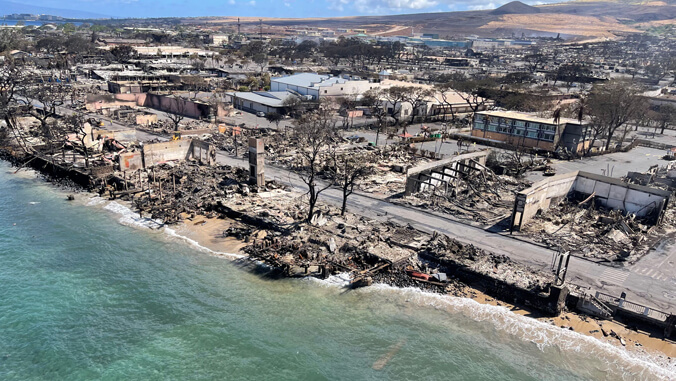
The disappearance of wildfire smoke does not necessarily mean that every environmental exposure concern has ended.
New research from the University of Hawaiʻi suggests that the consequences of destructive fires involving homes, infrastructure and developed land may extend well beyond the immediate emergency.
A study published on September 28, 2026, in the Proceedings of the National Academy of Sciences (PNAS) examined metal exposure and lung function among 1,400 adults in Maui, Hawaiʻi, following the devastating August 2023 wildfires.
Researchers identified substantially elevated urinary concentrations of several metals compared with US population reference data. They also found that greater exposure to combinations of metals was statistically associated with abnormal lung-function measurements.
The study raises an important environmental-management question:
When a major fire destroys a developed community, should environmental investigations continue after the flames are extinguished and airborne smoke has dispersed?
For Trinidad and Tobago and the wider Caribbean, this research provides a useful framework for understanding the importance of ash characterisation, soil and sediment testing, potential contaminant movement, and appropriate environmental monitoring following destructive fires.
However, the findings require careful interpretation. The study did not establish that the 2023 wildfire caused every elevated metal concentration or respiratory abnormality identified among participants.
Why urban wildfires create different environmental challenges
Wildfires are commonly associated with burning trees, grasses and other vegetation.
But fires that extend into developed communities can involve a considerably more complex mixture of combustible materials.
These events are often described as wildland–urban interface fires, where vegetation and developed areas meet or interact.
Depending on the affected location, combustible materials may include:
- Homes and other buildings
- Treated timber and construction materials
- Vehicles and vehicle components
- Electrical wiring and electronic equipment
- Plastics, furnishings and household products
- Industrial materials and stored chemicals
- Previously contaminated soils and deposited dust
When these materials burn, they may produce ash, gases, particles and other residues with chemical characteristics that differ from those associated with vegetation alone.
Fire can also disturb contaminants already present in the environment.
For example, metals deposited through previous industrial activity, agricultural practices or historical land use may become redistributed through soil disturbance, wind, runoff and debris-handling activities.
This creates an important distinction.
A contaminant detected after a wildfire may have been generated by the fire, released from a burned material, mobilised from an existing source, or introduced through another exposure pathway.
Identifying which explanation applies requires appropriate investigation.
What did the University of Hawaiʻi researchers investigate?
The study, titled Climate-amplified wildland–urban interface disasters create persistent internal metal mixtures associated with pulmonary impairment, was conducted by researchers involved in the Maui Wildfire Exposure Study (MauiWES).
The investigators examined adults living in communities affected by or located near the August 2023 Maui wildfires.
Participants were recruited between January 2024 and February 2025, approximately six to eighteen months after the disaster.
The research combined biological measurements with standardised respiratory assessments.
Study population
The wider study enrolled 1,837 adults.
Of those participants, 1,791 completed spirometry, and 1,647 provided urine samples for metal analysis.
After applying the study’s eligibility and data-completeness requirements, the final analytical cohort contained 1,400 adults.
The median participant age was 47 years, and approximately 61% were female.
An important limitation is that the number of participants with acceptable test results varied across the different lung-function measurements.
For example, after respiratory-test quality restrictions, the researchers reported 790 valid observations for one lung-function measure, 737 for another, and 624 for certain additional measures.
Consequently, the study should not be interpreted as having 1,400 fully usable observations for every reported lung-function association.
Metal analysis
Researchers collected urine samples and analysed them for multiple trace elements.
Twenty-seven urinary metals were initially measured, with 24 retained for the final analysis.
The study used inductively coupled plasma triple quadrupole mass spectrometry, a laboratory technique capable of measuring trace elements at low concentrations.
Urinary biomonitoring provides information about substances that have entered the body through one or more exposure pathways.
However, urinary concentrations do not independently identify the original environmental source.
They also do not establish how much of a particular substance entered the body through inhalation, ingestion or another route.
Lung-function assessment
Participants underwent spirometry, a standardised breathing test used to assess aspects of pulmonary function.
The study evaluated several measurements, including:
Forced vital capacity (FVC): The volume of air a person can forcibly exhale after taking a full breath.
Forced expiratory volume in one second (FEV1): The volume of air exhaled during the first second of a forced breath.
FEV1/FVC ratio: A measurement used in the assessment of airflow limitation.
Forced expiratory flow between 25% and 75% of FVC (FEF25–75): A measure describing airflow during the middle portion of forced exhalation.
Researchers evaluated whether these measurements fell below established lower limits of normal.
The spirometry assessments followed recognised American Thoracic Society and European Respiratory Society quality criteria.
What metals were detected?
The research identified notable differences between urinary metal concentrations measured in Maui participants and concentrations reported in US population biomonitoring data.
The investigators used the National Health and Nutrition Examination Survey (NHANES) as a comparison dataset.
Several metals were elevated relative to the population reference concentrations.
| Metal | Reported comparison with US population data |
|---|---|
| Antimony | Approximately 40 times higher |
| Manganese | Approximately 3.8 times higher |
| Barium | Approximately 2.3 times higher |
| Arsenic | Approximately 2.2 times higher |
These findings deserve attention, but they must be interpreted correctly.
The values are comparisons between population-level urinary concentrations. They do not indicate that the measured concentrations exceeded an established clinical toxicity threshold.
The underlying comparison used raw urinary concentrations, without adjustment for creatinine or specific gravity, to maintain consistency between the datasets.
Differences in urine dilution and population characteristics may influence the interpretation of such comparisons.
The results also do not demonstrate that the wildfire caused the observed elevation.
Some exposures may have originated from sources operating before the disaster.
What do these metals tell us about environmental exposure?
The metals identified in the research can occur in different environmental settings.
Antimony
Antimony is used in several industrial applications, including some flame-retardant systems, alloys and other manufactured materials.
It can also occur naturally.
The approximately 40-fold comparison reported in the Maui study is notable, but the magnitude of that comparison should not be mistaken for a 40-fold increase in disease risk.
The study did not establish which specific source contributed the antimony measured in participants.
Arsenic
Arsenic can occur naturally in rocks and soils and may also be associated with historical agricultural and industrial activities.
Certain treated materials and combustion residues can provide additional potential pathways.
However, measuring total urinary arsenic does not necessarily distinguish between different chemical forms of arsenic.
This matters because the toxicological significance of arsenic depends partly on its chemical form.
For some investigations, compound-specific arsenic speciation may therefore be necessary.
Cadmium
Cadmium may be associated with some industrial processes, batteries, pigments and other environmental sources.
It can also enter human exposure pathways through food and tobacco smoke.
In the Maui research, cadmium was among the metals contributing to statistical associations between metal mixtures and abnormal lung function.
Its presence cannot be attributed to a particular fire-related source without supporting evidence.
Manganese, barium and copper
These elements occur in environmental and industrial settings.
Manganese and copper also have essential biological functions, although excessive exposure under particular conditions may be harmful.
Their environmental and health significance depends on concentration, chemical form, exposure pathway and duration.
The scientific task is therefore not simply to identify a metal.
It is to establish where it occurs, how exposure may happen, and whether the measured circumstances create a meaningful risk.
How were metal mixtures associated with lung function?
Environmental exposures rarely involve a single substance.
People may encounter mixtures of metals, airborne particles and other chemicals through several environmental pathways.
The Maui researchers therefore used three complementary statistical approaches to investigate combined metal exposure.
One approach, weighted quantile sum regression, examined whether higher values in a composite metal-exposure index were associated with increased odds of abnormal lung-function measurements.
The researchers reported odds ratios of:
- 1.71 for FVC below the lower limit of normal.
- 1.53 for FEV1 below the lower limit of normal.
- 1.83 for the FEV1/FVC ratio below the lower limit of normal.
- 1.84 for FEF25–75 below the lower limit of normal.
Arsenic, cadmium and copper were important contributors to the mixture index in these results.
These findings indicate statistical associations.
They do not mean that each metal independently produced the reported increase in risk, nor do they establish that individual participants developed respiratory impairment because of wildfire-related contamination.
Other factors, including previous respiratory conditions, tobacco exposure, occupational exposures and environmental circumstances, may influence pulmonary function.
The study’s observational design cannot eliminate every possible explanation.
Why the absence of pre-fire data matters
One of the most important limitations of the study is the absence of comparable biomonitoring measurements from before the August 2023 fires.
Without those measurements, researchers could not determine how much each participant’s urinary metal concentration changed because of the disaster.
This limits the ability to separate several possibilities:
- Exposure that existed before the wildfire.
- New contaminants generated during combustion.
- Previously deposited contaminants disturbed by the fire.
- Continued exposure through post-fire dust, debris or environmental contact.
- Other unrelated environmental, dietary or occupational exposures.
The study provides an important observation: elevated biomarkers were present among participants assessed months after the disaster.
However, a single post-fire measurement cannot establish that a person’s metal burden remained continuously elevated throughout that period.
Longitudinal measurements are needed to evaluate how concentrations change over time.
This distinction is particularly important when designing environmental monitoring and recovery programmes.
What did researchers find about geographic exposure patterns?
The University of Hawaiʻi investigators identified differences in metal concentrations and pulmonary outcomes across Maui.
Participants from Lahaina demonstrated relatively elevated concentrations of certain metals, including arsenic and cadmium.
Other areas, including Wailuku/Kahului, showed different metal profiles, with relatively elevated concentrations of copper, iron and molybdenum.
These differences suggest that exposure cannot necessarily be explained by proximity to a single burn area.
Environmental conditions may differ across locations because of land-use history, soil characteristics, local activities, wind patterns, cleanup operations and other factors.
The findings therefore support a more detailed approach to environmental investigation.
Rather than assuming that every elevated metal concentration originated in the wildfire, researchers must investigate the possible sources and transport pathways relevant to each location.
What did environmental ash testing reveal?
The human biomonitoring study is supported by a broader body of environmental investigation following the Maui fires.
The Hawaiʻi Department of Health conducted separate ash-sampling programmes in affected areas.
In Lahaina, ash samples collected from burned properties in November 2023 contained elevated concentrations of several substances, including arsenic, lead, antimony, cobalt and copper, relative to the state’s applicable screening criteria.
Some concentrations exceeded Hawaiʻi’s environmental action levels used for preliminary hazard evaluation.
These findings established that potentially hazardous substances were present in certain post-fire ash samples.
Authorities subsequently implemented measures including debris removal, ash stabilisation and confirmatory soil sampling.
However, the ash investigation and the urinary biomonitoring study involved different measurements.
Finding a metal in fire ash does not prove that the same ash was the source of the metal measured in a particular person’s urine.
Establishing such a connection would require additional investigation.
The Hawaiʻi screening criteria should also not be treated as regulatory limits applicable to Trinidad and Tobago.
How can contamination remain an environmental concern after a fire?
Following a destructive fire, residues can remain in several environmental media.
Depending on the materials burned and site conditions, these may include:
Ash and debris: Materials remaining at the site of combustion may contain metals, organic contaminants or other substances requiring characterisation.
Surface soil: Fire residues may settle on or mix with existing soils, potentially changing their composition.
Settled dust: Contaminated particles may remain on surfaces and can become airborne again when disturbed.
Stormwater: Rainfall may mobilise ash, sediment and associated contaminants into nearby drains, rivers or receiving environments.
Sediment: Material transported into watercourses or coastal environments may accumulate in depositional zones.
Groundwater: In certain settings, contaminants may migrate through soil into underlying groundwater, depending on chemical properties, geology and hydrological conditions.
Each pathway is a possibility requiring site-specific evidence.
The presence of fire debris alone does not establish that groundwater or nearby coastal waters have become contaminated.
Likewise, elevated concentrations in one environmental medium do not necessarily demonstrate harmful exposure in another.
Appropriate sampling is needed to determine which pathways are active.
Why air monitoring alone may be insufficient
Ambient air-quality monitoring is essential during fires and debris-removal operations.
It can provide information about airborne particulate concentrations, selected contaminants and changes in air quality.
However, it cannot answer every question about post-disaster exposure.
For example, an air-monitoring programme may identify declining particle concentrations after smoke disperses while ash and debris remain on the ground.
Subsequent disturbance may create new opportunities for exposure or environmental transport.
A more comprehensive environmental investigation may therefore consider several complementary forms of evidence:
- Ambient air and particulate monitoring
- Ash and debris characterisation
- Surface-soil sampling
- Settled-dust investigation
- Stormwater and surface-water sampling
- Sediment assessment
- Groundwater investigation, where warranted
- Occupational exposure assessment
- Human biomonitoring through qualified healthcare or public-health programmes
These activities have different objectives and should be selected according to the circumstances of the incident.
Human biomonitoring is not interchangeable with environmental sampling, and it requires appropriate clinical, laboratory and ethical oversight.
What does this mean for Trinidad and Tobago and the Caribbean?
The Maui findings offer useful lessons for environmental planning in the Caribbean.
Trinidad and Tobago has developed residential, commercial, agricultural and industrial environments where fires or other disruptive events could create site-specific environmental investigation needs.
The research is especially relevant when considering incidents involving combustible infrastructure or environments with a documented history of potentially contaminating activities.
However, the Maui results do not establish that comparable contamination is present at any location in Trinidad and Tobago.
Local conclusions require local evidence.
Industrial and commercial fires
Where fires affect industrial facilities, chemical-storage areas or other commercial operations, environmental investigations may need to consider the substances stored or processed before the incident.
A credible assessment should begin with available site inventories, historical records, operational information and the circumstances of the fire.
Those details can guide the selection of analytical parameters.
A generic heavy-metal panel may not capture every contaminant relevant to a particular incident.
Agricultural and historical land use
Previous agricultural or industrial activities may influence the composition of soil and sediment.
If a disturbance occurs, historical land-use information can help identify whether a contaminant may have existed before the event.
This avoids prematurely attributing every detected substance to the latest incident.
Heavy rainfall and stormwater transport
Trinidad and Tobago’s seasonal rainfall makes runoff assessment an appropriate consideration for disturbed sites.
Where ash or contaminated sediment is present, rainfall may create a potential pathway for material to enter drainage systems and receiving waters.
The significance of that pathway depends on the site’s characteristics, the contaminants present, runoff conditions and available evidence.
A properly designed investigation may therefore include monitoring before and after significant rainfall events where justified.
Coastal and marine receiving environments
In areas where drainage systems discharge toward rivers, wetlands or coastal waters, sediment and water sampling may help determine whether contaminants have moved beyond an affected site.
The need for such monitoring should be established using a site-specific conceptual model.
Potential contaminant transport should not be presented as demonstrated coastal contamination without analytical evidence.
Environmental regulations and responsible assessment
Trinidad and Tobago’s Environmental Management Authority provides the regulatory framework relevant to a range of environmental activities.
The Air Pollution Rules, 2014, address specified air emissions and regulatory requirements.
The Water Pollution Rules, 2019, establish requirements relating to regulated water-pollution discharges.
Environmental assessment, monitoring and permit obligations depend on the applicable rules, facilities, activities and circumstances.
Following a destructive incident, the appropriate investigation should consider applicable environmental requirements and any relevant instructions issued by regulatory or emergency-management authorities.
Not every fire automatically triggers the same sampling or permitting obligations.
The investigation must be designed around the particular event.
A practical framework for post-fire environmental investigation
The Maui research highlights the value of a structured, evidence-led approach.
Step 1: Establish the incident history
Determine what burned, where the incident occurred and which materials may have been affected.
Review available information about site operations, storage activities and historical land use.
Identify any potential pre-existing contamination.
Step 2: Develop a conceptual site model
Identify potential sources, transport pathways and environmental receptors.
A conceptual site model helps determine whether contaminants could move through dust, runoff, soil, sediment or groundwater.
It should distinguish confirmed information from hypotheses requiring investigation.
Step 3: Define the data-quality objectives
Determine the questions the sampling programme must answer.
For example:
- Which contaminants are present in ash or soil?
- Are concentrations materially different from reference areas?
- Is contaminated material moving during rainfall?
- Are receiving waters or sediments affected?
- Is further delineation or remediation necessary?
The selected analytical methods should match these questions.
Step 4: Design representative sampling
Identify appropriate locations, depths, sampling frequencies and sample types.
Consider both potentially affected areas and suitable reference locations.
Where contamination is unevenly distributed, a small number of samples may not adequately describe the site.
Step 5: Establish laboratory quality assurance
A defensible sampling and analytical programme should specify:
- Sample containers and preservation requirements
- Chain-of-custody documentation
- Relevant analytical methods
- Appropriate reporting and detection limits
- Field and laboratory blanks, where required
- Duplicates and other quality-control samples
- Calibration and instrument-performance requirements
- Data review and validation procedures
For metal analysis, the required method may differ according to whether the objective is total concentration, dissolved concentration, bioaccessible fraction, chemical speciation or another endpoint.
These distinctions must be determined before sampling.
Step 6: Evaluate exposure and environmental significance
Interpret results against the applicable regulatory or risk-based assessment criteria.
A detected concentration is not automatically a regulatory exceedance.
A screening-level exceedance does not by itself establish that harm has occurred.
Where relevant, the assessment should consider exposure frequency, contaminant mobility, toxicity, bioavailability and the characteristics of potentially affected receptors.
Step 7: Implement follow-up monitoring where justified
If the investigation identifies ongoing sources, mobile contaminants or unresolved exposure pathways, additional sampling may be required.
Monitoring can help establish whether environmental conditions are improving, stable or deteriorating.
Follow-up work should be linked to clear decision criteria rather than repeated sampling without a defined objective.
How Ecotox can support post-fire environmental investigations
Ecotox Environmental Services Limited provides environmental analytical testing, sampling and monitoring services relevant to the investigation of potentially contaminated sites.
Its published analytical-testing capabilities include water, wastewater, soil, sediment, ash, sludge and other environmental matrices.
The company’s service information also identifies heavy-metal analysis, waste characterisation and specialised sampling capabilities.
Depending on the project requirements, these services can support:
- Post-fire ash and debris characterisation
- Soil and sediment investigations
- Heavy-metal testing of appropriate environmental samples
- Surface-water and stormwater monitoring
- Groundwater sampling
- Environmental baseline and reference sampling
- Waste characterisation
- Environmental compliance investigations
- Investigation-design and analytical-data interpretation
Where an investigation requires specialised chemical speciation, advanced human biomonitoring, clinical respiratory assessment or analytical services outside confirmed capabilities, appropriate specialist laboratories and healthcare professionals must be engaged.
The objective is to develop defensible environmental evidence that supports appropriate management decisions.
Learn more about Ecotox Environmental Analytical Testing Services.
Conclusion: Environmental recovery requires more than the disappearance of smoke
The 2026 University of Hawaiʻi study provides important evidence that elevated metal biomarkers and abnormal lung-function measurements can be observed among residents months after a destructive wildfire affecting developed communities.
The findings do not prove that the wildfire caused every elevation in metal exposure or every respiratory abnormality.
Instead, they highlight the need to understand environmental exposure as a combination of potential sources, pathways and historical conditions.
For Trinidad and Tobago and the wider Caribbean, the lesson is relevant to environmental investigations involving fires, contaminated land, disturbed industrial sites and other events that may redistribute hazardous substances.
A scientifically defensible environmental recovery programme should investigate what was released, what may already have been present, where contaminants could move, and whether subsequent monitoring demonstrates that relevant environmental risks are being controlled.
That is how environmental testing can support responsible recovery and long-term environmental management.
Sources
- Maunakea, A. K., Le, B., de la Hoz, R. E., et al. (2026). Climate-amplified wildland–urban interface disasters create persistent internal metal mixtures associated with pulmonary impairment. Proceedings of the National Academy of Sciences, 123(40), e2613208123. https://doi.org/10.1073/pnas.2613208123
- University of Hawaiʻi. (September 28, 2026). Toxic metals found in Maui residents months after 2023 wildfires, UH study finds. https://www.hawaii.edu/news/2026/09/28/pnas-study-toxic-metals-found/
- Hawaiʻi Department of Health. Maui Wildfire Environmental Monitoring Data Portal — Ash. https://health.hawaii.gov/environmental-data/ash/
- Hawaiʻi Department of Health. Maui Wildfire Environmental Monitoring Data Portal — Soil. https://health.hawaii.gov/environmental-data/soil/
- Centers for Disease Control and Prevention. (2026). About the National Exposure Report. https://www.cdc.gov/environmental-exposure-report/about/
- Centers for Disease Control and Prevention. (2026). Interpretation of the Data — National Exposure Report. https://www.cdc.gov/environmental-exposure-report/interpretation-of-the-data/index.html
- Environmental Management Authority, Trinidad and Tobago. Environmental Legislation. https://www.ema.co.tt/ema-legal/legislation/
- Environmental Management Authority, Trinidad and Tobago. Water Pollution Rules, 2019. https://www.ema.co.tt/our-environment/water/