


Kelp Forest Restoration and Marine Ecosystem Monitoring
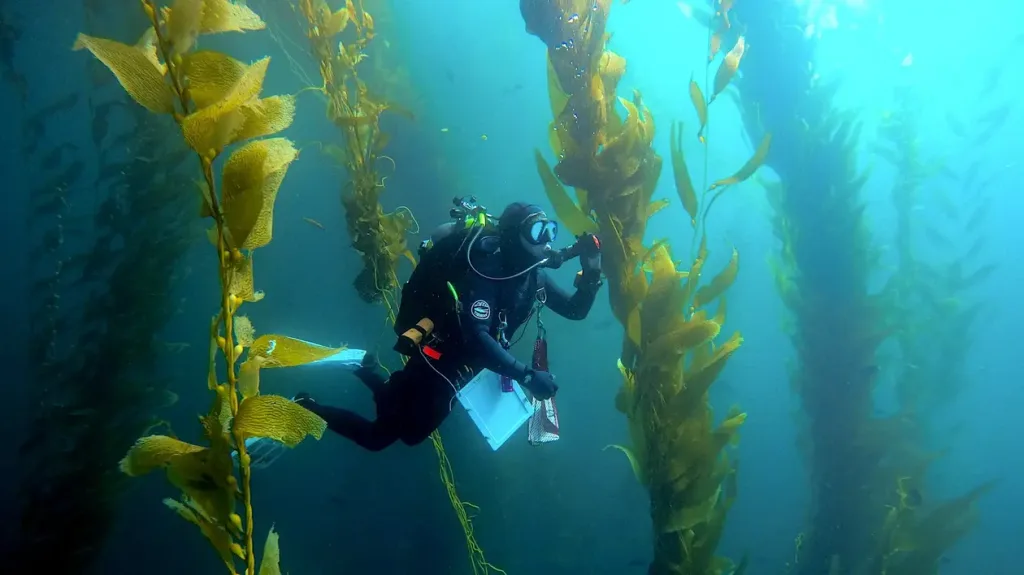
Kelp forests are some of the most productive marine ecosystems on Earth. They provide habitat for fish and invertebrates, help protect coastlines, support biodiversity, reduce erosion, and store carbon. Yet in many regions, these underwater forests are under severe pressure from ocean warming, pollution, overgrazing by sea urchins, coastal development, and wider ecosystem disruption.
A recent Yale Environment 360 article highlighted growing international efforts to restore kelp forests. Scientists and conservation teams are testing multiple strategies, including controlling kelp-eating sea urchins, transplanting more resilient kelp varieties, using satellite and drone monitoring, creating kelp biobanks, and studying heat-tolerant strains that may survive better in warming waters.
Although kelp forests are more common in cooler temperate waters than in the tropical Caribbean, the wider environmental lesson is directly relevant: marine ecosystems can change quickly, and restoration success depends on monitoring, baseline data, ecological understanding, and long-term environmental management.
For Caribbean coastal environments, this lesson applies to mangroves, seagrass beds, coral reefs, wetlands, estuaries, nearshore water quality, and marine sediment systems. These ecosystems all support coastal resilience, biodiversity, fisheries, tourism, and community protection. When they decline, the impact can extend far beyond the immediate habitat.
Marine Ecosystems Are Natural Infrastructure
Coastal ecosystems are often discussed as environmental assets, but they are also natural infrastructure. Kelp forests, mangroves, seagrass beds, coral reefs, wetlands, and coastal vegetation all help regulate environmental conditions.
They can reduce wave energy, trap sediment, support fisheries, protect shorelines, absorb nutrients, and provide habitat for marine life. These functions may not always appear on a balance sheet, but they carry real environmental and economic value.
When marine ecosystems are degraded, coastal areas may become more exposed to erosion, flooding, water quality decline, habitat loss, and reduced ecological productivity.
This is why ecosystem monitoring is so important. Without monitoring, environmental decline can go unnoticed until the damage becomes difficult or expensive to reverse.
Why Kelp Restoration Is a Warning Signal
The Yale Environment 360 article highlights how kelp forests are being affected by multiple pressures at once. Ocean warming can stress kelp directly. Sea urchins can overgraze kelp beds and convert productive forests into barren areas. Pollution and coastal development can weaken ecosystem conditions. Once a kelp forest collapses, recovery can be difficult without intervention.
This pattern is not unique to kelp.
Many marine ecosystems can shift from a healthy state to a degraded state when pressure becomes too intense. Coral reefs can become algae-dominated. Seagrass beds can thin or disappear under poor water quality. Mangroves can be fragmented by development. Wetlands can lose their flood-buffering function. Sediment disturbance can increase turbidity and reduce light penetration.
The key lesson is that ecosystem collapse is often easier to prevent than reverse.
Monitoring Helps Detect Change Early
Marine ecosystem monitoring helps identify environmental change before it becomes a crisis. It provides evidence on what is happening, where changes are occurring, and whether conditions are improving or declining.
Monitoring may include:
- Marine water quality sampling
- Sediment sampling and analysis
- Turbidity monitoring
- Nutrient testing
- Salinity and temperature tracking
- Ecological surveys
- Habitat mapping
- Shoreline and erosion observation
- Offshore installation monitoring
- Long-term sampling program design
This type of data helps scientists, regulators, developers, coastal managers, and businesses make better decisions.
For example, if a coastal development is planned near sensitive marine habitat, baseline monitoring can show the original condition of the environment. During construction, monitoring can detect sediment movement, turbidity, or water quality impacts. After completion, continued monitoring can help determine whether mitigation measures are working.
The Caribbean Context
Caribbean coastal environments are especially valuable and vulnerable. Tourism, fisheries, ports, coastal communities, industrial operations, housing, and infrastructure are often located near sensitive marine and coastal systems.
Small changes in water quality, sediment movement, drainage, or coastal development can affect downstream and nearshore ecosystems. Stormwater runoff can carry sediment and contaminants into marine environments. Poor wastewater management can increase nutrient levels. Dredging or construction can disturb sediment. Coastal erosion can increase turbidity. Climate change can intensify stress through warmer waters, stronger storms, and sea level rise.
This makes marine ecosystem monitoring essential for responsible development and environmental protection.
For Caribbean businesses and project teams, monitoring is not only about compliance. It is about understanding risk, protecting assets, supporting approvals, maintaining public trust, and reducing the chance of long-term environmental damage.
Restoration Requires Evidence
Restoration projects often sound straightforward: replant the habitat, remove the stressor, and allow the ecosystem to recover. In reality, restoration is complex.
A restoration project must answer practical questions:
- What caused the original decline?
- Are the stressors still present?
- Is water quality suitable for recovery?
- Is sediment quality affecting habitat health?
- Are there physical changes to the shoreline or seabed?
- What species should be restored?
- How will success be measured?
- How long should monitoring continue?
- What corrective actions are needed if recovery fails?
Without strong environmental data, restoration becomes guesswork.
This is one reason kelp restoration efforts now use tools such as satellite imagery, drones, genetic research, selective breeding, and ecological monitoring. The same principle applies to Caribbean restoration work involving mangroves, seagrass, wetlands, reefs, and coastal habitats.
Water Quality and Sediment Conditions Matter
Marine ecosystem health is strongly influenced by water and sediment conditions. Poor water quality can stress habitats and reduce biodiversity. Sediment contamination can affect benthic organisms and food webs. High turbidity can reduce light availability for photosynthetic ecosystems such as seagrass. Nutrient enrichment can support algal overgrowth. Salinity and temperature changes can shift ecosystem balance.
This is why marine sampling and sediment analysis are important parts of coastal environmental management.
Testing helps determine whether a site is suitable for restoration, whether a project is affecting nearby waters, and whether environmental conditions are changing over time.
For businesses, this information can support environmental impact assessment, compliance monitoring, due diligence, operational management, and responsible development planning.
From Coastal Protection to Climate Resilience
Marine ecosystem monitoring is also part of climate resilience. As coastal areas face stronger storms, sea level rise, warmer waters, and changing rainfall patterns, natural coastal systems become even more important.
Healthy coastal ecosystems can reduce vulnerability. Degraded ecosystems can increase exposure.
Monitoring helps identify where resilience is weakening and where intervention may be needed. It also helps track whether restoration or mitigation measures are delivering measurable benefits.
In this sense, environmental monitoring is not just a technical service. It is part of long-term adaptation planning.
Why Ecotox’s Role Matters
The global concern around kelp forest decline reinforces a broader environmental message: marine ecosystems need continuous observation, defensible data, and scientific interpretation.
Ecotox Environmental Services supports this type of work through specialized sampling, marine water and sediment surveys, environmental monitoring program design, offshore monitoring, water quality sampling, and environmental assessment support.
For coastal developers, industrial operators, regulators, and environmental managers, this data is essential. It helps transform environmental uncertainty into practical decisions.
Kelp restoration may be happening far from the Caribbean, but the lesson is highly relevant: coastal ecosystems are valuable, vulnerable, and difficult to replace once degraded.
Protecting them begins with monitoring.
Internal link: Specialized Sampling Services
https://ecotoxes.ani.quest/services/complete_sampling_services/
Outbound citation: Yale Environment 360 — Efforts to Save Kelp Forests from Ocean Warming Are Ramping Up
https://e360.yale.edu/features/kelp-restoration