


Why Small Ponds Can Emit Big Greenhouse Gas Bursts: Insights from Mud and Texas Hollow Ponds
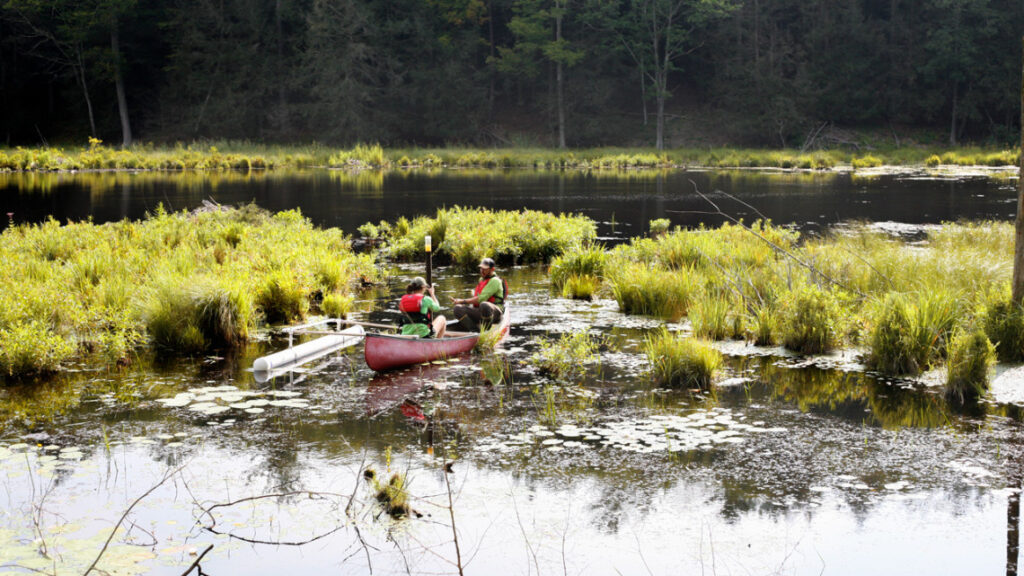
New research from Cornell University reveals that even small, shallow ponds can be biogeochemical hotspots for greenhouse gas emissions — with carbon dioxide and methane released in surprising patterns driven by subtle differences in depth, stratification, light penetration, and biological activity. Cornell Chronicle
Study Summary: Two Ponds, Big Differences
- Two similar ponds, different emissions: Researchers compared Mud Pond and Texas Hollow Pond, which are similar in size but differ in depth and light exposure. Cornell Chronicle
- Higher CO₂ in Texas Hollow: Despite expectations, Texas Hollow emitted more than twice as much carbon dioxide as Mud Pond, even though both stored large amounts of carbon in their sediments. Cornell Chronicle
- Methane surprises: Nearly twice as much methane “bubbled up” from Mud Pond’s sediments than from Texas Hollow — despite the latter’s stronger stratification. Cornell Chronicle
- Stratification isn’t the whole story: Although researchers expected deeper, more stratified water to lead to higher methane emissions, results showed that light penetration and plant growth in Mud Pond may stimulate organic matter input to sediments, enhancing methane production. Cornell Chronicle
Mechanisms of Gas Production & Release
- Carbon dioxide is produced by microbial and plant respiration; in stratified waters like Texas Hollow, oxygen gradients and lack of mixing likely influence CO₂ production and release. Cornell Chronicle
- Methane (CH₄) is generated in low-oxygen sediments, and “ebullition” (bubbling) can release large amounts to the atmosphere — especially where organic matter fuels microbial decomposition. Cornell Chronicle
- These subtle drivers — light, depth, organic inputs — mean small ponds cannot be modeled simply by size alone when estimating greenhouse gas budgets. Cornell Chronicle
Implications for Climate Modeling
The study underscores a broader challenge in climate science: small inland waters — which represent a tiny fraction of Earth’s surface — can disproportionately contribute to greenhouse gas emissions, yet are poorly represented in global carbon budgets. ScienceDaily Improved understanding of these emissions helps refine regional and global flux estimates and informs mitigation strategies.
How Ecotox Environmental Services Can Help
Ecotox offers services well suited to expand on insights from this research and support practical responses:
- Greenhouse Gas Flux Monitoring
- Deploy in situ measurement programs for CO₂ and CH₄ emissions in ponds, lakes, wetlands, and engineered waters.
- Biogeochemical Modeling & Source Attribution
- Model how water body characteristics (stratification, organic inputs, nutrient levels) influence gas production and emission patterns.
- Ecosystem Emissions Assessment & Risk Analysis
- Quantify and assess emission hotspots; evaluate how changes (e.g., water level management) might alter greenhouse gas outputs.
- Adaptive Mitigation Strategy Design
- Advise on land and water management practices that reduce greenhouse gas release (e.g., aeration, vegetation management, nutrient reduction).
These services can help environmental agencies, resource managers, and research partners better monitor and manage freshwater greenhouse gas sources.