


New Soil Moisture Model Reveals How Plants Shape Water Cycles—and What It Means for Environmental Management
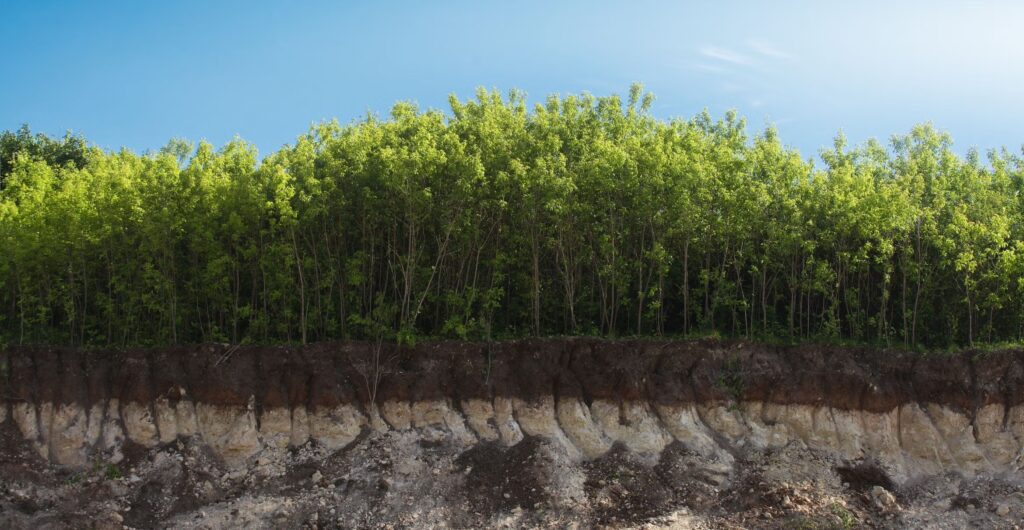
Researchers at UC Santa Barbara and San Diego State University have developed a nonlinear soil moisture model that captures how different plants strategically manage water—whether they act as ‘water spenders’ or ‘water savers.’ Validated using NASA SMAP satellite data and published in Geophysical Research Letters, this model significantly improves understanding of plant–soil–atmosphere interactions Threads+8The Current+8edhat+8.
🌱 How Plants Drive Soil Moisture Dynamics
- Beyond linear assumptions: Traditional models use one-size-fits-all responses. The new model reveals plants have nuanced strategies—some maintain growth until moisture is gone (‘spenders’), while others conserve (‘savers’) to survive drought .
- Satellite validation: The nonlinear model aligns much more closely with real-world data, avoiding overestimations of evapotranspiration and compensating for missing soil moisture measurement networks The Current.
- Species-specific traits: Grasses rapidly deplete soil moisture, while trees reduce water use gradually to maintain long-term water balance—likened to monitoring their “blood pressure” The Current+1edhat+1.
- Broader impact: Incorporating these dynamics enhances predictions of weather patterns, drought resilience, crop selection strategies, and ecosystem carbon and energy cycles The Current+1edhat+1.
📈 Practical Significance for Water & Land Management
- Better irrigation plans: Understanding specific plant behaviours allows more efficient water application for agriculture, reducing waste and improving yield.
- Improved parametric forecasting: Climate and hydrological models gain accuracy when plant feedbacks on evapotranspiration are considered.
- Ecosystem resilience insight: Managers can tailor restoration strategies by choosing vegetation types based on water-use strategies suited to local climate futures.
How Ecotox Environmental Services Applies This Insight
Ecotox offers services that implement the nuanced moisture model directly into environmental planning:
- Vegetation-Specific Moisture Profiling
Using field sensors and remote sensing, we identify local plant water-use behaviors—determining whether flora act as water savers or spenders. - Water Budget & Evapotranspiration Modeling
We apply nonlinear soil-plant models to simulate site-specific water budgets—crucial for precise irrigation design, drought risk analysis, and water-efficient landscaping. - Ecosystem & Agricultural Consulting
We advise on species selection and planting schedules based on water-use profiles to improve resilience under changing climate and water limits. - Impact Assessments & Monitoring
We integrate this enhanced modeling into Environmental Impact Assessments and adaptive monitoring to predict changes in soil moisture, vegetation health, and hydrological cycles.
By embedding plant-driven water behaviour into modeling and decision-making, Ecotox empowers clients to create climate-smart, water-efficient, and ecologically resilient landscapes.