


Hawaiʻi Researcher Tracks Microplastics Across Island Waterways
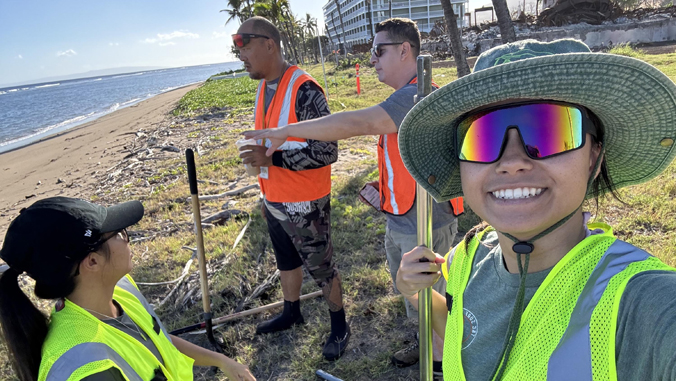
Hope Kanoa, now a graduate student at the University of Hawaiʻi at Mānoa, is expanding an ambitious research project to map microplastic contamination throughout Hawaiʻi’s coastal, riverine, and ocean environments. Her work was launched while she completed an undergraduate degree in Environmental Earth Science and has evolved into a broader investigation of how microplastics move through the islands’ water cycle. University of Hawaii
From Undergraduate Project to Graduate Research
- After graduating from Kalaheo High School, Kanoa chose to study Hawaiʻi’s water resources at UH Mānoa’s School of Ocean and Earth Science and Technology (SOEST). University of Hawaii
- As an undergraduate, she joined a research initiative with Prof. Xiaolong (Leo) Geng to measure microplastic concentrations in coastal waters around Oʻahu. University of Hawaii
- Her work combined field sampling, laboratory analysis, and environmental science outreach — showing interdisciplinary expertise early in her academic career. University of Hawaii
- Based on this success, Geng invited her to continue as a master’s student, where she broadened the scope to include riverine and oceanic environments in addition to shorelines. University of Hawaii at Manoa
Modeling Microplastic Movement Across Hawaiʻi
Kanoa’s graduate research aims to understand not just where microplastics are, but how they are transported within and between freshwater and coastal systems. She is interested in modeling transport pathways across the islands — considering inputs from rivers, land runoff, coastal circulation patterns, and sediment interactions. University of Hawaii
She sees Hawaiʻi as a natural laboratory for studying these dynamics because different water reservoirs are intimately connected through hydrology and ocean processes. University of Hawaii
Looking Ahead: Hydrology, Hydrogeology & Local Impact
Kanoa has said that her graduate program — focusing on hydrology and hydrogeology — provides a perfect fit for her goals of advancing water quality science in Hawaiʻi. Her intention is to apply her expertise locally, including potentially working as a hydrologist with state or federal agencies, while also addressing the human and ecosystem health implications of microplastic pollution. SOEST
How Ecotox Environmental Services Can Relate
Ecotox’s services directly align with the kinds of scientific inquiry highlighted in this evolving microplastics research:
- Microplastic Sampling & Characterization
- Design and implement robust field sampling programs across rivers, coasts, and nearshore waters.
- Quantify particle size distributions, concentrations, and polymer types.
- Fate & Transport Modeling
- Model how microplastics move through freshwater and marine systems, integrating hydrologic connectivity and circulation patterns.
- Environmental Risk & Impact Assessment
- Use empirical and modeled data to assess ecological and human health risks from microplastic exposures across coastal communities.
- Advisory for Mitigation & Policy
- Support development of targeted mitigation strategies for watershed managers, coastal planners, and regulators.
These services help stakeholders move from descriptive measurement to actionable management — exactly the transition Kanoa’s work is helping illustrate.