


3D‑Printed Diatomaceous Concrete That Absorbs Carbon: Innovative and Ready for Ecotox Integration
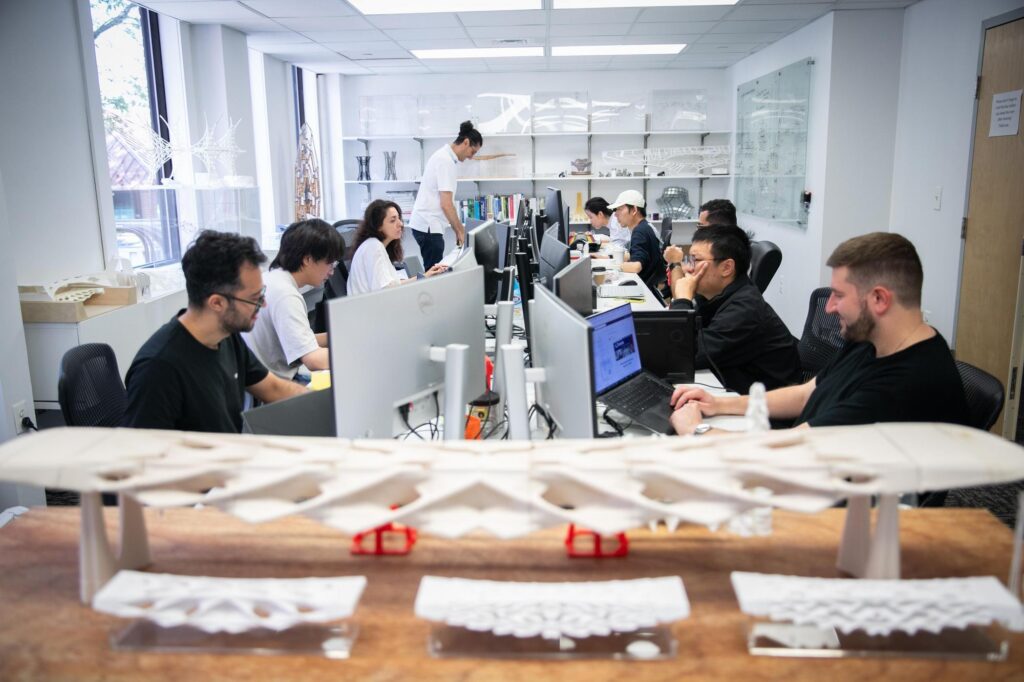
University of Pennsylvania engineers have unveiled a groundbreaking 3D‑printed concrete that absorbs up to 142% more CO₂, achieves structural strength comparable to traditional mixes, and uses ~60% less material. Leveraging diatomaceous earth’s porous microstructure and optimized geometry, this innovation marks a leap toward low‑carbon building materials Facebook+5Penn Today+5sciencesprings+5.
🧬 How It Works
- Diatomaceous earth (DE) as a CO₂ sponge:
DE is full of microscopic, sponge-like pores formed from fossilized algae. When blended into concrete, these pockets trap CO₂ during curing, enhancing carbon uptake and strengthening the structure Penn Today+1sciencesprings+1. - Optimized porous geometry:
Utilizing triply periodic minimal surface (TPMS) designs—structures inspired by bones and coral—allows the mix to retain 90% of normal compressive strength while increasing CO₂ absorption by 30% and cutting material use by 60% sciencesprings+1Penn Today+1. - 3D printing advances:
The high-porosity mix flows smoothly through printer nozzles yet rapidly stabilizes and cures, maintaining integrity while enabling complex architectural designs Wikipedia+2sciencesprings+2Penn Today+2. - Environmental and ecological benefits:
Beyond carbon capture in air, this material shows promise for marine applications, such as reef restoration or oyster bed structures, due to its porosity and ecological compatibility UPenn EII+2Reddit+2Penn Today+2sciencesprings+1Penn Today+1.
📏 Performance Metrics
| Metric | Diatomaceous Concrete vs. Conventional |
|---|---|
| CO₂ capture | +32–142% more CO₂ uptake |
| Material usage | –60% cement and material consumption |
| Compressive strength | ~90% of traditional concrete |
| Surface-area-to-volume | +500%, enabling efficient carbon uptake |
How Ecotox Environmental Services Can Help
While Penn’s team focuses on material development, Ecotox offers available services to integrate this innovation into real-world projects:
- Carbon Sequestration Verification
We perform field and lab testing—via gas flux analysis—to confirm CO₂ uptake claims and quantify sequestration potential in situ. - Marine Application Assessments
We evaluate suitability for ecological restoration—ensuring compliance with marine habitat studies and assessing potential benefits of reef-structure deployment. - Life Cycle & Environmental Impact Analysis
We model cradle-to-grave carbon emissions and environmental benefits, comparing diatomaceous mixes to standard concrete for building and coastal projects. - Regulatory Compliance Consulting
We assist with permitting, building-code demonstration, and environmental documentation—supporting uptake of innovative materials.
By bridging groundbreaking material science with practical field validation, Ecotox empowers sustainable construction and ecological restoration projects to deploy low-carbon, carbon-capturing concrete solutions.