


Pollution Is Changing Nature’s Smellscapes: Why Air Quality Monitoring Must Consider Ecosystem Communication
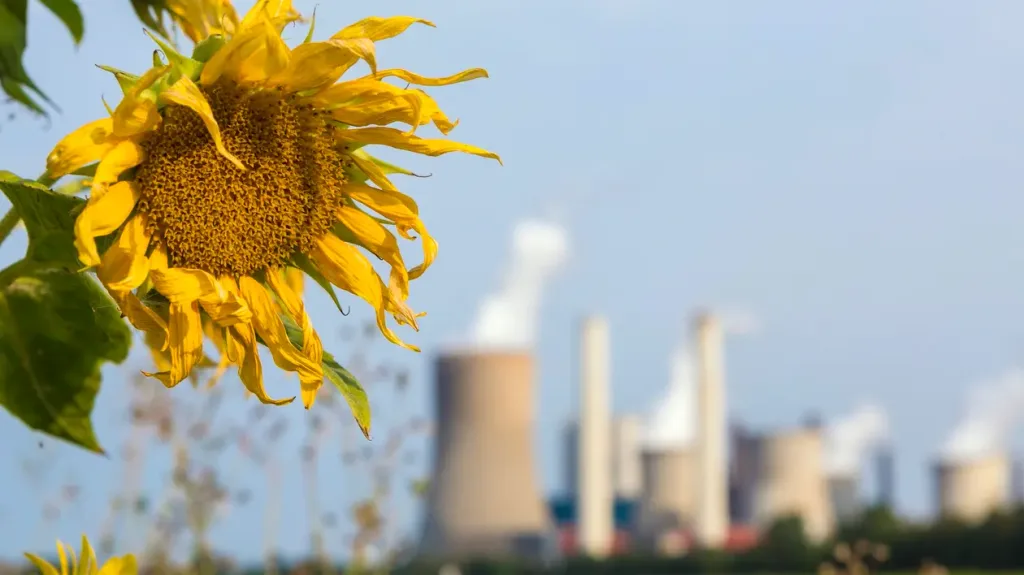
Pollution Is Changing Nature’s Smellscapes: Why Air Quality Monitoring Must Consider Ecosystem Communication
Environmental pollution does not only change what ecosystems look like.
It can also change what they smell like.
Plants, insects and other animals continuously release chemical signals into the air. These signals help organisms locate food, identify suitable habitat, attract pollinators, find mates, recognise members of their own species and avoid predators.
Together, the scents present within a geographic area form an environmental smellscape.
A growing body of research indicates that air pollutants, rising temperatures and agricultural chemicals are altering these smellscapes. The consequences may extend beyond the loss of familiar natural aromas. Pollution can interfere with the chemical communication systems that support pollination, reproduction, navigation and other essential ecological processes.
This emerging field presents an important challenge for environmental monitoring:
An ecosystem may appear physically intact while pollution is quietly disrupting the invisible chemical messages that allow its species to interact.
What is an ecological smellscape?
An ecological smellscape is the combined pattern of scents and airborne chemical signals within an environment.
Flowers release volatile organic compounds to attract pollinators. Insects use pheromones to identify potential mates. Animals follow odour trails toward food, prey or suitable habitat. Plants can also emit chemical signals when damaged or attacked.
Humans tend to understand environments primarily through sight and sound, but many other organisms depend heavily on smell.
Examples include:
- Bees recognising the scent of rewarding flowers
- Moths following floral odours over long distances
- Insects using pheromones to locate mates
- Ants maintaining colony organisation through chemical signals
- Butterflies identifying host plants for egg-laying
- Scavengers locating food
- Predators detecting prey
- Plants attracting particular pollinators
These interactions help maintain biodiversity and ecosystem services.
Animal pollinators support reproduction in most wild flowering plants, while pollination influences approximately 35% of global crop production by volume. The importance of animal pollination is especially strong in tropical ecosystems.
The chemical signals involved are therefore not secondary ecological features.
They are part of the communication infrastructure of nature.
How pollution changes natural scents
Many floral scents and animal pheromones are composed of volatile organic compounds.
These compounds can be chemically reactive. Once released into the air, they may interact with oxidising pollutants such as:
- Ground-level ozone
- Nitrate radicals
- Hydroxyl radicals
- Nitrogen oxides
- Components of vehicle and industrial emissions
Pollutants may remove individual compounds from a scent blend, alter the relative proportions of those compounds or create new reaction products.
The resulting scent may no longer carry the same biological meaning.
A flower may still produce an odour, but a pollinator may find it harder to recognise. An insect may still release pheromones, but those molecules may degrade before reaching a potential mate.
Yale Environment 360 reports that researchers are documenting effects from air pollution, climate change, fertilisers and fungicides on the chemical signals used by plants and animals.
Ozone can degrade floral odour plumes
Floral scent does not travel through the air as a stable, uniform cloud.
It forms a plume affected by wind, turbulence, temperature and atmospheric chemistry.
Researchers examining ozone’s effect on floral odour plumes found that the pollutant degraded several important floral volatile compounds. The reactions changed the chemical structure and continuity of the plume that insects would normally use to navigate toward a flower.
Honeybees were trained to recognise a four-compound floral scent.
When they were later exposed to versions of the scent altered by ozone, recognition declined with distance and chemical degradation. Only 10% of bees recognised the more degraded mixture representing the edge of an odour plume 12 metres from its source.
This demonstrates that measuring the presence of a flower or the abundance of pollinators alone may not explain whether the communication channel between them remains functional.
Pollution can degrade that channel before either the plant or insect has disappeared.
Night-time air chemistry can affect nocturnal pollinators
Daytime pollinators such as bees receive much of the public attention, but moths and other nocturnal insects also pollinate wild plants and crops.
At night, nitrate radicals can become important atmospheric oxidants.
Research involving the pale evening primrose found that nitrate radicals rapidly degraded key compounds in the flower’s scent. Field experiments reported approximately 70% fewer visits to an artificial flower releasing the pollution-altered scent than to flowers or scent sources emitting the original mixture.
Atmospheric modelling conducted as part of that research indicated that, in heavily polluted areas, the distance from which moths could detect the flower may have fallen to approximately one-quarter of the estimated distance under pre-industrial conditions.
This does not mean every flower or moth population will respond identically.
Scent chemistry, pollutant concentrations, wind, species behaviour and local environmental conditions all influence the outcome.
The findings nevertheless show that pollution can reduce the effective communication range between a plant and its pollinator.
Pollution can affect pollination before killing insects
Environmental assessments often focus on direct toxicity.
A chemical may be evaluated according to whether it kills organisms, causes visible injury or produces measurable physiological damage.
Sensory pollution can operate differently.
An insect may remain alive but become less able to:
- Detect a flower
- Recognise a food source
- Follow an odour plume
- Learn a floral scent
- Locate a mate
- Distinguish its own species
- Respond normally to predators or competitors
These behavioural changes may reduce feeding success, reproduction and survival without creating immediate mortality.
Field research on diesel exhaust and ozone found major reductions in pollinator activity under experimental pollution conditions. Pollinator abundance fell by approximately 62% to 70%, flower visits declined by approximately 83% to 90%, and plant pollination and yield indicators were also reduced.
The pollutants were not simply acting as traditional poisons.
They were also altering the chemical environment in which insects searched for flowers.
Fungicides can create odour pollution
Agricultural chemicals may affect pollinators through more than direct contact or residues in pollen and nectar.
The odour of a chemical formulation can itself interfere with the scent environment.
Researchers tested three fungicide products to determine whether their odours affected bumblebees’ ability to learn and recognise a common floral scent.
Every fungicide disrupted floral-odour learning or recognition at one or more of the concentrations tested. One formulation was disruptive at all tested concentrations, while two formulations reduced the insects’ antennal response to the floral scent.
The results came from controlled behavioural and physiological experiments, not a complete field-scale assessment of every fungicide or crop system.
They should not be interpreted as evidence that all fungicides produce identical effects.
They do demonstrate that chemical odours can act as a form of environmental interference, even where the active ingredient is not causing immediate insect mortality.
This creates a more complex management question.
Agricultural disease control may be necessary, but application timing, formulation, concentration and proximity to flowering vegetation may influence unintended effects on pollinator behaviour.
Pollution can disrupt insect reproduction
Chemical signals are also central to insect mating.
Many insects release species-specific pheromones that allow individuals to distinguish males from females and locate suitable mates.
Research published in Nature Communications found that ozone exposure degraded male-specific pheromones in several fruit-fly species.
Ozone-exposed males became less attractive to females, and male-male courtship increased because the insects’ normal chemical sex-recognition signals had been disrupted. Similar pheromone degradation or altered sexual recognition occurred in most of the species tested.
This suggests that pollution can influence populations through pathways that conventional monitoring may overlook.
A reduction in reproduction may occur even where adult insects remain present.
Over time, impaired communication could add another pressure to populations already affected by habitat loss, pesticides, climate change, invasive species and disease.
Climate change can alter the scent source itself
Air pollutants can react with scent molecules after plants release them.
Climate change can also alter how much scent plants produce in the first place.
Temperature, drought, water stress and other environmental conditions influence plant metabolism and the production of volatile compounds.
Yale Environment 360 describes research in which warming or climatic extremes altered scent production in strawberry plants, petunias and commercially valuable aromatic plants.
A warmer or drier environment may therefore affect ecological communication in several ways:
- Plants may produce different quantities or mixtures of scent compounds.
- Pollutants may degrade those compounds after release.
- Heat and drought may change flowering periods.
- Pollinator activity and geographic ranges may also shift.
- Plant and pollinator timing may become less synchronised.
The resulting ecological effect may be greater than the influence of any single stressor.
Why smellscape disruption matters for agriculture
Pollination supports fruit development, seed production and crop yield.
Many crops benefit from or depend on insects, including bees, flies, moths, butterflies and beetles.
Pollinators use combinations of scent, colour, shape and previous learning to locate productive flowers.
When scent signals are degraded or masked, insects may spend more time searching and less time feeding.
Potential agricultural consequences include:
- Fewer flower visits
- Reduced pollen transfer
- Lower fruit set
- Lower seed production
- Uneven crop yields
- Greater pressure on managed pollinator colonies
- Reduced resilience where wild pollinator diversity is already low
These effects will depend on the crop, pollutant, insect species and local conditions.
The research does not support assuming that every polluted agricultural area is experiencing the same loss.
It does support including air quality and chemical communication among the factors considered when investigating unexplained pollination problems.
Why the issue matters for the Caribbean
Caribbean agriculture and biodiversity are strongly connected to tropical plant-pollinator relationships.
Tropical ecosystems contain high plant diversity, and many flowering plants depend on animals for pollination. Regional agriculture also includes fruit, vegetable, spice and horticultural crops that may benefit from insect pollination.
At the same time, Caribbean environments may experience combinations of:
- Vehicle emissions
- Industrial emissions
- Oil and gas activity
- Open burning
- Agricultural chemical use
- High temperatures
- Drought
- Urban expansion
- Habitat fragmentation
- Wildfire or smoke events
- Transboundary air pollution
The Yale article and supporting studies did not specifically measure ecological smellscape disruption in Trinidad and Tobago or the wider Caribbean.
The findings should therefore be treated as a research warning and monitoring opportunity—not proof of a quantified regional impact.
Potential Caribbean research questions include:
- Are ozone and nitrogen oxide concentrations elevated near important agricultural areas?
- Do floral scent profiles differ between more and less polluted locations?
- Are pollinator visits lower near roads, industrial areas or burn sites?
- Does pesticide or fungicide application timing affect pollinator activity?
- Are nocturnal pollinators being adequately surveyed?
- Are changes in fruit set linked to air quality, habitat conditions or chemical use?
- Which native plants depend on highly specialised scent-mediated pollinators?
Answering these questions would require integrated environmental and ecological evidence.
Conventional air monitoring remains essential
Ecological smellscape research does not replace conventional air-quality monitoring.
It expands the reasons why monitoring matters.
A useful air-quality programme may assess pollutants such as:
- Ozone
- Nitrogen dioxide
- Other nitrogen oxides
- Particulate matter
- Sulphur dioxide
- Carbon monoxide
- Volatile organic compounds
- Relevant industrial emissions
These measurements help determine whether pollutant concentrations are elevated, how they change through the day and where major sources may be located.
For smellscape investigations, timing can be particularly important.
Some oxidising pollutants are more active during daylight, while nitrate-radical chemistry becomes more significant at night. Pollinator activity also varies by species and time of day.
Average monthly or annual data may therefore miss shorter periods during which chemical communication is disrupted.
Volatile organic compound analysis adds another layer
Routine air monitoring can measure the pollutants capable of altering scents.
Chemical analysis of volatile organic compounds can help characterise the scent itself.
Researchers may use methods such as:
- Sorbent tubes
- Solid-phase microextraction
- Gas chromatography
- Mass spectrometry
- Controlled scent collection
- Plant headspace sampling
These methods can help determine:
- Which scent compounds are present
- How concentrations vary
- Whether a pollutant removes particular compounds
- Whether new reaction products are formed
- How scent changes with distance
- Whether treated and untreated plants differ
This type of analysis is technically specialised and should be designed around a clear research question.
A list of detected VOCs does not automatically reveal how an insect perceives the mixture.
Chemical measurements may need to be combined with behavioural studies and ecological observations.
Biological monitoring reveals whether the change matters
Environmental chemistry can show that a scent changed.
Biological monitoring helps determine whether that change affected organisms.
Depending on the ecosystem, monitoring might include:
- Pollinator abundance
- Flower-visitation frequency
- Time spent searching
- Species diversity
- Nocturnal insect surveys
- Pollen-transfer measurements
- Fruit and seed production
- Insect reproduction
- Host-plant selection
- Seasonal timing
- Habitat condition
Repeated surveys are essential.
Pollinator numbers and activity naturally vary with rainfall, flowering cycles, temperature, season and time of day.
A single observation cannot reliably distinguish pollution effects from normal variation.
Comparisons between locations and before-and-after assessments may provide stronger evidence.
Environmental impact assessment should consider sensory pollution
Development projects can change environmental sensory conditions through:
- Air emissions
- Dust
- Artificial lighting
- Noise
- Chemical use
- Vegetation removal
- Changes in plant communities
Noise and light pollution are increasingly recognised within environmental assessment.
Chemical or olfactory disruption receives much less attention.
It may be relevant where a project is located near:
- Agricultural land
- Pollinator habitat
- Protected areas
- Rare plant populations
- Forest edges
- Wetlands
- Restoration sites
- Ecologically sensitive corridors
The practical challenge is that smellscape effects are difficult to predict and measure.
Not every project will require specialised olfactory research.
However, where emissions include ozone-forming pollutants, reactive chemicals or strong VOC sources near sensitive habitats, the potential for sensory disruption may deserve consideration within ecological risk assessment.
Baseline studies create the reference point
Before project construction or a new emission source begins, baseline environmental information can document existing conditions.
Relevant baseline work might include:
- Ambient air-quality monitoring
- VOC sampling
- Pollinator surveys
- Flowering-plant inventories
- Habitat mapping
- Agricultural production records
- Pesticide and fungicide-use information
- Meteorological data
- Daytime and night-time ecological observations
Baseline data provide a reference for future comparisons.
Without them, it may be difficult to determine whether a decline in pollinator activity, crop yield or ecological reproduction began before or after an activity changed.
Baseline work also helps identify seasonal periods that need protection, such as major flowering or pollinator-breeding seasons.
Monitoring should combine chemistry and ecology
Smellscape pollution is an interdisciplinary problem.
No single measurement can fully describe it.
A strong investigation may combine:
Atmospheric data
Pollutant concentrations, weather, wind direction, temperature and time of day.
Chemical data
The identity and concentration of floral VOCs, pheromones or atmospheric reaction products.
Biological data
Pollinator visits, mating behaviour, species abundance and plant reproduction.
Spatial data
Distance from roads, industrial facilities, agricultural applications and natural habitat.
Temporal data
Season, flowering period, day versus night and changes before and after pollution events.
This integrated approach can help distinguish correlation from a more credible cause-and-effect relationship.
Reducing smellscape disruption
Several actions could potentially reduce the disruption of ecological chemical signals:
- Reducing nitrogen oxide and ozone-forming emissions
- Controlling industrial and vehicle air pollution
- Preventing open burning
- Improving agricultural chemical management
- Avoiding unnecessary spraying during peak flowering
- Maintaining buffer zones
- Protecting diverse pollinator habitats
- Reducing combined light, noise and chemical pollution
- Monitoring nocturnal as well as daytime pollinators
- Supporting research on local plant-pollinator relationships
Management decisions should remain evidence-based.
The fungicide research, for example, does not justify assuming every application will cause the same behavioural effect. It supports investigating formulation, timing, concentration and ecological context.
Likewise, air-quality improvements can benefit human health while also protecting ecological communication systems.
How Ecotox can support environmental investigations
Ecotox Environmental Services can support projects involving:
- Ambient air-quality monitoring
- Environmental baseline studies
- Specialised air and environmental sampling
- Environmental analytical testing
- Ecological risk assessment support
- Agricultural and industrial compliance monitoring
- Surface-water and soil sampling
- Biodiversity-related field programmes
- Environmental impact assessment support
- Long-term environmental monitoring
- Sampling-plan development
For a smellscape-related investigation, air-quality data could be integrated with ecological observations, meteorological information and appropriately designed specialised chemical analysis.
Learn more about Ecotox Environmental Monitoring and Sampling Services.
Ecosystems depend on invisible communication
Environmental degradation is often recognised through visible evidence:
- Dead vegetation
- Polluted water
- Smoke
- Erosion
- Habitat loss
- Declining animal populations
Smellscape research reveals another possibility.
The organisms may still be present, and the habitat may still look green, but the chemical conversations holding the ecosystem together may already be weakening.
A flower may release a signal that no longer travels far enough.
A bee may fail to recognise a familiar scent.
A moth may pass a plant it would previously have pollinated.
An insect may lose the pheromone cues needed to identify a mate.
These changes can affect reproduction, food production, biodiversity and ecosystem resilience.
Pollution is therefore not only changing the physical environment.
It may also be changing the information environment through which nature functions.
Understanding that invisible disruption will require stronger cooperation among air-quality specialists, analytical scientists, ecologists, farmers, regulators and environmental monitoring professionals.
Protecting ecosystems means protecting not only their species and habitats—but also the chemical signals that allow those species to find and communicate with one another.
Sources
Yale Environment 360 — Pollution Is Changing the Smells of Nature, With Risks for Wildlife
https://e360.yale.edu/features/smellscapes
Science — Olfaction in the Anthropocene: NO₃ negatively affects floral scent and nocturnal pollination
https://doi.org/10.1126/science.adi0858
Environmental Pollution — Mapping the effects of ozone pollution and mixing on floral odour plumes and their impact on plant-pollinator interactions
https://doi.org/10.1016/j.envpol.2023.122336
Frontiers in Ecology and Evolution — Odor-Pollution From Fungicides Disrupts Learning and Recognition of a Common Floral Scent in Bumblebees
https://doi.org/10.3389/fevo.2022.765388
Nature Communications — Ozone exposure disrupts insect sexual communication
https://www.nature.com/articles/s41467-023-36534-9
Food and Agriculture Organization — Global Action on Pollination Services for Sustainable Agriculture
https://www.fao.org/pollination/