


Microplastics Mapped in Living Tissue: Why Environmental Testing Matters
Microplastics Mapped in Living Tissue: Why Environmental Testing Matters
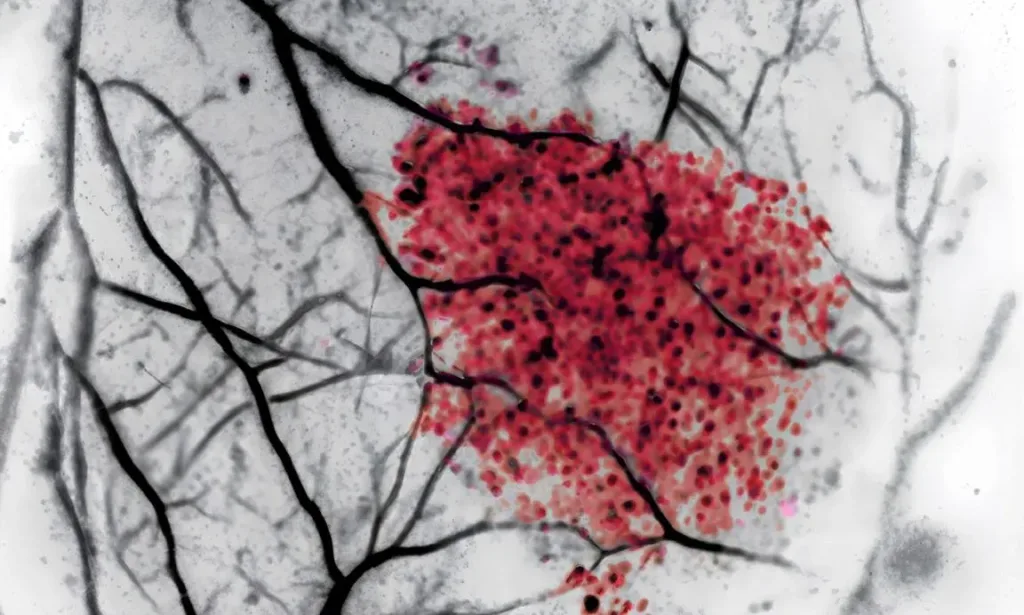
Scientists have developed a non-invasive method for mapping certain microplastic particles inside the living tissue of mice.
The research, conducted by scientists from University College London, Kingston University and the University of Birmingham, used photoacoustic imaging to locate particles made from common plastics such as polypropylene and polyethylene.
Instead of removing and destroying tissue for analysis, the technique uses short pulses of laser light. Microplastics absorb the light according to their optical characteristics and generate high-frequency sound waves. Ultrasound detectors capture those waves and reconstruct an image showing where the particles are located.
The proof-of-concept study allowed researchers to observe particles deep inside living tissue and track them over a period of up to two months. The work may eventually help scientists investigate where microplastics accumulate, how long they remain, how they move through biological systems and whether accumulation is associated with harmful health effects.
The development is scientifically significant, but it also reinforces a wider environmental lesson:
By the time microplastics are being investigated inside living tissue, they have already travelled through a much larger chain of production, consumption, waste disposal and environmental exposure.
Understanding what happens inside the body is important.
Preventing plastic contamination from entering water, sediment, food systems and ecosystems remains equally important.
What are microplastics?
Microplastics are plastic particles generally smaller than five millimetres.
Some are intentionally produced at a small size. Others form when larger plastic products deteriorate through sunlight, heat, abrasion, weathering and mechanical breakdown.
Potential sources include:
- Plastic bottles and packaging
- Single-use bags
- Synthetic clothing fibres
- Tyre wear
- Industrial plastic pellets
- Paints and coatings
- Fishing gear
- Personal-care products
- Construction materials
- Fragmented household and commercial waste
Once released, microplastics may enter drains, rivers, wastewater systems, beaches, coastal waters and the open ocean.
NOAA reports that marine microplastics occur from the sea surface to seabed sediment. Its global marine microplastics database records observations from water, beaches, sediment and other marine settings, although differences in sampling and analytical methods can make results from separate studies difficult to compare directly.
That measurement challenge is central to environmental management.
It is not enough to say that microplastics are present. Scientists must determine what kinds of particles are present, where they occur, how concentrations change and which organisms or communities may be exposed.
What the new research achieved
The researchers demonstrated that photoacoustic imaging can detect the natural optical signatures of selected plastic particles without requiring fluorescent dyes or radioactive labels.
This is important because chemical labelling can alter how particles behave. A labelled particle may not move, accumulate or interact with tissue in exactly the same way as an unmodified particle.
The new method combines characteristics of optical and ultrasound imaging. Multiple wavelengths help distinguish plastic signals from biological structures such as blood vessels, while ultrasound detection allows imaging below the tissue surface.
The study reported:
- Detection of polypropylene and polyethylene particles
- Imaging within living mouse tissue
- Microscopic particle resolution
- Observation over approximately two months
- Differentiation between plastic and biological signals
- Comparison with histological examination after imaging
- A potential relationship between photoacoustic signal and the amount of detectable plastic
These capabilities could improve future research into microplastic biodistribution—the way particles move through and accumulate within an organism.
What the research does not yet prove
The findings should be interpreted carefully.
The experiments involved mice, not a validated diagnostic procedure for humans. The animals received controlled quantities of microplastics through injection so researchers could determine whether the particles could be detected and followed accurately.
The study therefore does not by itself establish:
- The amount of microplastic normally absorbed from food, water or air
- How much reaches individual human organs
- Whether every polymer type can be detected
- Whether transparent or weakly pigmented particles produce adequate signals
- The health effect of a particular particle concentration
- A direct causal relationship between microplastics and specific diseases
- That the technology is ready for routine clinical use
Instead, it establishes a promising research platform.
The method may allow future studies to observe how particle size, shape, polymer type and route of exposure influence accumulation, persistence, clearance and possible biological effects.
This distinction matters.
Detecting a substance does not automatically prove that it caused disease. Health risk depends on exposure level, particle characteristics, biological response, duration and many other variables.
The World Health Organization has identified continuing uncertainties and research needs concerning dietary and inhalation exposure to micro- and nanoplastics. Its assessments emphasise the need for better exposure data and stronger evidence concerning potential health effects.
Detection advances are changing the microplastics debate
Microplastic research has historically faced major analytical difficulties.
Particles differ in:
- Size
- Shape
- Colour
- Polymer composition
- Surface weathering
- Chemical additives
- Environmental contamination
- Biological material attached to their surfaces
A method that detects large, dark polypropylene particles may not perform identically for smaller, transparent or differently composed particles.
Environmental samples create additional challenges.
Water may contain algae, sediment, fibres and organic debris. Soil and marine sediment contain complex mineral and biological materials. Tissue contains biological structures that can interfere with detection.
Laboratories may use visual microscopy, spectroscopy, thermal analysis, chemical digestion or combinations of techniques. Differences in sample collection, preparation, particle-size thresholds and reporting units can make results difficult to compare.
NOAA explicitly cautions that there is no single standard combination of methods for sampling, extracting, analysing and reporting marine microplastics. Researchers must therefore review the methodology behind each dataset before comparing concentrations.
New imaging techniques can expand scientific capability, but standardisation and quality assurance remain essential.
The exposure pathway begins in the environment
Microplastics found in organisms originate from broader material and environmental systems.
A simplified pathway may involve:
- Plastic products are manufactured and used.
- Waste is discarded, lost or inadequately managed.
- Larger plastic objects fragment into smaller particles.
- Fibres and particles enter wastewater, drains and waterways.
- Microplastics move into rivers, coastal waters and sediment.
- Aquatic organisms encounter or ingest the particles.
- People may experience exposure through food, water, air or consumer products.
Not every particle follows the same route, and the relative importance of each exposure pathway is still being studied.
However, the chain demonstrates why biomedical detection cannot replace environmental prevention.
A medical imaging tool may help scientists understand what happens after exposure. Environmental monitoring and waste management are needed to reduce exposure at its source.
Why this matters for the Caribbean
The Wider Caribbean is highly dependent on coastal and marine ecosystems.
Fisheries, tourism, recreation, transport and coastal livelihoods all rely on clean and productive waters. Marine litter and plastic pollution can therefore create environmental, economic and social consequences.
UNEP’s Caribbean Environment Programme reports that plastic waste entering Caribbean waterways can degrade into small fragments capable of entering food webs. The programme also identifies inadequate solid-waste management and land-based litter as important regional pollution pathways.
Regional conditions can intensify the problem:
- Extensive coastlines
- Dense coastal settlement
- Tourism-related waste
- Limited landfill space
- Open dumping
- Flooding and stormwater transport
- Rivers and drains carrying land-based waste to the sea
- Fishing and maritime activity
- Hurricanes that mobilise debris
- Dependence on imported packaged goods
Plastic pollution should therefore be approached as more than a beach-cleaning issue.
Visible litter is only one part of the problem. Once plastic fragments become microscopic, removal becomes much more difficult.
Microplastics can move between environmental compartments
Microplastics do not remain in one place.
They may be transported between:
- Surface water
- Groundwater
- Wastewater
- River sediment
- Marine sediment
- Beaches
- Soil
- Air
- Plants and animals
Their movement depends on particle density, size, shape, weathering, water flow, biological growth and other environmental conditions.
Some particles float. Others sink after becoming coated with biological material or attaching to sediment. Fibres may behave differently from fragments or beads.
Marine sediment can act as a long-term accumulation zone. Disturbance from storms, dredging, construction or strong currents may later remobilise deposited particles.
This is why environmental investigations may need to include more than surface-water samples.
Water, wastewater, sediment, soil and biological samples can each reveal a different part of the contamination pathway.
Environmental testing must begin with a clear question
A successful microplastics investigation should not begin simply with “test for microplastics.”
The project must define what it is trying to determine.
Possible questions include:
- Are microplastics present upstream and downstream of a discharge?
- Is a wastewater system releasing fibres or fragments?
- Are particles accumulating in marine sediment?
- Do concentrations increase near an industrial or urban area?
- Are particular polymer types associated with a suspected source?
- Are commercially important marine organisms being exposed?
- Do concentrations change between wet and dry seasons?
- Is a pollution-control measure reducing releases?
The answer determines the sampling design.
A water-column study may require volume-based samples at different depths. A sediment investigation may require replicate samples from depositional areas. A wastewater study may need influent, process-stage and final-effluent samples.
Testing without a defined objective may produce data that are difficult to interpret or use.
Sampling design affects the result
Microplastics can be unevenly distributed.
One sample may contain many particles while another nearby sample contains few. Concentrations may change with rainfall, tides, wastewater flow, currents and human activity.
A defensible programme should consider:
- Sampling location
- Water depth
- Sediment depth
- Sample volume or mass
- Number of replicates
- Wet- and dry-season conditions
- Upstream and downstream comparisons
- Tidal conditions
- Field and laboratory blanks
- Container materials
- Clothing worn by sampling personnel
- Sample storage
- Chain of custody
- Detection limits
Contamination control is especially important.
Synthetic fibres can be released from clothing, laboratory materials, air and plastic sampling equipment. If blanks and quality controls are not used, the laboratory may accidentally measure contamination introduced during sampling or analysis.
Polymer identification matters
Visual inspection alone may misidentify natural fibres, paint fragments or organic particles as plastic.
Analytical confirmation may therefore be necessary.
Depending on the study and available instrumentation, laboratories may use techniques such as:
- Fourier-transform infrared spectroscopy
- Raman spectroscopy
- Pyrolysis gas chromatography–mass spectrometry
- Thermal desorption methods
- Microscopy combined with spectral analysis
Each approach has advantages and limitations.
Some provide particle counts and visual characteristics. Others identify total polymer mass but destroy the sample. Some are better suited to larger particles, while others can detect smaller material.
Results should clearly state:
- The size range examined
- The polymers included
- Whether data represent particle counts or mass
- The analytical method
- Recovery efficiency
- Quality-control results
- Detection and reporting limits
Without this information, a reported concentration may be misleading.
Living-tissue imaging and environmental analysis are complementary
The new photoacoustic method and environmental microplastics testing answer different questions.
Environmental testing asks:
- Where are particles entering the environment?
- Which environmental media contain them?
- What are their concentrations and polymer types?
- Which sources may be responsible?
- Are prevention measures working?
Living-tissue imaging could eventually help researchers ask:
- Where do particles travel after entering an organism?
- How long do they remain?
- Do different particle types accumulate differently?
- Are they cleared or retained?
- Which biological effects occur near accumulated particles?
Together, these approaches could improve the link between environmental contamination and biological exposure.
That connection is essential for risk assessment.
Environmental concentration alone does not reveal how much enters an organism. Tissue detection alone does not identify the original pollution source.
Integrated research is needed to connect source, environmental transport, exposure and biological response.
Ecological monitoring remains essential
Microplastics may interact with aquatic organisms in several ways.
Depending on particle characteristics and exposure conditions, organisms may ingest particles, encounter them across respiratory surfaces or experience indirect changes to habitat and food availability.
Monitoring programmes may consider:
- Plankton
- Shellfish
- Fish
- Benthic organisms
- Seabirds
- Mangrove and seagrass habitats
- Coral-associated ecosystems
- Sediment-dwelling organisms
Biological monitoring should be interpreted alongside water and sediment data.
Finding particles in an organism does not by itself establish population-level harm. However, it can help identify exposure pathways and locations requiring further investigation.
Long-term monitoring is particularly valuable because microplastic contamination may change slowly and respond to seasonal rainfall, waste-management improvements or changes in consumer behaviour.
Prevention is more effective than recovery
Once plastics fragment into microscopic particles and disperse through rivers, sediment and marine ecosystems, recovery becomes technically difficult and expensive.
Preventive measures can include:
- Reducing unnecessary single-use plastics
- Improving waste collection
- Preventing open dumping
- Controlling industrial pellet loss
- Capturing litter in drains and waterways
- Improving wastewater treatment
- Managing synthetic textile fibres
- Strengthening recycling systems
- Monitoring industrial discharges
- Improving stormwater management
- Educating consumers and businesses
UNEP’s Caribbean initiatives emphasise reducing land-based waste before it enters waterways and the Caribbean Sea. Regional programmes also identify monitoring, research, legislation, institutional coordination and improved solid-waste management as necessary components of marine-litter control.
Source reduction protects ecosystems while also reducing potential human and wildlife exposure.
How Ecotox can support microplastics investigations
Ecotox Environmental Services can support pollution investigations and monitoring programmes through services including:
- Surface-water sampling
- Groundwater sampling
- Wastewater sampling
- Marine water sampling
- Soil and sediment sampling
- Environmental baseline studies
- Specialised sampling plans
- Waste characterisation
- Environmental analytical testing
- Ecological risk assessment support
- Compliance monitoring
- Long-term environmental monitoring
For emerging contaminants such as microplastics, project design should clearly define the analytical method, quality-control requirements, particle-size range, reporting units and interpretation limitations.
Where specialised polymer identification is required, an appropriate analytical pathway and qualified laboratory capability should be confirmed before field sampling begins.
Learn more about Ecotox Environmental Analytical Testing Services.
Better detection should lead to better prevention
The ability to map selected microplastics inside living tissue represents an important research advance.
It may eventually help scientists observe how particles move, accumulate and persist without repeatedly removing or destroying tissue. It could also provide a stronger basis for investigating associations between exposure and biological effects.
But the technology is not yet a routine human diagnostic tool, nor does this proof-of-concept study establish that detected particles cause particular diseases.
Its greatest immediate value is that it improves the scientific tools available for future research.
The environmental message is more direct.
Microplastics do not begin inside living tissue. They begin with the production, use, loss and disposal of plastic materials.
Reducing exposure therefore requires action across the entire chain:
Prevent plastic leakage, monitor environmental contamination, identify exposure pathways, improve analytical methods and investigate biological effects with scientific care.
Better detection can show us where particles go.
Better environmental management can reduce how many particles get there.
Sources
University of Birmingham — Microplastics mapped in living tissue for the first time
https://www.birmingham.ac.uk/news/2026/microplastics-mapped-in-living-tissue-for-the-first-time
Advanced Science — In Vivo Microplastic Detection With Photoacoustic Imaging
https://doi.org/10.1002/advs.202512152
World Health Organization — Dietary and inhalation exposure to nano- and microplastic particles and potential implications for human health
https://www.who.int/publications/i/item/9789240054608
UNEP Caribbean Environment Programme — Trash Free Waters Initiative in the Caribbean
https://www.unep.org/cep/trash-free-waters-initiative-caribbean
NOAA National Centers for Environmental Information — Marine Microplastics
https://www.ncei.noaa.gov/products/microplastics