


Climate Change Is Shrinking Marine Animals: Why Ocean Monitoring Matters
Climate Change Is Shrinking Marine Animals: Why Ocean Monitoring Matters
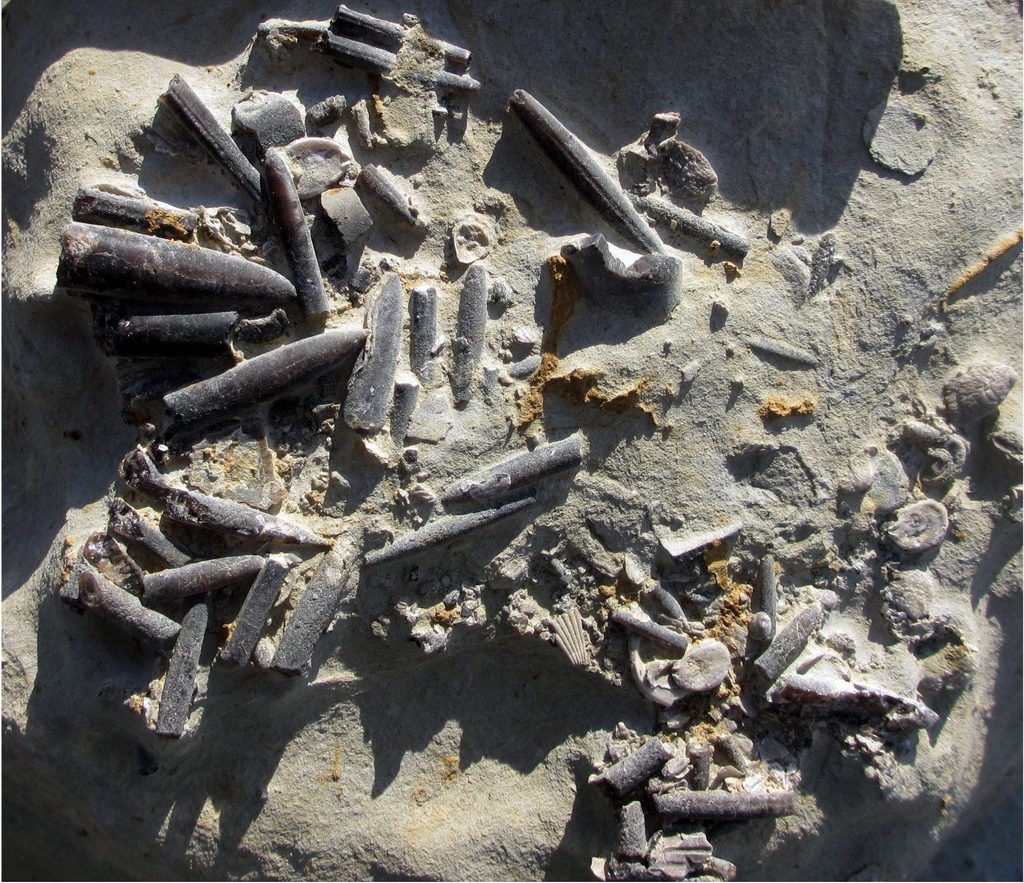
Marine animals have responded to major environmental crises by becoming smaller for hundreds of millions of years.
New research involving Friedrich-Alexander-Universität Erlangen-Nürnberg, the University of Warsaw and the University of Lille examined almost 9,000 changes in the body size of marine animals. The evidence covered fossil, historical and modern records extending across approximately 450 million years. The researchers found that reductions in body size are a widespread response to environmental stress—and that the effect is particularly pronounced during periods of strong global warming.
This phenomenon is known as the Lilliput effect.
It may appear as genuine dwarfing within individual species, or as a broader ecological shift in which smaller species become increasingly dominant within marine communities. According to the study, body-size changes within species were approximately twice as strong during warming-driven crises as during environmental crises not characterised by intense warming.
For modern environmental management, the finding carries an important warning:
Changes in the size of fish and marine invertebrates may be more than a fisheries issue. They may be evidence that the wider ecosystem is under sustained environmental stress.
What is the Lilliput effect?
The Lilliput effect describes a substantial decline in the average body size of organisms during or after a major environmental disturbance.
The name comes from the fictional island of Lilliput in Jonathan Swift’s Gulliver’s Travels, whose inhabitants were unusually small.
In marine ecosystems, the effect can occur in at least two ways:
- Individual species may develop or mature at smaller sizes.
- Ecological communities may shift toward naturally smaller species as larger organisms decline or disappear.
The new study found evidence of both patterns across very different groups of marine ectotherms, including fish, molluscs and crustaceans. Ectotherms depend heavily on surrounding environmental conditions to regulate their body temperature and metabolism.
The finding is significant because it suggests that shrinking body size is not limited to one species, one ocean region or one geological event.
It appears to be a recurring biological response to environmental disruption.
Stronger warming, greater shrinking
The researchers compared body-size changes associated with multiple environmental crises across Earth’s history.
Although reductions occurred during crises with different causes, warming events produced particularly strong and variable changes within species. The study also found that ancient crises involving greater temperature increases were associated with more pronounced dwarfing.
This historical pattern has direct relevance to present-day oceans.
The study concludes that continued warming is likely to influence current trajectories toward smaller body sizes in modern marine ectotherms. The researchers warn that smaller fish and invertebrates could increasingly become normal if ocean warming continues.
This does not mean every marine species will shrink at the same rate or through the same mechanism.
Species differ in their thermal tolerance, growth rate, reproductive strategy, mobility, food supply and habitat requirements. Some may adapt, some may relocate, some may decline and others may become more dominant.
The overall pattern, however, points toward substantial ecological reorganisation.
Why body size matters
The size of marine animals affects far more than their appearance.
Body size can influence:
- Growth and reproductive output
- Predator-prey relationships
- Swimming and migration
- Competition for food
- Vulnerability to fishing
- Energy transfer through food webs
- The commercial value of harvested species
- The amount of food obtained from each animal
A population made up of smaller individuals may produce different ecological and economic outcomes from a population containing larger, older animals.
Shrinking can also occur alongside changes in species composition. A reef, estuary or offshore ecosystem may become increasingly dominated by smaller organisms even if the total number of animals does not immediately collapse.
This means population counts alone may not provide a complete picture of ecosystem condition.
Environmental programmes may also need to examine body-size distributions, community structure and changes over time.
Warming can create multiple pressures
Temperature does not act independently.
As seawater warms, the amount of oxygen that can remain dissolved in it generally decreases. Dissolved oxygen is essential for fish, crustaceans, molluscs and other marine organisms, and low concentrations can reduce the range of species able to survive in an affected habitat.
Marine organisms may therefore experience several interacting pressures:
- Higher temperatures
- Reduced oxygen availability
- Ocean acidification
- Changes in food availability
- Altered currents
- Habitat loss
- Pollution
- Disease
- Fishing pressure
- Extreme weather
These combined pressures may affect growth, development, reproduction and survival.
A decline in body size should consequently be investigated within its environmental context rather than attributed automatically to temperature alone.
Why the research matters for the Caribbean
Caribbean states depend heavily on marine ecosystems for food, livelihoods, tourism, recreation and coastal culture.
The Food and Agriculture Organization identifies fisheries as particularly important to food security, household income and coastal livelihoods in the Eastern Caribbean, including Trinidad and Tobago. It also identifies coral bleaching, sea-level rise, stronger storms and hurricanes, and sargassum influxes among the climate-related pressures already disrupting fishing operations and fisher livelihoods in the region.
The possibility of declining body size adds another concern.
Potential regional implications could include:
- Smaller commercially harvested fish
- Changes in catch composition
- Reduced weight or value per individual
- Shifts in spawning and nursery habitats
- Changes in predator-prey relationships
- Greater uncertainty for stock assessments
- Declining resilience of already stressed ecosystems
- New challenges for fisheries management
These outcomes should not be assumed without local evidence.
However, the historical pattern identified by the study provides a strong reason to improve marine biological and oceanographic monitoring throughout the Caribbean.
Measuring more than the number of fish
Traditional fisheries data often focus on total catch, species landed and fishing effort.
These measures remain important, but climate-related ecosystem change may require a broader evidence base.
Monitoring could also record:
- Length and weight distributions
- Age or maturity where feasible
- Juvenile-to-adult ratios
- Species composition
- Changes in the abundance of smaller and larger species
- Seasonal movement
- Habitat condition
- Water temperature
- Dissolved oxygen
- Salinity
- pH
- Nutrients
- Chlorophyll
- Turbidity
- Contaminants
Repeated measurements are especially important.
A single sampling event may show what organisms are present at one moment, but it cannot reliably identify a long-term trend. Standardised sampling over months and years is needed to distinguish climate-related change from normal seasonal variability.
Establishing an environmental baseline
A baseline describes environmental conditions before a major project, disturbance or long-term change is evaluated.
For marine ecosystems, baseline work may include:
- Water-quality sampling
- Marine sediment sampling
- Fish and invertebrate surveys
- Habitat mapping
- Benthic community assessment
- Plankton sampling
- Seagrass, mangrove or coral condition surveys
- Measurement of temperature and dissolved oxygen
- Review of historical fisheries records
Baseline information gives regulators, scientists and resource managers a reference point.
Without it, changes may be noticed only after they have become severe. It may also become difficult to determine whether an observed decline is linked to climate change, pollution, habitat modification, fishing pressure or several causes acting together.
Body size as an ecosystem indicator
The research suggests that body-size reduction could be treated as one signal within a larger marine ecosystem assessment.
For example, a monitoring programme might identify that:
- Average fish length is declining.
- Larger species are becoming less common.
- Smaller species are becoming more dominant.
- Water temperatures are increasing.
- Dissolved oxygen is decreasing.
- Nursery habitat is deteriorating.
- Catch per unit of fishing effort is changing.
No single observation proves the cause.
Taken together, however, multiple indicators can reveal whether an ecosystem is moving away from its historical condition.
The strongest monitoring programmes therefore combine biological, physical and chemical evidence.
Water-quality monitoring is essential
Marine organisms respond to the total quality of their environment.
Important water-quality parameters may include:
- Temperature
- Dissolved oxygen
- pH
- Salinity
- Turbidity
- Nutrients
- Chlorophyll-a
- Petroleum hydrocarbons
- Metals
- Pesticides
- Microbiological indicators
NOAA’s Caribbean ocean-acidification monitoring station in Puerto Rico, for example, collects information including carbon dioxide, salinity, chlorophyll, oxygen and pH. This type of integrated monitoring helps researchers understand how changing ocean chemistry and physical conditions affect marine environments over time.
Temperature monitoring is particularly useful when paired with dissolved oxygen data.
If animal body sizes change while temperature, oxygen and habitat conditions also shift, scientists have a stronger basis for investigating possible environmental drivers.
Marine sediments must also be considered
Pollutants entering coastal environments do not always remain in the water column.
Metals, petroleum hydrocarbons, pesticides and other substances may become associated with suspended particles and accumulate in seabed sediment.
Marine organisms living in or feeding near sediment can therefore experience exposure even when water samples appear relatively clean.
Sediment sampling may help identify:
- Historical contamination
- Pollutant hotspots
- Risks to bottom-dwelling organisms
- Potential contaminant remobilisation
- Conditions affecting nursery or feeding habitats
- Changes linked to dredging or coastal construction
For a complete assessment, water, sediment and biological information may need to be interpreted together.
Fisheries monitoring and environmental monitoring must connect
Fisheries data and environmental data are often collected by different organisations for different purposes.
Climate change makes closer integration increasingly important.
A decline in fish size may be influenced by:
- Harvesting larger individuals
- Warmer water
- Reduced food availability
- Habitat degradation
- Pollution
- Low oxygen
- Changes in migration
- Altered species interactions
Catch records alone may not distinguish among these possibilities.
Likewise, water-quality data without biological observations may not show how changing conditions are affecting commercially and ecologically important species.
An integrated programme can connect:
- What is changing in the environment
- What is changing in marine communities
- What is changing in fisheries catches
- What risks are emerging for ecosystems and livelihoods
FAO’s Caribbean fisheries adaptation work similarly emphasises climate-vulnerability assessment, modelling fish abundance and accessibility, and integrating climate adaptation into fisheries governance.
Implications for environmental impact assessment
The study also has relevance for coastal development and environmental impact assessment.
Projects involving ports, dredging, wastewater discharge, industrial facilities, coastal construction or marine infrastructure may affect ecosystems already experiencing climate stress.
An impact that appears moderate under historical environmental conditions could become more significant when combined with:
- Higher temperatures
- Lower oxygen levels
- Coral or seagrass decline
- Reduced organism size
- Shifting species distributions
- More frequent extreme events
Environmental assessments should therefore consider cumulative impacts.
The question should not be limited to whether a project creates a measurable change on its own.
It should also ask whether the project adds pressure to an ecosystem whose resilience is already being reduced by climate change.
How Ecotox can support marine monitoring
Ecotox Environmental Services can support coastal and marine projects through:
- Marine water sampling
- Marine sediment sampling
- Surface-water monitoring
- Water-quality analysis
- Environmental baseline studies
- Specialised field sampling
- Ecological risk assessment support
- Environmental impact assessment support
- Compliance monitoring
- Wastewater and discharge assessment
- Soil and sediment testing
- Long-term monitoring programme design
These services can help establish existing conditions, identify environmental pressures and track whether marine ecosystems are changing over time.
Learn more about Ecotox Specialized Sampling Services.
Smaller animals can signal a larger problem
The discovery that marine animals have repeatedly become smaller during environmental crises provides a long historical perspective on modern ocean warming.
The research does not predict the precise future of every fish, shellfish or marine ecosystem.
It does show that shrinking body size is a recurring response to environmental stress and that strong warming tends to produce more pronounced changes.
For the Caribbean, this reinforces the value of collecting reliable, long-term evidence.
Monitoring should not begin only after fisheries collapse or obvious habitat loss occurs. It should track the physical, chemical and biological signals that may reveal ecosystem change at an earlier stage.
Marine animals becoming smaller may appear to be a subtle trend.
Across an ecosystem, however, it can represent a major warning.
Sources
Friedrich-Alexander-Universität Erlangen-Nürnberg — Climate change makes marine animals shrink
https://www.fau.eu/2026/07/news/research/klimawandel-laesst-meerestiere-schrumpfen/
Proceedings of the National Academy of Sciences — Unique fingerprint of marine ectotherm body size change during hyperthermal crises
https://doi.org/10.1073/pnas.2505564123
Food and Agriculture Organization — Climate Change Adaptation in the Eastern Caribbean Fisheries Sector
https://www.fao.org/in-action/climate-change-adaptation-eastern-caribbean-fisheries/en/
NOAA Fisheries — Monitoring Ocean Acidification in Caribbean Coral Reefs
https://www.fisheries.noaa.gov/national/climate/monitoring-ocean-acidification-caribbean-coral-reefs