


Methane Removal Study Reveals Volcanic Chemistry
Introduction
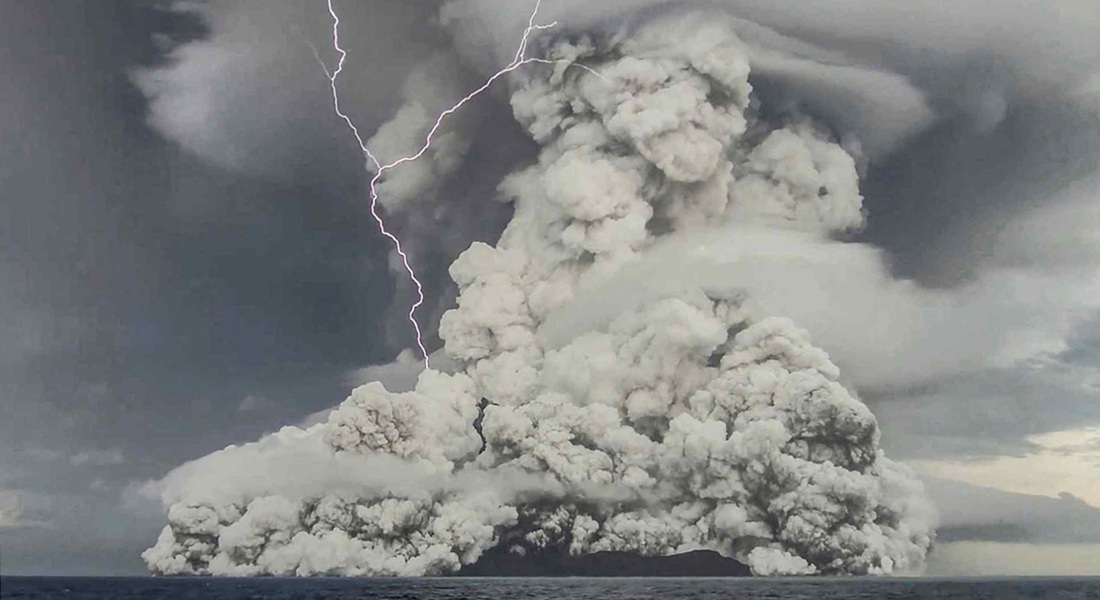
Methane removal has become a critical climate research priority because methane strongly affects near-term warming. A new University of Copenhagen report describes a surprising natural mechanism observed after the Hunga Tonga–Hunga Ha’apai eruption. The January 2022 eruption released methane, but volcanic chemistry also helped remove some of it from the air.
Researchers used advanced satellite measurements to identify unusually high formaldehyde levels inside the volcanic plume. Formaldehyde matters because it forms during methane breakdown. This finding connects atmospheric chemistry, climate risk assessment, air quality monitoring, and greenhouse gas verification.
Study / discovery overview
The University of Copenhagen reported findings from a Nature Communications study on the 2022 Hunga Tonga–Hunga Ha’apai eruption. The eruption was one of the most violent volcanic events in modern times. It also created an unusual atmospheric laboratory for studying methane removal.
Researchers observed a formaldehyde cloud that persisted far longer than expected. Formaldehyde usually survives only for a few hours in the atmosphere. The team tracked the cloud for 10 days, which suggested continuous methane breakdown inside the plume.
The proposed mechanism involves volcanic ash, salty seawater, and sunlight. The eruption pushed enormous amounts of seawater and ash into the stratosphere. When sunlight hit this mixture, reactive chlorine likely formed and helped break methane down.
This mechanism builds on earlier research involving Saharan dust, sea salt, sunlight, and methane breakdown. The new study suggests similar chemistry can occur in volcanic plumes. That finding could change how scientists assess atmospheric methane budgets.
Key findings
The volcano released around 300 gigagrams of methane during the eruption. Researchers compared that amount to annual methane emissions from more than two million cows. The plume also removed about 900 megagrams of methane per day during the observed process.
The researchers found record-high formaldehyde concentrations in the plume. This provided evidence that methane destruction continued for more than one week. Satellite observations helped confirm that the signal was real and not an instrument artifact.
The study used the TROPOMI instrument aboard the European Space Agency’s Sentinel-5P satellite. This instrument monitors air pollution and greenhouse gases worldwide every day. Researchers adjusted their analysis for unusual stratospheric altitude and high sulfur dioxide interference.
The findings may affect the global methane budget. Scientists have not fully included atmospheric dust effects in methane removal estimates. The study suggests volcanic dust and aerosols may influence how much methane remains in the atmosphere.
Methane is responsible for about one third of global warming. Over 20 years, methane is about 80 times more potent than carbon dioxide. However, methane typically breaks down within about 10 years.
That short lifetime makes methane reduction important for near-term climate action. Faster methane removal could help slow warming over the next decade. Yet carbon dioxide reductions remain essential for long-term climate stability.
Broader implications
Methane removal research shows why environmental monitoring must support climate decisions with verified measurements. Climate strategies need evidence, not assumptions. This is especially important when new technologies attempt to accelerate atmospheric methane breakdown.
The study also highlights the value of remote sensing. Satellite tools can detect atmospheric chemistry across large regions. They can also support air quality monitoring, emissions tracking, and climate risk assessment.
For industry, the findings carry both promise and caution. The chemistry may inspire future methane removal technologies. However, any engineered method must prove safety, effectiveness, and measurable climate benefit.
This creates a clear need for monitoring program design. Projects must measure baseline conditions, emissions, atmospheric changes, and potential side effects. Without strong verification, claimed methane removal may remain uncertain.
The research also connects to industrial emissions monitoring. Methane can come from energy production, waste systems, agriculture, and industrial activity. Better emissions data can guide mitigation plans and environmental compliance.
Environmental impact assessment will also matter for any future atmospheric intervention. New methods must consider air chemistry, ecological effects, exposure pathways, and unintended consequences.
Fate and transport modelling can also support decision-making. It helps explain how chemicals move through air, water, soil, and ecosystems. That insight becomes important when climate solutions interact with environmental systems.
How Ecotox Environmental Services Can Help
Ecotox Environmental Services helps organisations assess environmental risks through monitoring, sampling, modelling, and compliance support. For climate-related concerns, Ecotox can support air monitoring, industrial emissions monitoring, and environmental impact assessment.
Methane removal research reinforces the need for reliable environmental data. Organisations need defensible measurements before making emissions, pollution, or climate claims. Ecotox can help design monitoring programs that support better decisions.
Ecotox also supports exposure assessment and ecological risk assessment. These services help evaluate how environmental changes may affect workers, communities, and ecosystems.
Where pollution may move across connected systems, Ecotox can support water quality monitoring, soil sampling, and sediment sampling. These services help identify contamination pathways beyond the original emission source.
Fate and transport modelling can also support climate and contamination assessment. It helps clients understand how pollutants move and where risks may emerge.
By combining environmental monitoring, contaminant monitoring, and compliance support, Ecotox helps clients manage environmental uncertainty. This approach supports responsible decisions as climate science and technology continue to evolve.
Internal link:
Ecotox Environmental Services environmental monitoring and assessment capabilities — https://ecotoxes.ani.quest/services/
Outbound citation:
Scientists stunned: Volcano cleans up after itself by removing methane from the air — https://news.ku.dk/all_news/2026/05/scientists-stunned-volcano-cleans-up-after-itself-by-removing-methane-from-the-air/