


Marine Plastic Chemicals Disrupt Octopus Predator-Prey Behavior
Introduction
Plastic chemical marine behavior effects are becoming an important research focus.
Plastic chemical marine behavior changes can occur when additives leach from degraded plastics.
Researchers are examining how these chemicals influence interactions between marine predators and prey.
Study / discovery overview
To explore these effects, researchers at Florida Atlantic University studied predator-prey interactions in marine environments.
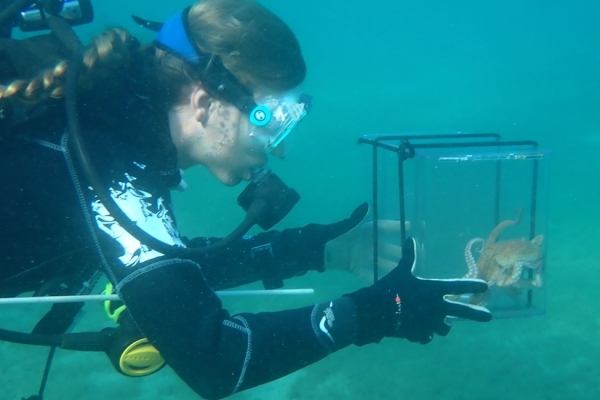
The research focused on the common South Florida octopus (Octopus vulgaris) and several common prey species.
Scientists evaluated how exposure to a plastic-derived chemical influenced hunting behavior and prey responses.
The findings were reported by Florida Atlantic University and published in the Journal of Experimental Marine Biology and Ecology.
Key findings
Researchers examined the effects of oleamide, a lubricant commonly used in plastics such as polyethylene and polypropylene.
As plastics degrade in seawater, oleamide can leach into the surrounding environment.
The chemical resembles naturally occurring biological signals used by marine organisms for communication.
Laboratory experiments tracked octopus behavior across more than 31,500 observations of predator-prey interactions.
Exposure to oleamide altered prey choice, shifting octopus preference from hermit crabs toward free-living crabs.
Crustacean prey also showed reduced predator-avoidance behavior and continued foraging near predators.
Interactions between predators and prey increased after exposure, although many contacts did not result in successful predation.
Behavioral changes persisted for several days after the chemical was removed from the water.
Broader implications
These results suggest that chemical additives from plastics can disrupt marine communication systems.
Many marine organisms rely on chemical cues to locate food, detect predators, and navigate habitats.
Plastic-derived compounds may mimic or interfere with these signals.
Behavioral disruptions could influence feeding patterns, species interactions, and resource distribution within ecosystems.
Subtle changes in predator-prey dynamics may therefore alter coastal marine food webs over time.
Understanding chemical effects from plastic pollution expands current perspectives beyond physical debris impacts.
How Ecotox Environmental Services Can Help
Plastic pollution research highlights the need for environmental monitoring of emerging contaminants.
Ecotox Environmental Services conducts water, sediment, and biological sampling in marine and coastal environments.
Environmental monitoring programs track contaminant occurrence and ecological indicators in aquatic ecosystems.
Fate and transport modelling helps evaluate movement of pollutants through marine systems.
Ecological risk assessments support management decisions for pollution-affected environments.
Ecotox Environmental Services environmental monitoring and assessment capabilities — https://ecotoxes.ani.quest/services/
Florida Atlantic University report on octopus behavior and marine plastic chemicals — https://www.fau.edu/newsdesk/articles/octopus-marine-plastic-pollution.php