


Fiddler Crabs Are Found to Hoover Up and Break Down Microplastic Particles
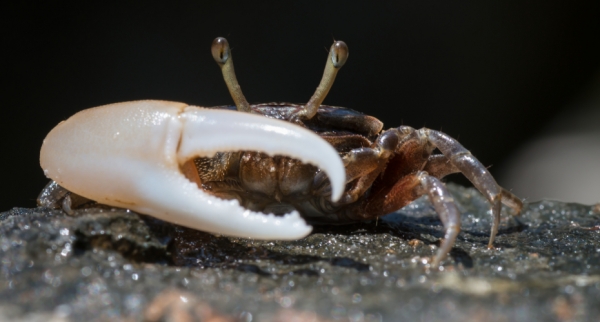
Microplastic particles were found to be ingested and fragmented by fiddler crabs in polluted mangroves. This behavioral adaptation was studied by scientists.
Study Setting and Goals
First, polluted mangrove forests in Turbo, Colombia were selected as field sites.
Then, fluorescent polyethylene microplastics were introduced into the sediment to track crab interactions.
Finally, soil and crabs were sampled over 66 days to observe uptake and breakdown.
Key Observations
Throughout the experiment, microplastics were found at about 13 times greater concentration in crabs than in sediments.
Next, plastics were observed within crab organs — notably hindguts, hepatopancreas, and gills — in uneven distributions.
Also, many particles were fragmented into smaller pieces during digestion.
This outcome suggests that crabs and gut bacteria may be aiding plastic fragmentation faster than sunlight or waves.
Ecological Implications
Although plastic breakdown by crabs may reduce larger microplastic particles, consequences remain unclear.
Smaller fragments — including nanoplastics — may accumulate in crab tissues over time.
Moreover, such particles may move into the food web, potentially affecting predators and other organisms.
Research Significance
This research challenges assumptions that plastic degradation is driven mainly by abiotic processes, such as sunlight, waves, and abrasion.
Instead, biological fragmentation by sediment‑feeding animals can significantly alter plastic fate in coastal ecosystems.
Furthermore, evolutionary adaptation to pollution pressures was observed, indicating ecological responses to chronic microplastic exposure.
How Ecotox Environmental Services Can Help
Ecotox’s existing services align with the needs highlighted by this research, helping stakeholders understand and manage microplastic behavior in coastal systems:
- Microplastic Sampling & Profiling
- Microplastic concentrations can be quantified in sediments and biota across tidal wetlands and mangrove ecosystems.
- Fate & Transport Modeling
- Models can be developed to simulate how microplastics move, accumulate, and transform in coastal food webs.
- Ecological Exposure & Risk Assessment
- Biological uptake, fragmentation, and potential food‑web transfer of microplastics can be evaluated for risks to wildlife.
- Pollution Mitigation Advisory
- Evidence‑based strategies can be recommended to reduce pollutant sources and protect sensitive coastal habitats.