


Marine Heatwaves Disrupt Ocean Food Webs and Jam the Carbon Pump
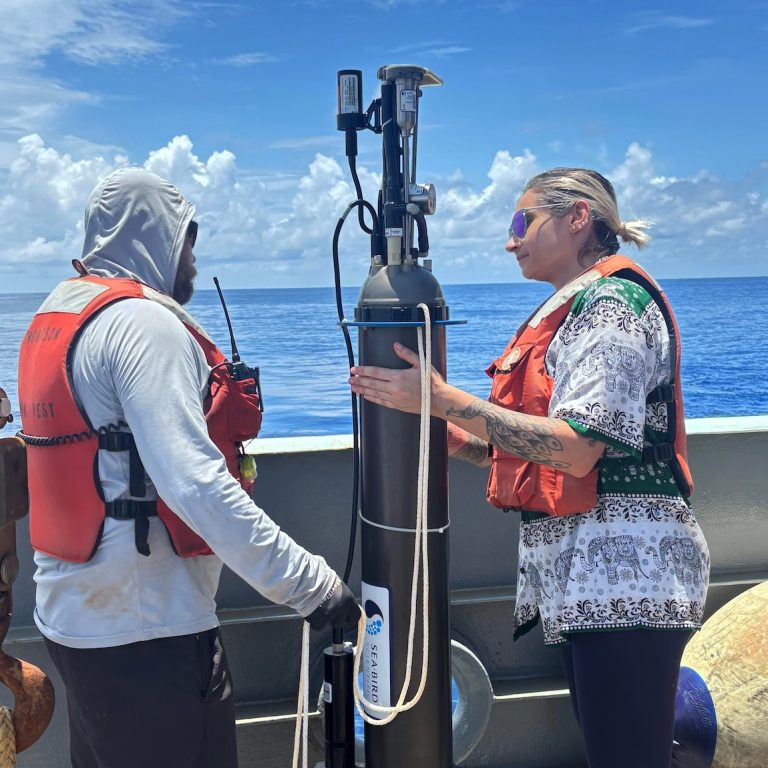
MBARI and collaborating scientists have shown that marine heatwaves alter ocean food webs in ways that can slow the downward transport of carbon—weakening the ocean’s role as a climate buffer. MBARI
Key Findings & Mechanisms
- The study combined decade-long data from robotic floats (BGC-Argo) and plankton surveys in the Gulf of Alaska. MBARI+2Miami News+2
- In heatwave periods, plankton communities shifted toward smaller species and increased recycling of organic carbon near the surface. MBARI+3MBARI+3Environmental News Network+3
- As a result, particulate organic carbon (POC) that normally sinks to the deep ocean instead accumulates in midwater depth (200–400 m) or recycles, reducing deep carbon sequestration. MBARI+2Miami News+2
- The “biological carbon pump” was effectively jammed during the studied marine heatwaves—meaning more carbon could return to the atmosphere rather than being locked in the deep sea. MBARI+2Miami News+2
- The two heatwaves (“The Blob” 2013–2015 and 2019–2020) had different signatures: in one, surface production was high but export efficiency dropped; in another, excess carbon at the surface could not be explained by production alone and likely involved increased recycling and waste accumulation. MBARI+1
Implications & Risks
- The ocean has been a major sink for anthropogenic CO₂. If marine heatwaves increasingly impair this, more carbon may remain in the atmosphere, accelerating warming. MBARI+2Miami News+2
- Ecosystem impacts: alterations at the base of the food web cascade upward, potentially shifting species composition, trophic dynamics, and marine productivity. MBARI+2Miami News+2
- Unpredictability: Not all heatwaves behave the same. The effect depends on the precise response of plankton, grazers, and recycling processes—making long-term modeling and monitoring more complex. MBARI+1
How Ecotox Environmental Services Can Contribute
Ecotox’s existing capabilities align well with needs exposed by this research:
- Carbon Export & Flux Modeling
- Use site-specific data to simulate how heatwaves might reduce carbon export in coastal or regional waters.
- Food-Web & Trophic Shift Assessment
- Analyze plankton and grazer community data to detect shifts in size structure and recycling versus export pathways.
- Ecosystem Impact & Risk Assessment
- Evaluate implications for fisheries, biodiversity, and carbon budgets in marine zones sensitive to heatwave stress.
- Monitoring Program Design & Validation
- Design integrated observational programs (combining sensors, sampling, remote sensing) to capture baseline, heatwave, and post-heatwave states.
By linking measurement, modeling, and risk assessment, Ecotox can help marine clients anticipate and adapt to disruptions in the ocean’s carbon machinery.