


Warming Atlantic Fuels Hurricane Clusters: A New Challenge for Flood Resilience
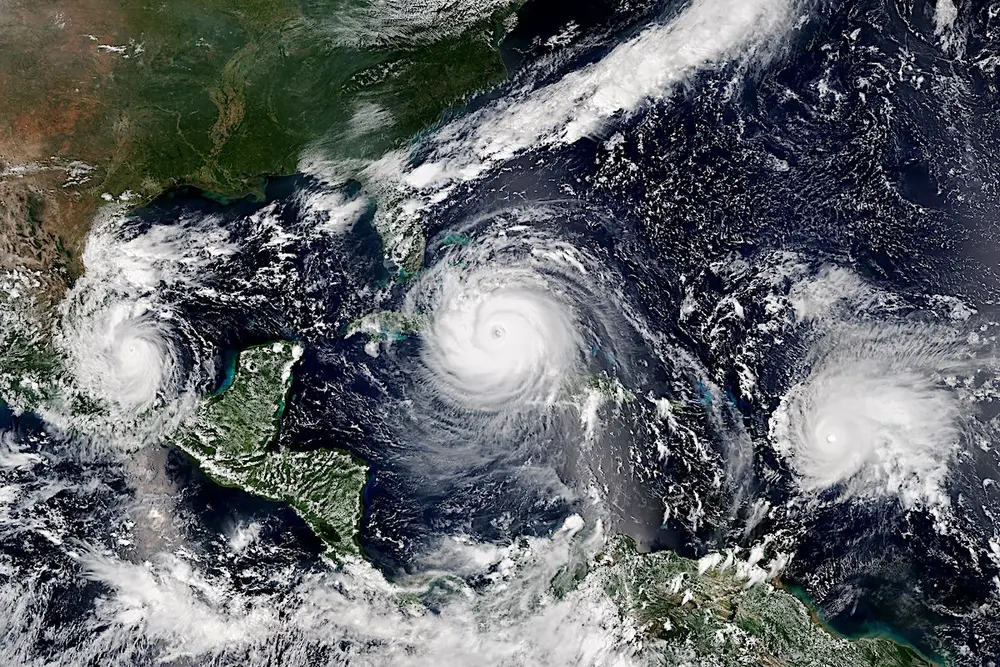
A recent Yale Environment 360 digest reports that, as Atlantic ocean waters warm, it’s becoming increasingly common for hurricanes to form in clusters—meaning two or more storms develop simultaneously. Notable examples include Hurricanes Katia, Irma, and Jose in September 2017, as well as five named storms spinning at once in the Atlantic during September 2020 Yale E360+1.
Key Study Insights
- Surge in clustered storms: The study finds that the warming climate isn’t just increasing hurricane frequency—it’s creating conditions that facilitate multiple storms at once, a pattern once rare in the Atlantic Yale E360PreventionWeb.
- Shift in global patterns: Historically, the Northwest Pacific saw most tropical cyclone clusters. Today, the Atlantic now emerges as a hotspot—with the likelihood of clusters there having increased tenfold over the past half century New AtlasPreventionWeb.
- Climate drivers: The clustering trend is influenced by a La Niña-like warming pattern and atmospheric wave dynamics, which together make the Atlantic more prone to forming simultaneous hurricanes PreventionWebNew Atlas.
- Multiplied risk: Simultaneous storms strain emergency response systems, disrupt recovery, and escalate cumulative environmental and societal damage.
Implications for Flood Preparedness
- Compound flooding risk: Coastal infrastructure now faces the prospect of rapid successive hurricane impacts—even before full recovery from the first, exposing vulnerabilities in our current defense planning.
- Redundancy in resilience design: Communities must upgrade flood defenses, drainage systems, and response protocols to withstand multiple storm surges in short order.
- Adaptive floodplain strategies: Real-time management of flood storage, and flexible buffer zones, become essential in increasingly storm-prone seasons.
How Ecotox Environmental Services Supports Climate-Ready Flood Management
Ecotox offers robust, actionable services to help communities adapt to hurricane clustering:
- Compound Flood Risk Modeling
- Evaluate flood exposures using projected storm clusters, hydrologic load modeling, and terrain floodflow mapping.
- Resilience Testing for Infrastructure
- Simulate performance of levees, coastal barriers, drainage, and urban runoff systems under successive storm scenarios.
- Adaptive Floodplain & Corridor Design
- Design defensible flood zones, managed realignment features, and flexible buffers that function across clustered events.
- Impact Reporting & Preparedness Guidance
- Produce evidence-based resilience assessments and implementation frameworks for planners, regulators, and emergency managers.
With Ecotox’s expertise, flood resilience becomes not just reactive—but anticipatory, robustly aligned with evolving climate threats.